The very first episode of 4ms's newly launched official podcast. The guest is Richard Devine, an electronic artist and sound designer based in Atlanta, Georgia. Hosting the conversation is 4ms's Ross Fish.
His path since the early days of Eurorack, discovering the ARP 2600 and Max, his love for 4ms modules, and his recommendation of the MetaModule and VCV Rack for anyone just getting into modular — it's a rich, roughly 31-minute conversation, audio-focused rather than video. In this article, we bring you that conversation in an edited transcript.
This article is an edited transcript of 4ms's official Podcast EP.1, "Interview with Richard Devine." We've lightly cleaned it up for readability, trimming some filler and repetition. For the full nuance, we recommend listening to the original audio.
- How I Found 4ms
- Into Hardware Modular — the ARP 2600 and Ben Burtt
- What Makes 4ms Modules Special
- Mixing and Mastering — Why "Glue" Matters
- Favorite Modules — STS / DLD / QCD
- For Anyone Starting Out with Modular — VCV Rack and the MetaModule
- Wrapping Up
How I Found 4ms
Ross (4ms)
This is episode one of the 4ms podcast… and I'm saying that with zero confidence (laughs). I honestly don't know yet whether this is going to keep going as a podcast or whether it's a one-and-done.
Up to now, we've been making these short SNS clips where we get a quick comment from a favorite artist who uses our gear — hop on a Zoom, then cut it down to a minute or two. Everybody's so busy these days, right?
But with today's guest, Richard Devine, the moment he started talking I could tell this guy has a lot to say. And all of it was great. So this time we decided not to cut it down and just let it run. I'm going to stay out of the way as much as I can and let him talk. My first question was simple: who are you, and how long have you been using 4ms gear?
Richard Devine
My name is Richard Devine. I'm an electronic artist based in Atlanta, Georgia. I started using 4ms gear… let me think, when was it. The first thing I bought from Dan was a clock divider, I'm pretty sure — a 4HP clock divider. Before that I had this pink module with all these crazy lines drawn on it, and I bought that one too. Anyway, that's around when I started talking to Dan. It was right when 4ms was getting going, and they were in the middle of transitioning from pedals over to Eurorack. That's gotta be fourteen, fifteen years ago now.
I officially got into Eurorack in 2005. Back then there were barely any makers — Doepfer, Analogue Solutions, Vermona… and then Plan B, Peter Grenader, Mike Brown's Livewire, and Scott from Harvestman started showing up. It was a really tiny, underground, super-early Eurorack community. Nobody knew what Eurorack was, nobody even knew the Doepfer format.
The first thing I used was that Doepfer stuff. I bought two G6 cases and built out from there. You buy an empty case, you flip through that old paper Doepfer catalog, and you go "oh, I want a frequency shifter, and an envelope follower, and a precision VCO" — you build it however you want. That concept really pulled me in. Up until then it was all hardwired modulars, where the oscillator, VCA, VCF, and envelope were all fixed in place and you couldn't even change the order — unless it was a Serge or a Buchla or a 4U, something where you could route signals back with banana cables.
I loved the size of it too. The vintage stuff I used to have — ARP 2500s and 2600s, EMLs — took up so much room. And the '70s gear I collected in the '90s was always breaking, expensive to keep running, hard to find parts for. Back then nobody cared about that gear; it would just end up in pawn shops. Atlanta especially had a ton of hip-hop studios, and schools and universities were dumping their gear too. So basically my music store was the pawn shop (laughs).
Richard Devine
…I went off on a tangent there, let me get back to your question. I really started using their stuff seriously around the time they moved from pedals to their first Eurorack modules — when they were still in Austin, Texas. What I love about Dan is that he focused on areas nobody else was paying attention to. Everybody was doing oscillators and filters, like "I want to make an MS-20-style filter," and Dan was like, "No, I want to do interesting things with clocks." Clock division and multiplication, rotating clocks… the Rotating Clock Divider was one of my first modules too, and just that one thing could trigger my other sequencers and generate a huge number of variations. Cramming that much functionality into 4HP was such a unique idea. If you go back and watch my old Vimeo videos from fifteen years ago, it's in almost every single patch.
After that, Dan started sending me new modules he was developing, and those ended up in almost all my patches too. I think pretty much every patch I've ever posted has 4ms in it. 4ms is one of those staples I just can't work without. And it's rugged — I've abused it on stage for years and it's totally reliable. I like gear that doesn't break when you beat on it. I love Dan's ideas, he's a really visionary guy, and back then there was nothing else out there like it. I just loved that direction and that commitment, so I stuck with it, and we're still working together to this day.
Into Hardware Modular — the ARP 2600 and Ben Burtt
Ross (4ms)
Just out of personal curiosity — you've always been way ahead of the curve, and you really know your way around schematics. There was a time when you were a Max guy, right? When did you move over to hardware modular? Was it from vintage gear? Or from something like the Nord Modular? When did you first get interested in modular in the hardware world?
Richard Devine
The biggest turning point was when I got an ARP 2600. Found that one in a pawn shop too. It's semi-modular — it's got 66 patch points, but you can also play it just with the faders, no cables. That system is where I learned the fundamentals of sound design. What ring modulation is, what FM between two oscillators is, envelope followers, slew, sample and hold, white noise, pink noise, VCF, VCA, mixer, spring reverb… it had pretty much everything you need, and it was perfect for learning the basics. You can play it with a keyboard or an external sequencer.
The other reason was Ben Burtt, my favorite sound designer of all time. Still my all-time favorite to this day. He's at Skywalker Ranch now, but he was at Pixar for years, and he's known for those iconic sounds in Star Wars, Indiana Jones, WALL-E. He actually won an Academy Award for the voice in WALL-E. Back when we were still flipping through magazines instead of scrolling on our phones, I read an article about how he made the R2-D2 sounds using his own voice plus the ARP 2600's envelope follower, sample and hold, and ring modulator. I was like, "Oh, that's how he did it!" It blew my mind. Like, how do you make a synth this alive, this expressive — almost like a living thing?
That was the first time I realized you don't have to use a traditional interface to control these machines — you can use your voice, anything, any signal, to make the system more organic, more alive, more full of character. That was my gateway drug — no going back after that. After the 2600 came an EML 101 Electro Comp, then two EMS synths — an AKS and a Synthi A. Those were landmark instruments for me because they taught me patching with the pin matrix. It's a completely different way of thinking than regular patch cables. I had a six-panel Serge too, and I learned patching with banana jacks, that whole unique way of thinking. I still have a few Serge systems — a Quasar, and a big four-panel rig.
Richard Devine
Coming back to Max — when you open Max, you've basically got a blank white canvas, and you just think about what you want to build. The reason I got into Max in the first place was that I wanted to do things the DAWs of the day couldn't. Like, I wanted to ramp the tempo from 20 up to 1000 BPM and back down to 30, 50, then 1000 again — wobble the tempo with an LFO, that kind of thing. A friend told me, "Get Max," and I bought it at the university bookstore without even knowing what it was. Back then it was the Opcode version, and it came with this thick book and six or seven floppy disks (laughs). I loaded it onto a Mac SE/30, worked through every tutorial, sequenced a sampler, and went "whoa, this is incredible." I loved that it was object-based. You pick an object that does a specific thing, and from there you just dream as big as you want and build it up. Multiply or divide signals, split MIDI and audio — you can do a lot of what you'd do on a modular.
I wanted to "break" my own sampler. I'd do crazy stuff to an Akai S3200, like telling it to "play back at audio rate," and a few times I dumped so much MIDI data into it that the screen filled up with garbage characters and it just completely froze. And I was like, "This is it — I love an environment where I can break things myself." I really don't like an environment where everything's already set up for you and you can't break anything. It feels claustrophobic to me.
After that I got into Reaktor, Pure Data, and SuperCollider. I even met James McCartney and wrote some Smalltalk. SuperCollider really floored me. I leaned on it heavily on two albums around 2002-2003. I never thought a computer could make sounds that refined and organic. When I heard the SuperCollider FM landscape patch, I was like, "This is coming from a computer?" It sounded like a babbling brook or birdsong — it really knocked me out.
Either way, I've always loved an environment where you start from a totally blank slate and you get to decide where it goes from there. Whether it's a computer or a modular. The instant you connect something, there's sound, and you can edit it in real time, swap out objects, try all kinds of things. Basically, I hate constraints — I want the freedom to make whatever I want to make. Especially because a lot of the time I was trying to make things that didn't even exist yet.
What Makes 4ms Modules Special
Ross (4ms)
Let me ask a slightly bigger 4ms question. You touched on clocks earlier, but for you, what is it that sets 4ms modules apart from everything else? Is it something about the way Dan thinks…
Richard Devine
I love the ecosystem they've designed. Other than the new reverb module, I think I have pretty much all of them — and I want that one too, I'm actually talking to Thomas about it right now. Thomas is a good friend too. Is he in the office over there right now?
Ross (4ms)
Yeah, he's downstairs.
Richard Devine
He's downstairs. Thomas and I go way back.
Ross (4ms)
I should send you the first module I ever worked on here, too. It's the LA2A / Neve EQ one.
Richard Devine
Oh, I'd love that. The LA2A — I love it. I've got the real one too (laughs).
Ross (4ms)
I think you'll really like it. It's basically an in-chain "glue" module — the top section is the LA2A-style one, and this one's a 1073.
Richard Devine
That's awesome. I've got an original AMS Neve 1073 in a dual-rack version. It wasn't cheap… like thirteen thousand dollars, some ridiculous price.
Ross (4ms)
I hated building a whole patch up, getting it all dialed in, and then going "okay, where's the dynamics? Where's the glue?" It always felt like 200 sounds going off at once instead of an actual mix.
Mixing and Mastering — Why "Glue" Matters
Richard Devine
I'm glad you brought that up. The number one question on my patch videos was always, "How do you get it to sound so good?" And the answer is, "There's a lot of outboard gear underneath the rack." Behind it there's Neve, Empirical Labs, API, Massenburg… all mastering-grade gear. I'm actually building a new mastering room right now too.
Before it hits that outboard, I have a dedicated 2500 rack set up, with an SSL G Comp as the main compressor. A Pultec EQ on the low end. I pull out the midrange detail so it stays clear and punchy even on a tiny phone speaker. I'm kind of surprised more makers don't dig into this area. I got pretty deep into the API 500-series lunchbox stuff too — I have six lunchboxes plus a mountain of rack outboard.
Modular is hard to master. There's so much information in it, so (like you said) it really helps to have a compressor that glues the whole thing together and keeps it under control. For me especially, I get these absolutely wild sounds, so it's like, "Okay, let's pull this back a bit." A compressor to tame the whole thing, a multiband plus expander to bring out the midrange… I've picked up a ton of tricks over the years through trial and error. If you're just in the computer, you can use plugins like Gullfoss from Soundtheory or soothe to tame the nasty frequencies that jump out of the mix. Modular tends to build up in specific bands, and sometimes you can't even hear it yourself. It depends on how dense the patch is, but my patches get pretty dense. There's a lot going on, both in the sequencing and rhythmically, so I work really hard to keep the mix super clear and bring out all the detail I struggled to build in. So I'm genuinely thrilled that you all are tackling this stuff.
Favorite Modules — STS / DLD / QCD
Richard Devine
So in my live rig I actually use three — well, two stereo samplers and a stereo delay. That one's the SCS… no, what's it called.
Ross (4ms)
The DLD.
Richard Devine
Yes, the DLD! I love that thing. Dan told me it's based on Karplus-Strong synthesis. If you feed a random audio-rate clock into the input, set the rate all the way down and the feedback to max, you get this insanely gnarly sound. It's like Autechre meets speed metal… I can't really describe it, but it's truly insane. It sounds amazing on a big sound system — a properly tuned Funktion-One or a Void — and it's one of my favorite effects in my live set right now.
I run two STS stereo samplers. The memory, and the way Dan's bank system works, are just so smart. Each bank can load a different sample, so I keep a document noting which percussion sounds are in which bank. One sampler is all percussion, the other is for randomly throwing in weird processed DSP fragments. You can store 32GB-plus across two samplers — it's basically infinite memory. And it sounds genuinely great even at high volume. When I did a shootout of all my samplers, running them through a PA at 24-bit/96k, it made my top three alongside the Rossum sampler and the ER-301 of the modular world. 4ms is right up there, and the pitch-shifting quality is excellent. All sound designers pitch things down, so that matters. You can reverse it, hold or freeze it. With just one unit you can create infinite complexity. Push the orange button and you're in another bank, push it again and you're in yellow mode for glitch and granular stuff… it's a really well-thought-out interface, and it's fun to use live. So I keep two of them side by side, and I've even put stickers on them.
And then there's one that doesn't get enough credit but that I think is one of Dan's masterpieces: the QCD — the Quad Clock Divider. The one with the expander. To this day, I haven't found anything that can replace it. I have plenty of other modules that can divide and multiply, but this one — you can invert it, pair it with the expander — you can make really wild, organic rhythms with it, and it still amazes me. I think it's a brilliant utility that everybody should have in their system.
For Anyone Starting Out with Modular — VCV Rack and the MetaModule
Ross (4ms)
If you were talking in 2026 to someone who's just getting interested in Eurorack, what would you say to them — like, "it's worth it, you should definitely do it"?
Richard Devine
Here's what I'd do — first, try out VCV Rack and see if you like how it works. And if you do, buy a 4ms MetaModule. That module is… when Dan first showed it to me at NAMM, I thought, "This is absolutely genius." You build a patch in VCV Rack and you can pour it straight into the Meta. I've got it racked up in this rig and I use it all the time. It's just wonderful.
You can learn the fundamentals by watching how other people built their patches. That's how I learned Max, and how I learned Reaktor. I'd open up the inside of an ensemble and go, "How is this filter section built?", follow the signal flow, figure out where the signals split, and understand the architecture. So if I were starting now, the first thing I'd get is VCV Rack. It's wonderful.
I use it on the iPad all the time too, sketching out ideas when I don't have the modular in front of me. When I get an idea but the system isn't around, I'll rough it out in VCV Rack, then flesh it out later on the computer, pour it into the Meta, assign it to knobs, and use it in a patch. It's genuinely genius. And I really enjoy watching the videos you (Ross) put out on the MetaModule. You're putting out so much great content. I think the Meta is one of the most advanced and brilliant new modules to come out in recent memory.
Richard Devine
If I were getting started right now in 2026 — with this many options available — I think it's the perfect scenario for someone who wants to learn. You can start with VCV Rack even if you have no money, and once you're hooked and you go "I want to take this further," you buy a Meta and use it with a hardware interface, with your hands and your ears, turning knobs and getting instant feedback. Build out from there. That way you've already got the muscle memory — the ideas you patched together virtually, inside the computer, you can just bring straight out into the real world on actual hardware, the Meta. That's why the Meta is a genius module. It really is the best of both worlds, and you can save and recall patches. I'm building a new live case right now, and the Meta's going in there. I can recall a complex patch at the push of a button, no loading hassle, nothing to worry about. Exactly the state you built in VCV Rack comes right up. And then you just run with it.
So that's what I tell people. You don't need a lot of money. Just dip your toe in first and see if it clicks — if it feels good, if it gives you some confidence. I think the biggest hurdle with modular is confidence. People see all those cables and blinking lights and they get intimidated. "This is an instrument? It looks like a piece of lab equipment." VCV Rack is way more approachable, and it's free on top of that. Tons of users upload their patches, so you can learn how they're built — it's a really educational tool. Schools use it for Modular 101. I wish I'd had a tool like this back then — I learned the hard way. So skip all the struggle I went through and go to VCV Rack. It's the best.
Wrapping Up
Ross (4ms)
Well, they're going to kick me out in two minutes (laughs), but thank you so much for today. I really appreciate you doing this.
Richard Devine
Of course, Ross. I've been working with 4ms for a long time. I'm happy to support you. You guys are the best. I couldn't do what I do now without you. I've been a fan since day one and I still love everything you do. Keep it up. You're the best.
Ross (4ms)
Thank you. Talk to you again soon.
Ross (4ms)
And that's it for the episode — or, as Dan likes to put it, "GitHub-wise, version 0.0.1." I don't know yet whether it'll continue, but if you liked this format and you'd like to hear more of the 4ms podcast, let us know in the comments. Requests are welcome too — tell us who you'd like to hear from. From here on it's open season. Thanks for sticking with us. Like, follow, subscribe, and share it with a friend. Go play with your modular synth, and buy another 4ms module. Or, you know, go outside and touch grass. It is summer, after all. See you next time.
Richard Devine
Richard Devine is an electronic music artist and sound designer based in Atlanta, USA. Known for his meticulously layered, deeply processed sound, he's earned worldwide acclaim in the IDM and glitch worlds.
He released much of his work through Schematic Records out of Miami, and after his remix of Aphex Twin's "Come to Daddy" and recognition from Autechre, he went on to release albums on Warp Records as well.
Alongside his artist career, he's a top-tier sound designer. He's created sounds for instruments like Native Instruments (Reaktor, Absynth, Massive, and more) and Moog's Animoog, done sound design for brands like Sony, Coca-Cola, Microsoft, Tesla, and Nike, and worked on game audio for titles including Cyberpunk 2077 and Halo.
A true authority who knows modular synthesis inside and out — and in this conversation, he shared his thoughts on 4ms and the MetaModule.
About 4ms Company
4ms Company is an American maker that has been designing and building innovative audio electronics for musicians since its founding in 1996. Today they are based in Portland, Oregon, right in the heart of the West Coast synthesizer scene.
They are known for products that fuse the intuitive feel of hardware with the flexibility of software — MetaModule (a hardware interface for software modules), Catalyst Sequencer, Looping Delay, Sampler, and more. With a focus on clean, low-noise, great-sounding instruments, and a lineup that spans both fully-built modules and DIY kits, they have something for everyone from beginners to seasoned builders.
That wraps up the conversation from 4ms Podcast EP.1.
For my part (Takazudo), I often see Richard Devine on X and Instagram running absurd numbers of modules, and I've always gotten this "this guy is on another level" feeling — so getting to know the roots of someone like that feels full of little discoveries.
I also found it interesting that, of all things, it was a sound designer's story that struck him so hard. We live in an age so far ahead of those days that sounds like that are just taken for granted now. People don't even wonder how they were made anymore.
But even in an age like this, I had my own realization: you can still get that feeling of directly controlling sound, of touching a synth's knobs and hearing it respond. And I started thinking — maybe finding that part fun is actually the right way to approach music! You don't necessarily have to make something polished.
And Takazudo got into modular through VCV Rack too, so if you're at all curious, I really think trying it out in VCV Rack is the way to go. With that in mind, please do check out the MetaModule as well 👌
Related MetaModule Products
In addition to the main MetaModule unit, dedicated expander modules are available.
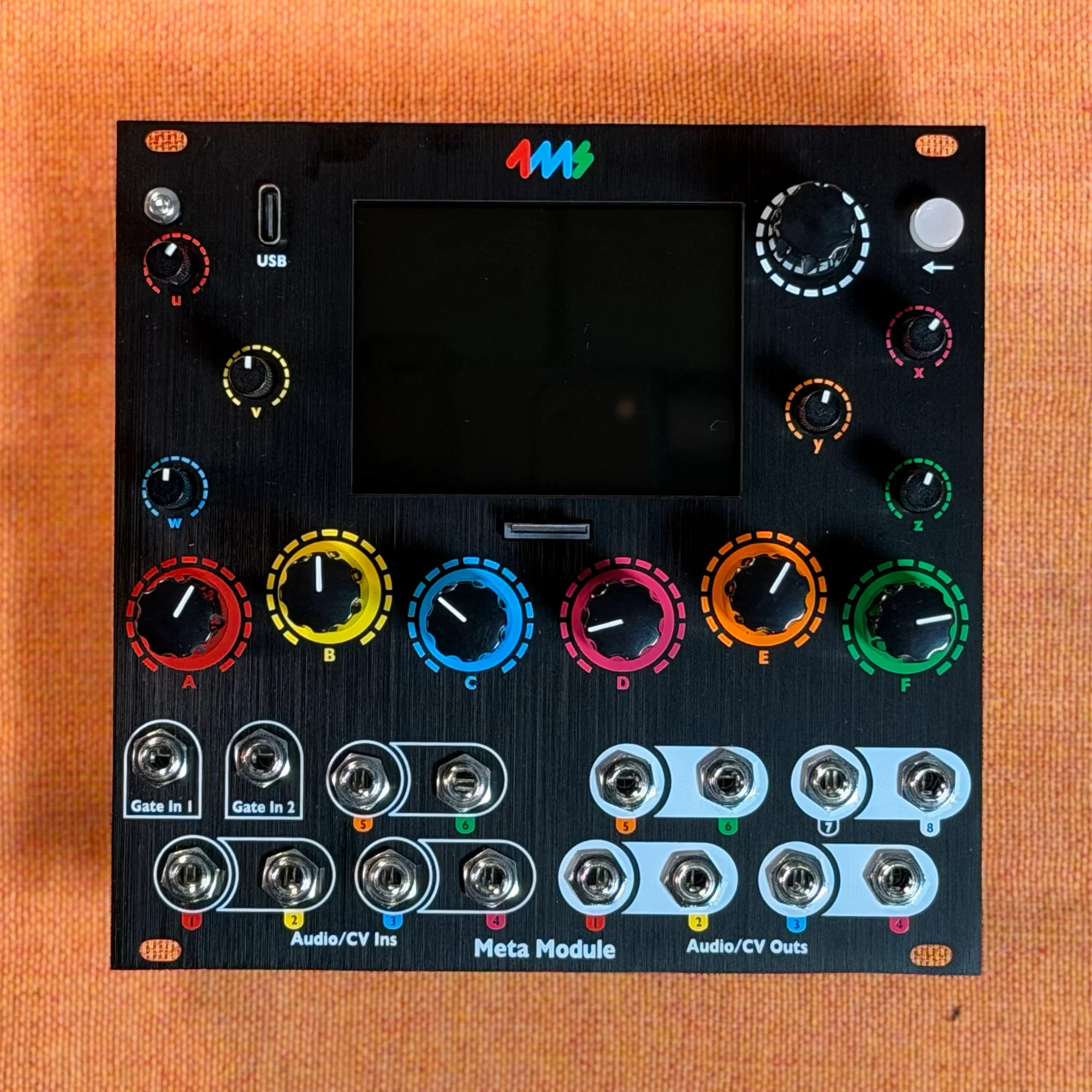
26HP hybrid module that lets you control VCV Rack plugins through physical knobs and jacks. Supports 160+ built-in modules and over 1,500 third-party plugins, with microSD and USB-C onboard for expansion.
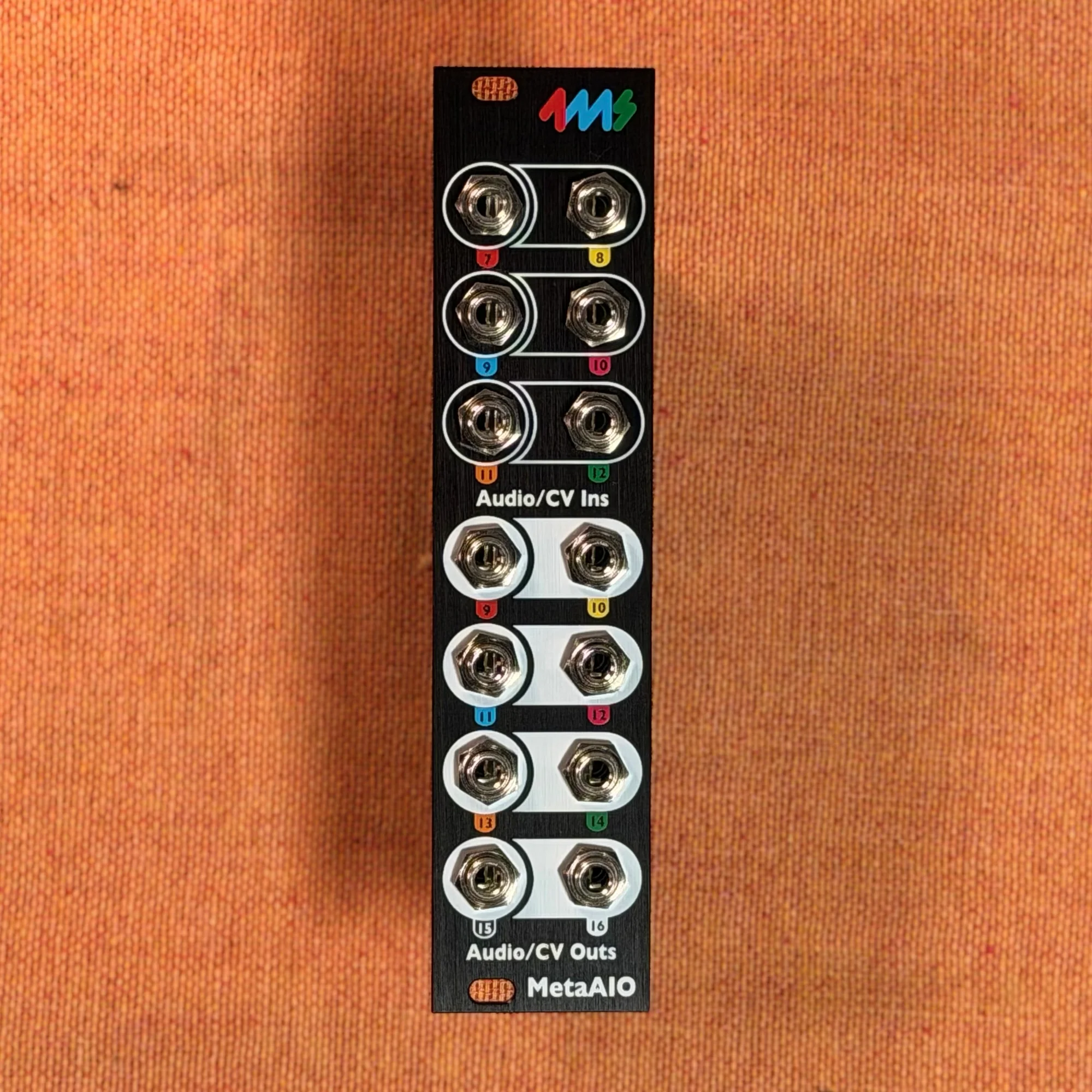
Audio I/O expander for the MetaModule. Adds six 24bit/48kHz DC-coupled inputs and eight outputs—bringing the combined system up to 12 inputs and 16 outputs—and connects via a simple ribbon cable.
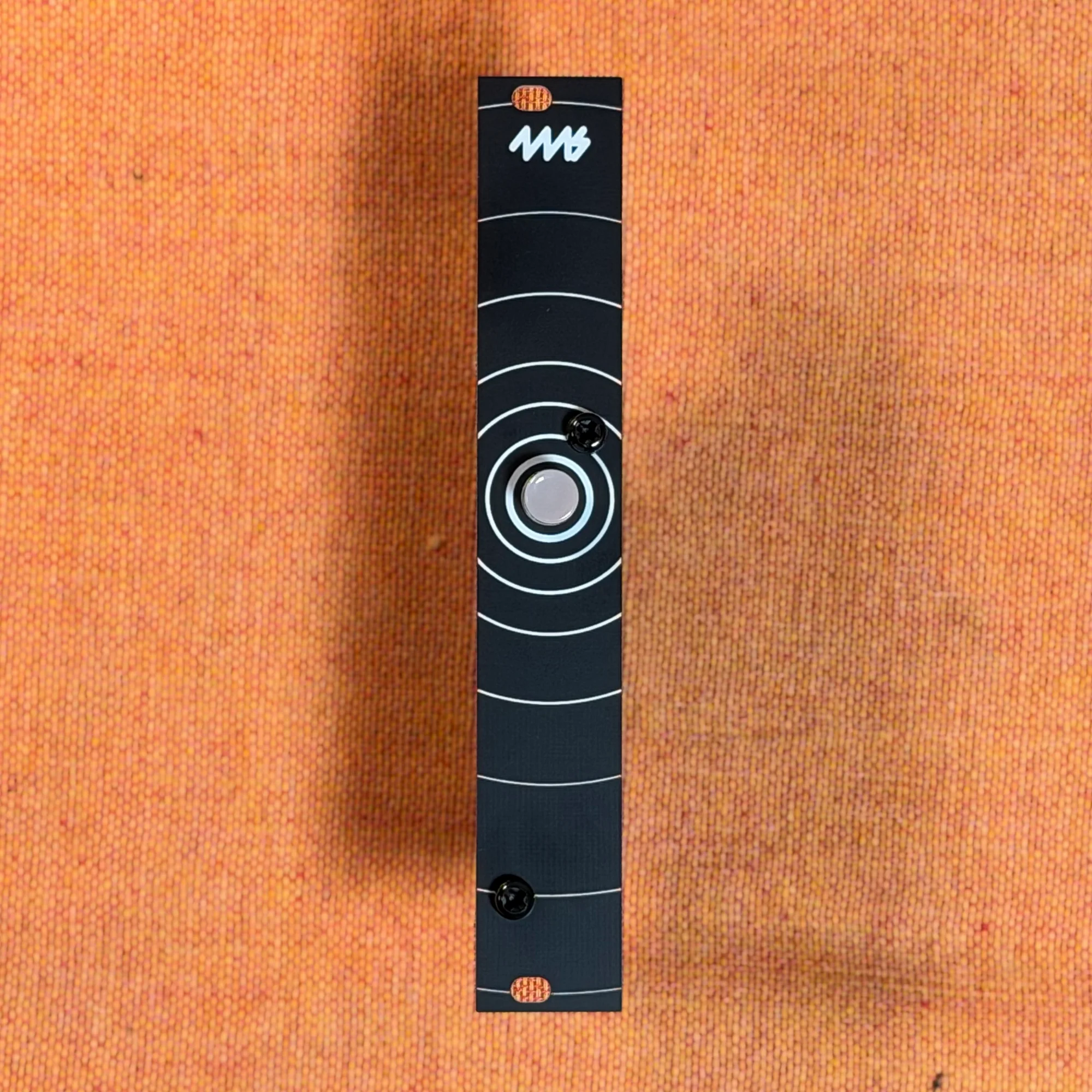
6HP 8-button expander designed for the MetaModule. Each button can be assigned to up to 8 parameters simultaneously, with toggle/momentary modes and daisy-chain support for up to four units.
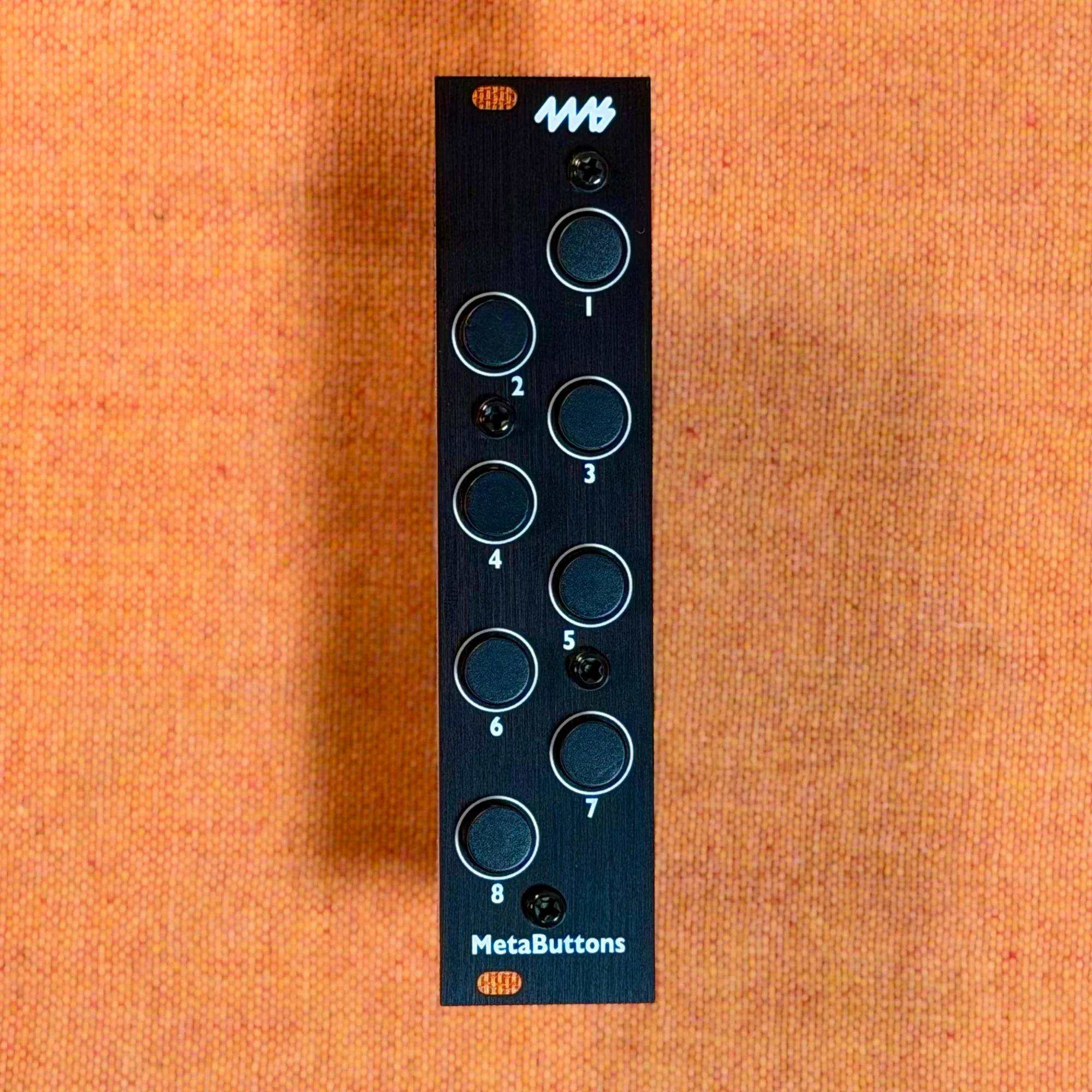
Wi-Fi expander for the MetaModule. Transfers patch files wirelessly over an existing network and lets you browse, delete, and organize patches from a browser interface.