
This time I’m writing an introductory guide to modular synth power supplies. Power supplies for modular synths — aren’t they confusing? Wait, is this right? Am I doing this correctly? I’m just using it by feel, but is that really okay…? Don’t you have those kinds of worries?
This article is aimed at people who are beginners when it comes to power supplies.
- Me and Power Supplies
- Batteries and Light Bulbs
- Modular Synth Power Supplies
- Experimenting with Current Flow
Me and Power Supplies
I’m Takazudo, the author, and I use DIY power supplies for my modular synths. I regularly upload modular synth performance videos to YouTube, and all the recent ones are powered by my DIY power supplies. They look like this:

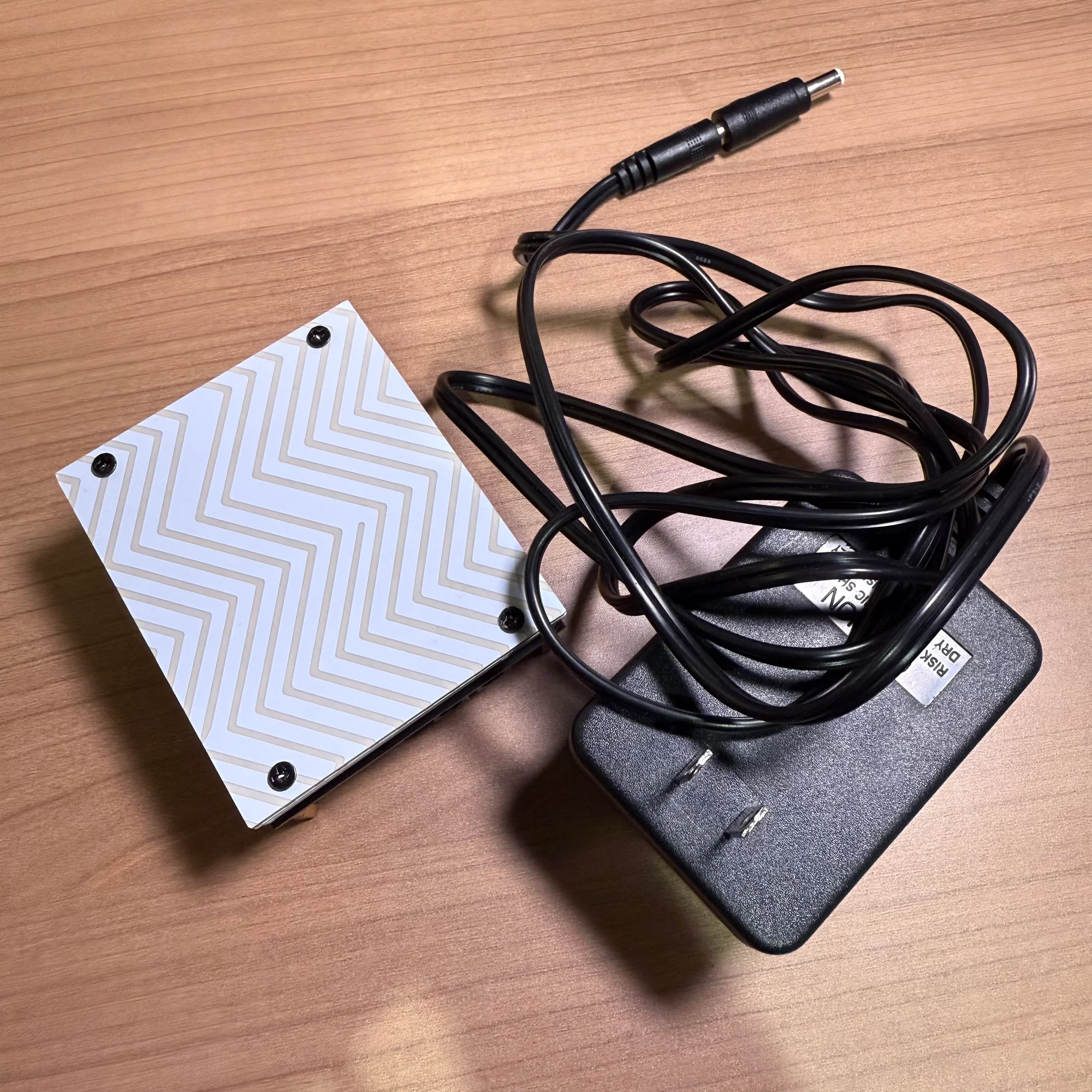
Why did I bother making these? Well, after building my own case, I wanted a power supply too. But buying a power supply on its own is fairly expensive, so I wondered if I could build one myself — that’s how it started. As I researched, I found published circuits and explanations, and initially tried following along and replicating them.
The resources I’ve particularly referenced are the following video by Moritz Klein and the circuit diagram from a power supply module sold by AI Synthesis, a brand we carry at our shop. (We’re not currently stocking this particular product as of March 2025.)
-
[DIY SYNTH PSU: How to design a simple dual power supply
However, my knowledge of electronic circuits pretty much stopped at middle school level — I didn’t understand anything. So I’ve been constantly asking ChatGPT and watching explanation videos on YouTube, gradually learning bit by bit. Recently, you can pass circuit diagram images to ChatGPT and ask “explain this,” and it’ll teach you, so I’ve been continuously asking it questions.
Still, power supplies are incredibly deep. Well, of course they are — if you could just casually build them, you’d essentially be able to make the core components of household appliances. But learning about power supplies has been valuable in that I get to understand circuits from their very foundation.
As I’ve gradually deepened my understanding, I’ve started to see what’s happening around modular synth power supplies. But looking back to when I didn’t understand any of this, I think it’s completely natural to feel anxious — you have no idea what’s going on. So with this article, I hope to at least partially alleviate those concerns.
Batteries and Light Bulbs
With that said, let me write about power supplies at my level of understanding. I’d love to jump straight into modular synth power supplies, but modular synth power supplies provide three voltages — +12V, +5V, and -12V — to each module. This is quite complex, so let me explain starting from the simplest example. We’ll start with the basics of voltage and current.
First, as an ultra-simple example, let’s consider a circuit that lights a miniature bulb with an AA battery. You probably did something like this in elementary school:
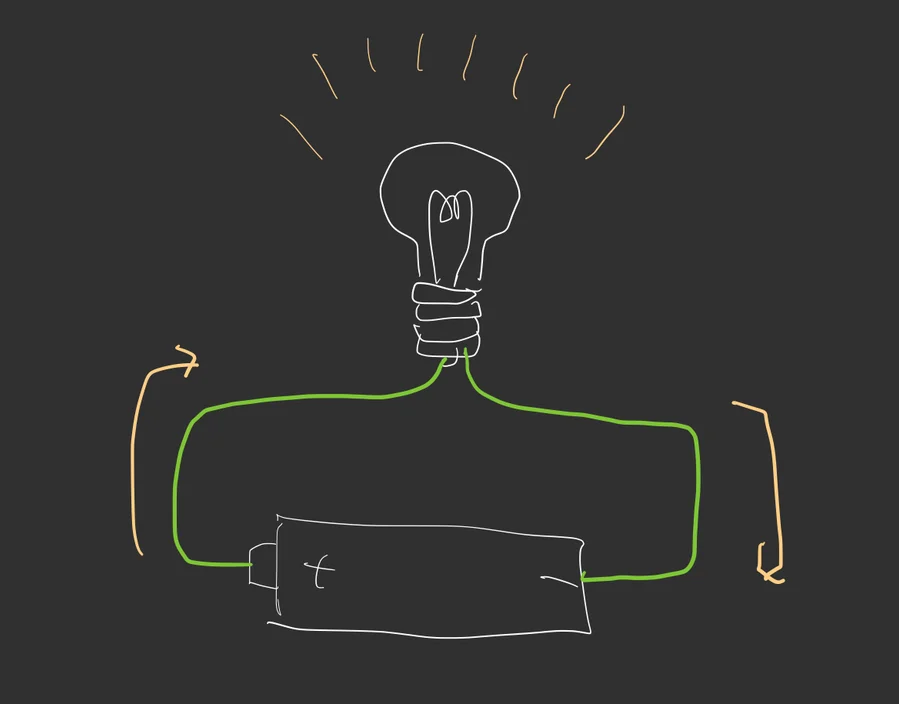
In this circuit, the light bulb illuminates because current flows from the battery’s positive terminal to its negative terminal. This current is generated when the battery supplies +1.5V of voltage to the circuit.
But what exactly is voltage? I didn’t understand this part myself, but voltage and current are often compared to the flow of water. Here’s a diagram illustrating that:
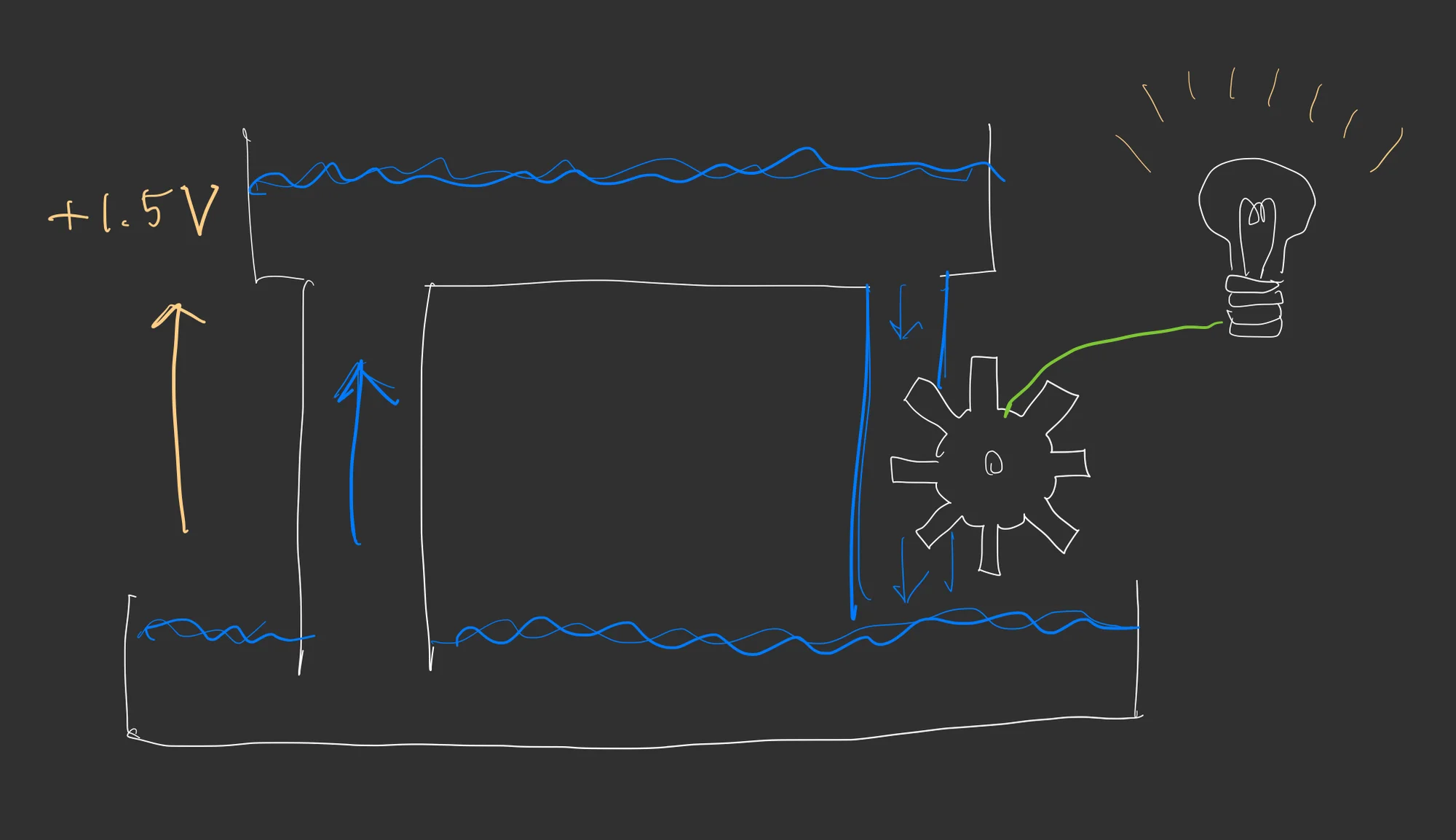
This diagram compares the battery supplying +1.5V to the circuit to a pump pushing water up to a high position. Pushing water to a higher position — this represents applying voltage to a circuit. “Applying voltage” means giving electrical pressure to the circuit. It’s like a mysterious force saying “Flow, electricity!” — that’s the image of voltage.
The water at a high position falls with energy that lights the bulb, then returns to its original low position — this is analogous to current flowing from the positive to the negative terminal.
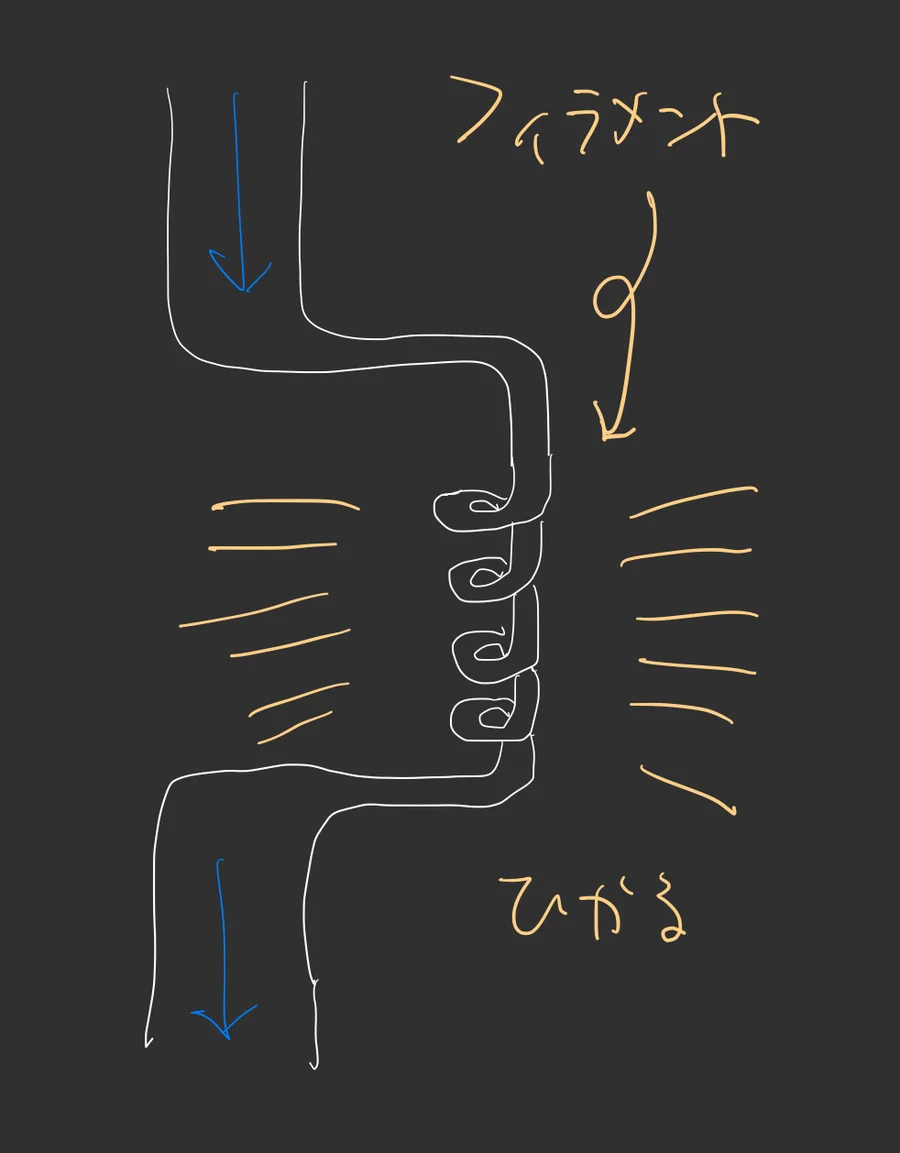
The light bulb glows because current passes through a thin metal wire — the filament — which has specific properties that produce this phenomenon. Using the water analogy again, imagine a thin tube (the filament) through which water flows, generating light and heat. Think of it as having many obstacles inside the tube, and when water hits them, they glow.
Light bulbs come in various types — some brighter, some dimmer. This is easy to understand if you think of household incandescent bulbs or fluorescent lights. Generally, brighter bulbs draw more current, while dimmer bulbs are built to draw less. Modular synths work the same way — depending on their function (specifically, the components used inside), some require a lot of power while others don’t need much.
Let me summarize the relationships between voltage and current:
- Voltage: How high up the water falls from. The higher it is, the greater the energy of the falling water.
- Current: How much water flows. The amount of water flow is determined by the voltage and the circuit (its components).
- Light bulb: The more water (current) that flows through the bulb, the brighter it shines. Different bulbs allow different amounts of water (current) to flow (load).
So basically, when voltage is applied, something operates in the components along the circuit, and the current returns to its original low position.
What’s actually happening here isn’t literally water flowing, and while current flows from positive to negative, electrons actually move from negative to positive — there are many details I could cover, but the goal of this article is to give you a general understanding.
So let’s move forward with the understanding: when voltage is applied, something like water flows. That’s the basic image of how a light bulb works.
Understanding Electrical Circuits
As someone learning about these circuits, I’ve come to feel that ultimately, we humans are using the properties of electricity found in nature to build useful things — and you don’t necessarily need to know exactly what’s happening at a fundamental level.
Knowing the true underlying theory is certainly enjoyable, but intuitively, I think it’s enough to understand that there are components that utilize these properties, and we combine them for various purposes. For example, very few people fully understand how their computer or smartphone works, and most people think of synths as “press a key, hear a sound.”
But having enough understanding to not feel anxious — knowing roughly what’s happening — I think that’s helpful for deepening your understanding.
Modular Synth Power Supplies
You’re probably thinking “I didn’t come here to learn about light bulbs!” — so let me get back to modular synth power supplies. As I mentioned earlier, modular synth power supplies handle three types of voltage: +12V, +5V, and -12V. You’re all connecting your cases and modules with ribbon cables, and each terminal serves the following purpose:
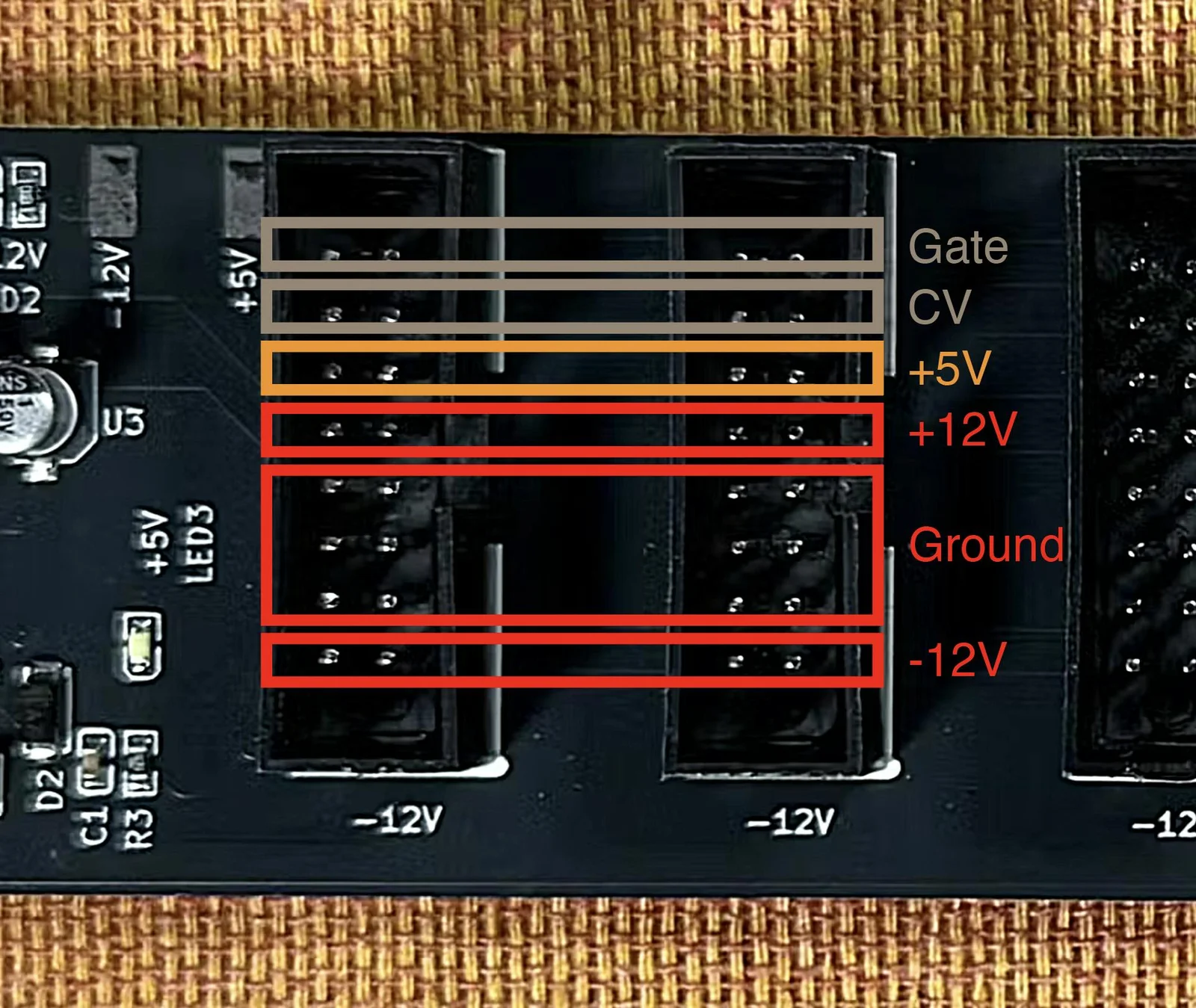
Note that this socket is a 2x8, 16-pin connector, with pairs of horizontal pins arranged in 8 rows. The two pins side by side in each pair are connected — they’re typically linked both on the bus board and in the module’s circuit. The six pins I’ve marked as Ground are similarly connected, or sometimes only some of them are actually connected to the module.
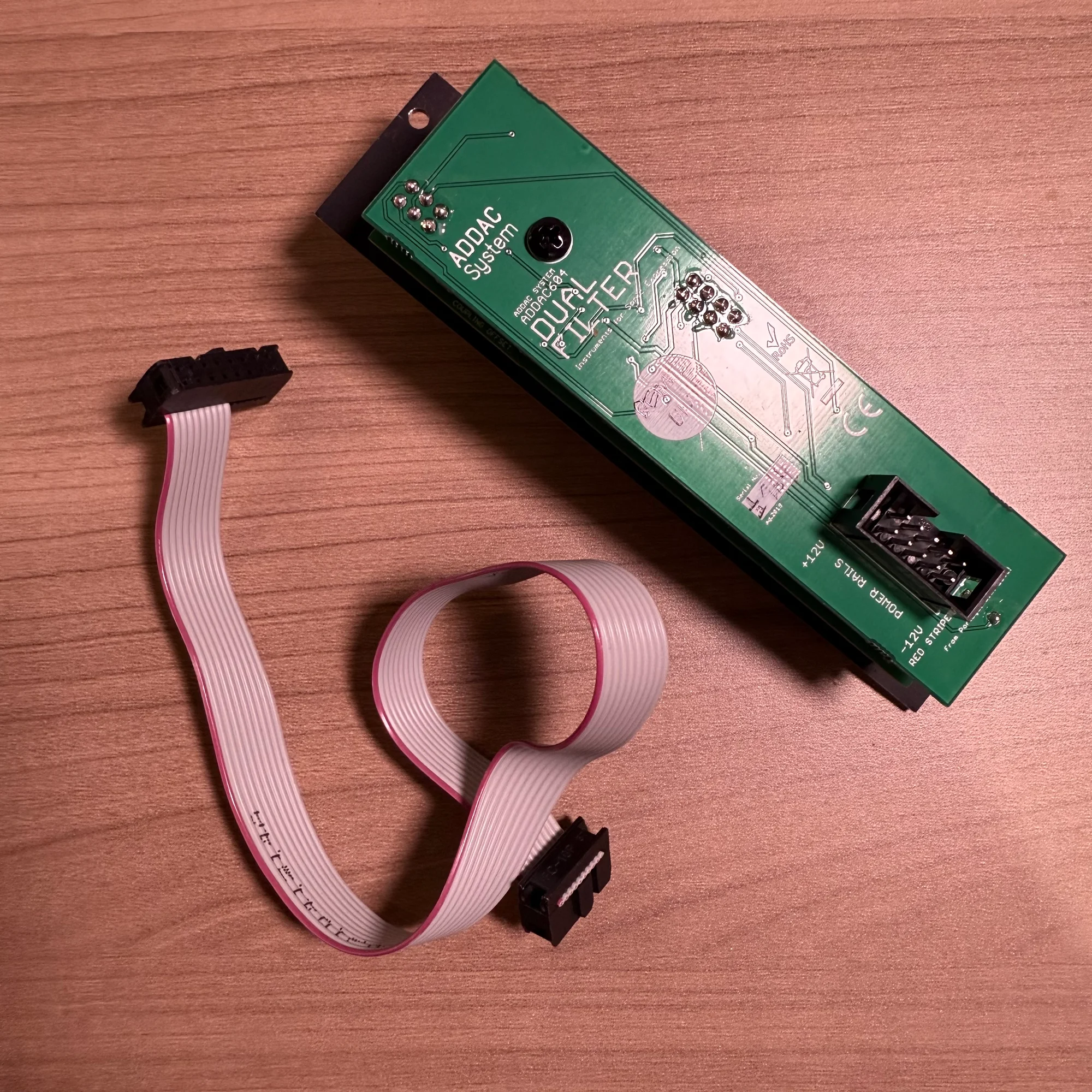
Hearing that, you might think a 1x8 pin layout would work just fine. From what I’ve briefly researched, Doepfer started making modular synths in the 1990s and used ribbon cables that were already widely used in computers for power connections, which is why these pins and cables became the standard. Eurorack modular synths are essentially built around this de facto standard.
Oh, and for those who’ve never bought a modular synth — a ribbon cable is a flat cable like the one in the photo. When you buy a module, it usually comes with one that fits the power socket. In most cases, the power socket has one notched area designed to prevent incorrect insertion. (Though some don’t have this, so please be careful.)
So, +12V, +5V, and -12V — three voltages are supplied to the module. Explaining all of them at once would be confusing, so let’s first imagine the modular synth itself as a light bulb, running on +12V.
+12V and Ground
In this case, the module receives current using the +12V terminal and the Ground terminal shown in the earlier photo. The current flow can be diagrammed as follows:
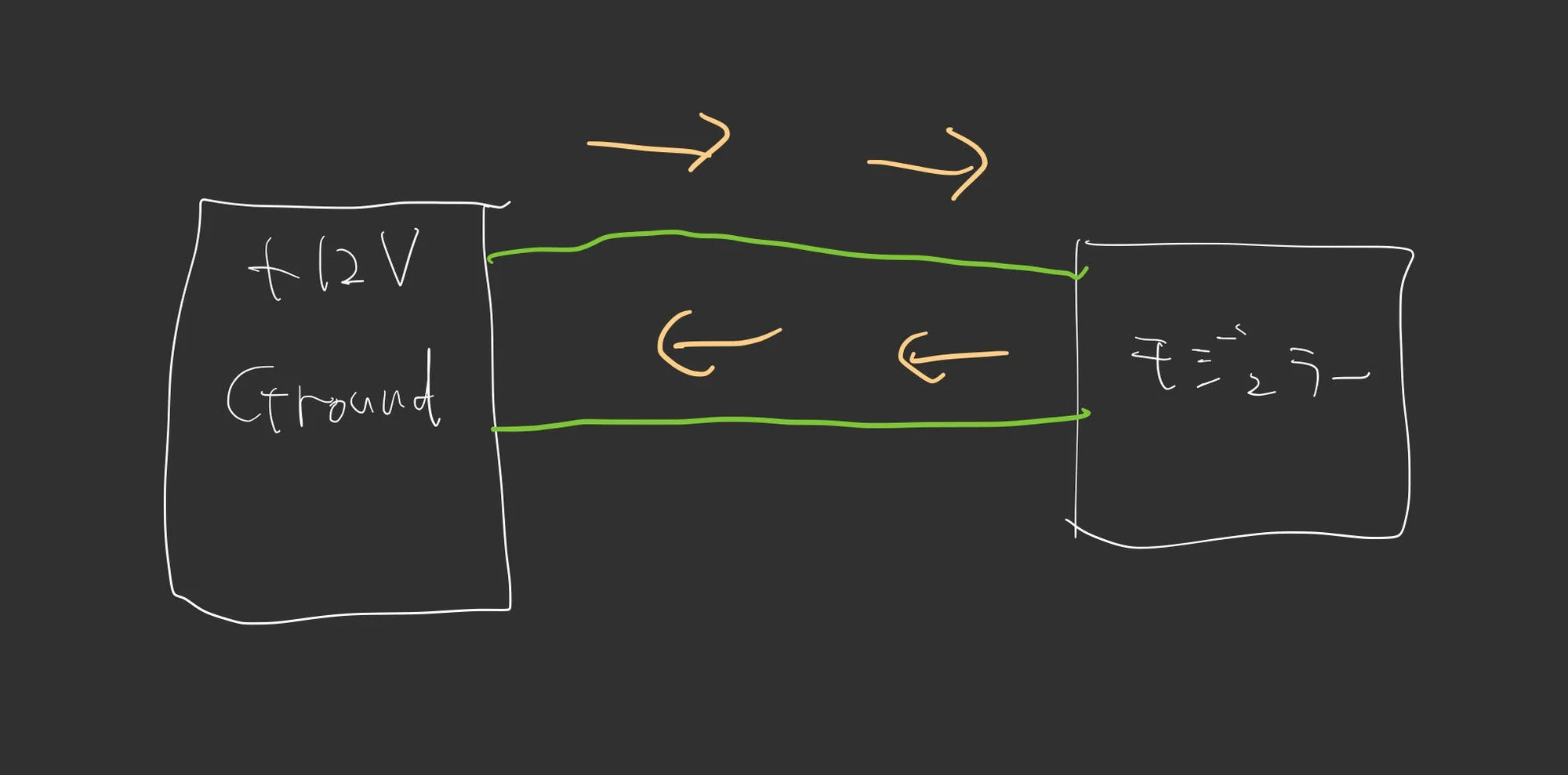
Current flows from the +12V terminal of the modular synth power supply into the module, then returns to the Ground terminal. Ground is a general term used in electrical circuits. It refers to the reference point where voltages return — the electrically “low” point. In our earlier light bulb and battery example, the negative terminal corresponds to Ground.
Looking back at the photo I showed earlier, check where the +12V and Ground terminals are on the modular synth power connector. +12V is the 5th row from the bottom, and Ground is the 2nd through 4th rows from the bottom.
-12V and Ground
But a modular synth isn’t a light bulb. There’s also this -12V thing — what is it? If we diagram it similarly, it looks like this:
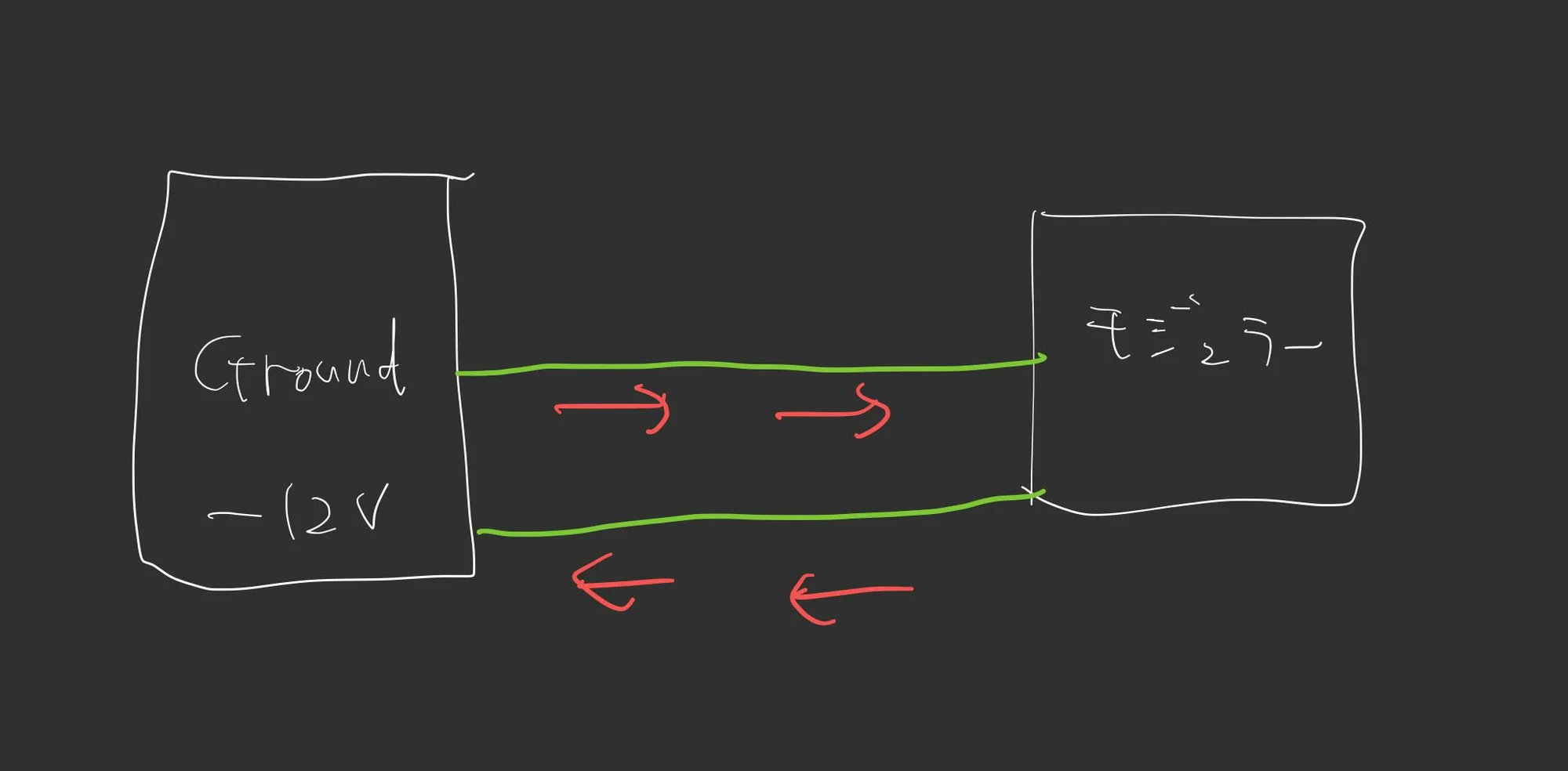
Negative voltage means current flows in the opposite direction. For +12V to Ground, I explained that +12V is the high-position water flowing down to Ground. For -12V, imagine water flowing from Ground to an even lower position at -12V, then being pumped back up to Ground. This current flow occurs through the -12V and Ground terminals on the power socket.
The -12V terminal is at the very bottom row of the power socket. On ribbon cables, the part typically marked in red corresponds to -12V. On PCBs, there’s usually a white line indicating which side is -12V, to help prevent mistakes.
+12V, Ground, and -12V
Combining +12V and Ground with -12V and Ground gives us a diagram like this:
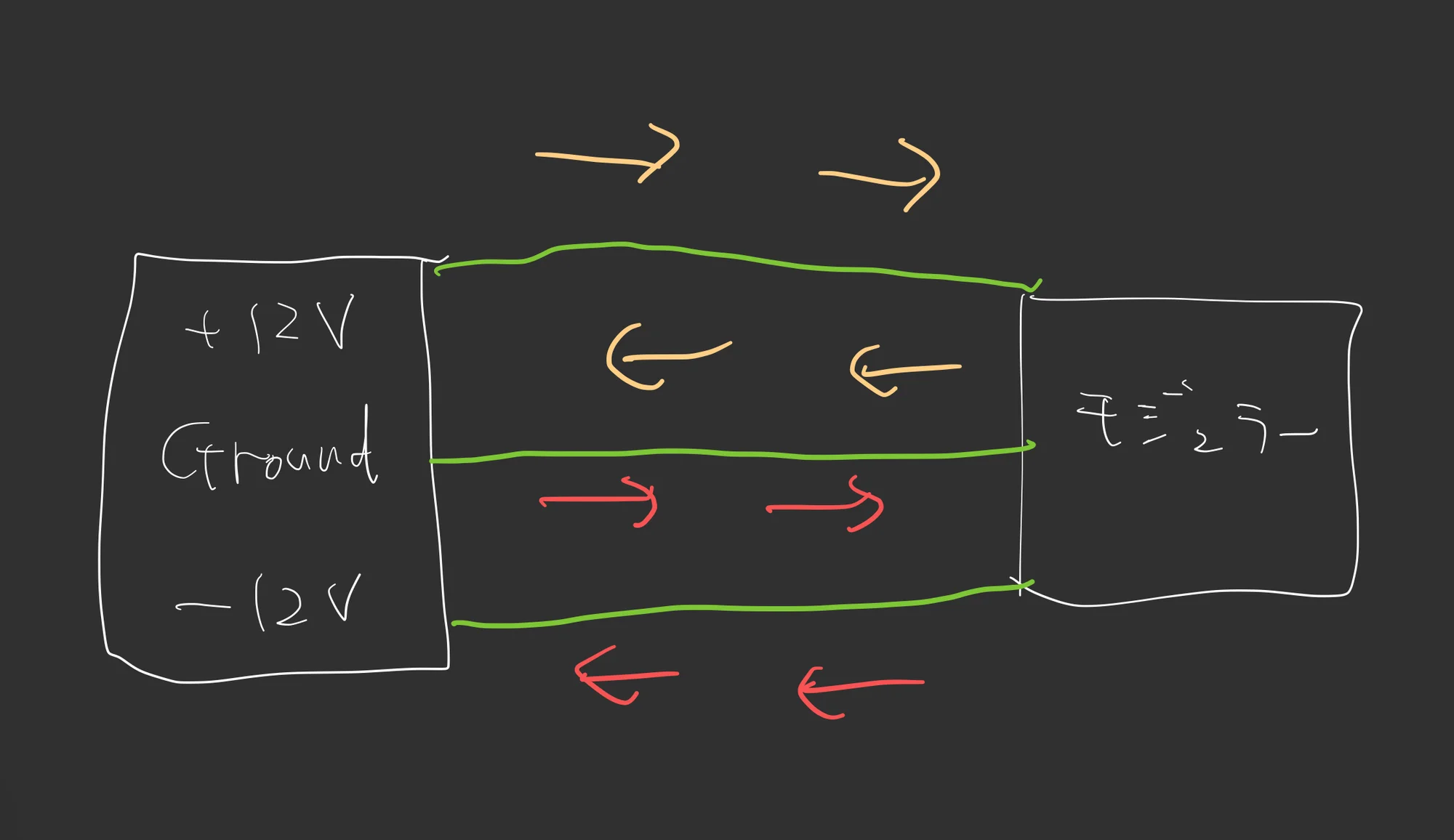
Using the water flow analogy again, it looks like this:
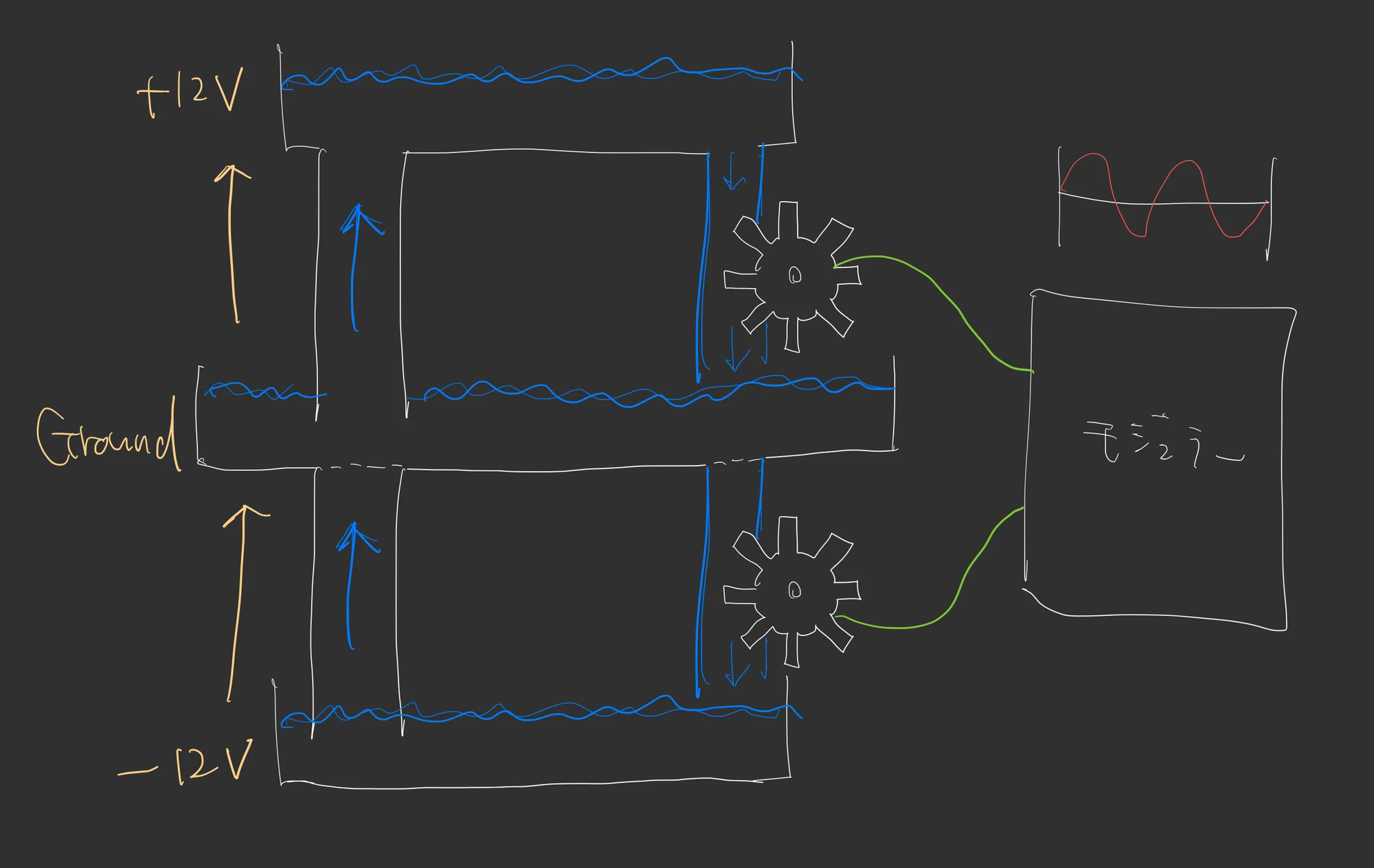
With actual water, it would seem like everything would pool at -12V, but imagine that water only flows downward from Ground when components demand power.
You might be thinking: “What is this -12V? It’s confusing!” The reason this negative voltage is needed is that some components used in modular synths require both positive and negative voltage.
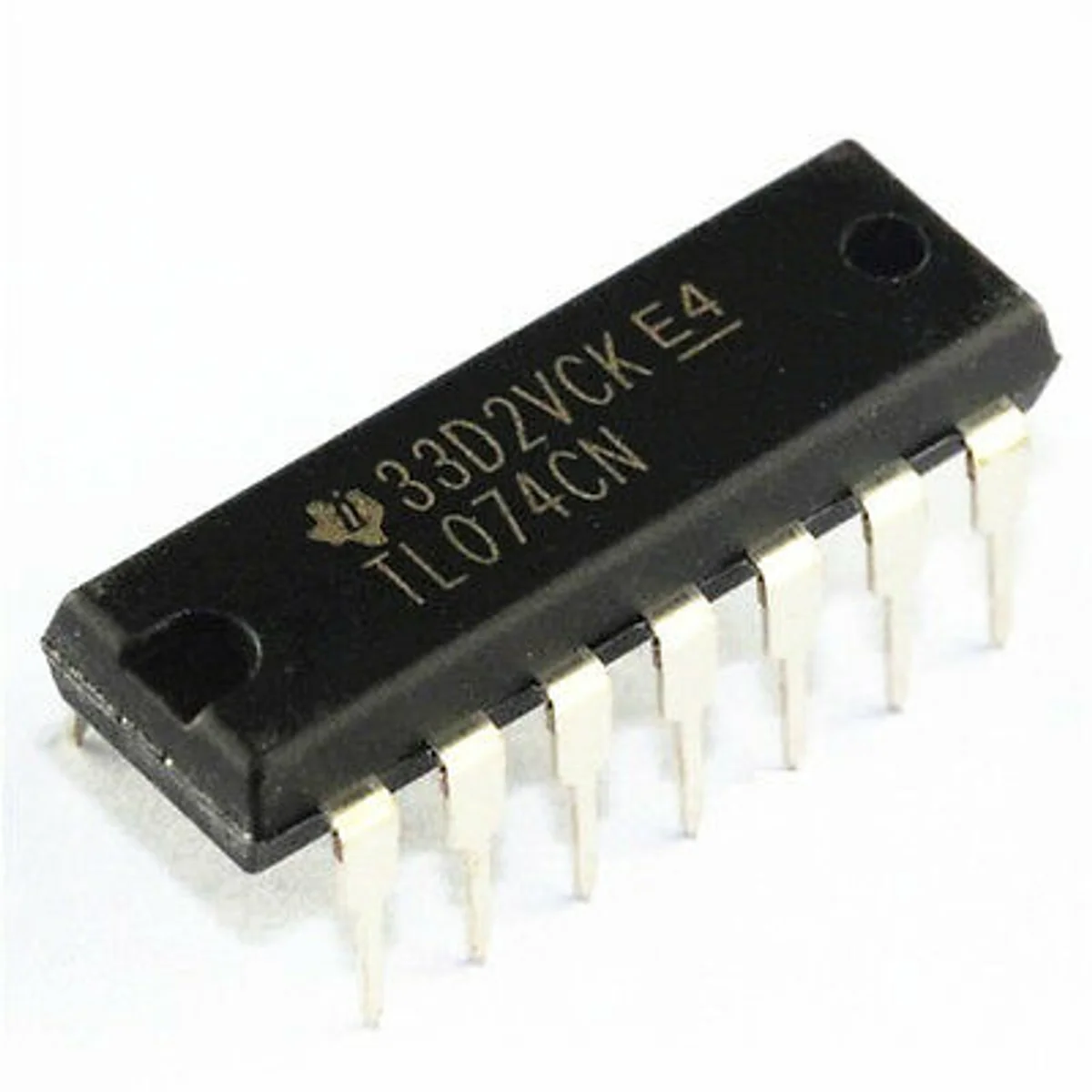
For example, there’s a component called an op-amp that amplifies input waveforms. It can amplify a waveform like a sine wave in both the positive and negative directions. This is used, for instance, when increasing volume. To amplify in the positive direction, you need positive voltage, but to amplify in the negative direction, you need negative voltage.
Also, oscillators that generate sine waves produce positive and negative voltages at regular intervals, so negative voltage is needed throughout modular synths. This is one of the confusing points compared to general electrical devices.
In short, modular synths use many components that require negative voltage, so in addition to +12V, you need to supply -12V as well. That’s just how it is.
Experimenting with Current Flow
While writing this article, I thought — +12V and -12V are hard to grasp. So I decided to experiment myself. The direction of current flow is essentially:
- +12V to Ground
- Ground to -12V
As I showed in the diagrams, this is how current flows. So I thought, if I put a light bulb or something in between, I could verify it, right? So I bought the following and tried it:
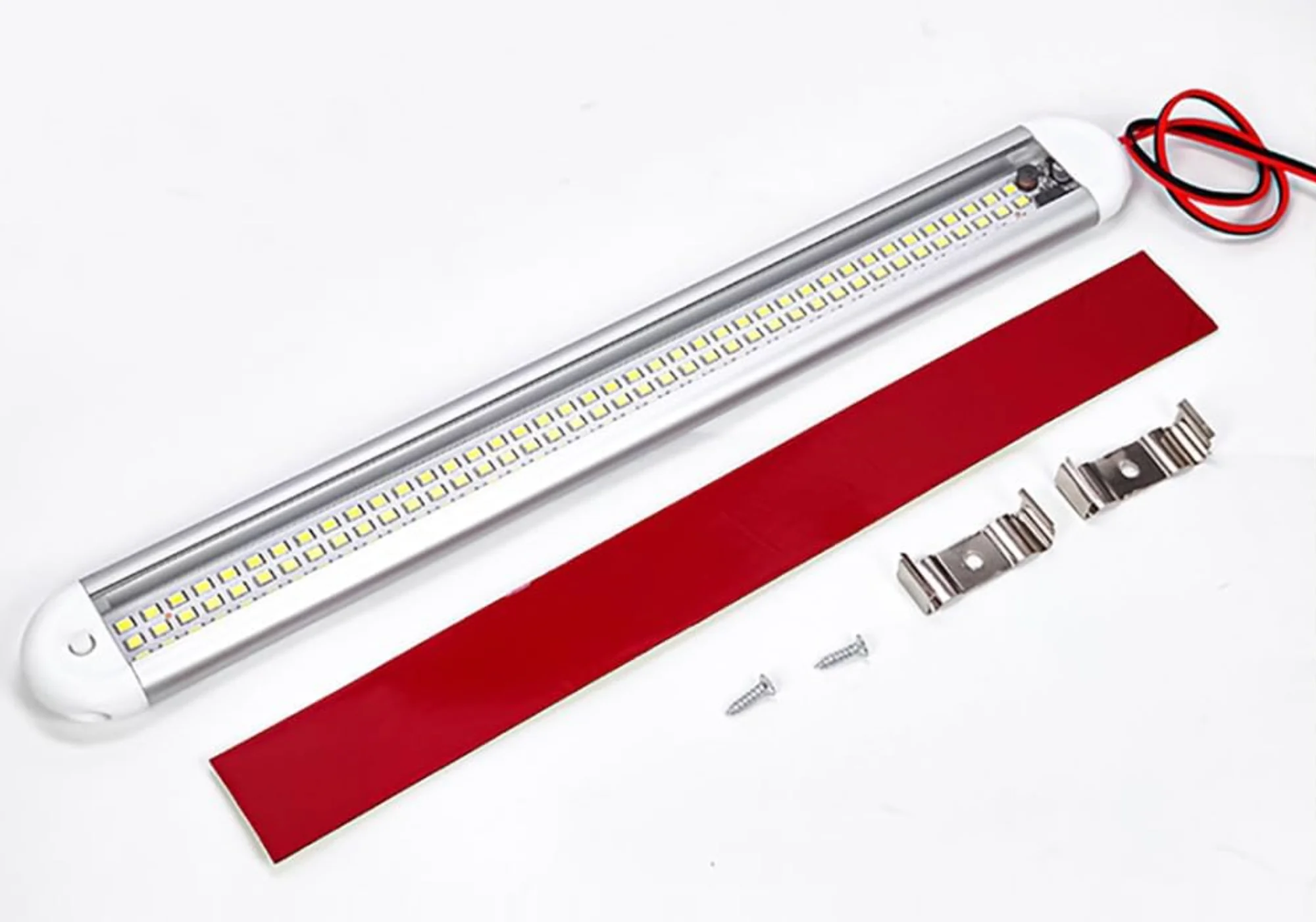
An LED room light. It apparently works from 12V to 85V. Perfect for testing with a modular synth power supply’s 12V.
However, LEDs differ from regular light bulbs. Light bulbs don’t have polarity, but LEDs have positive and negative terminals — they won’t work if oriented incorrectly. In the photo above, the red lead is the positive side and the black lead is the negative side. Considering the direction of current flow, they connect as shown in the following diagram:
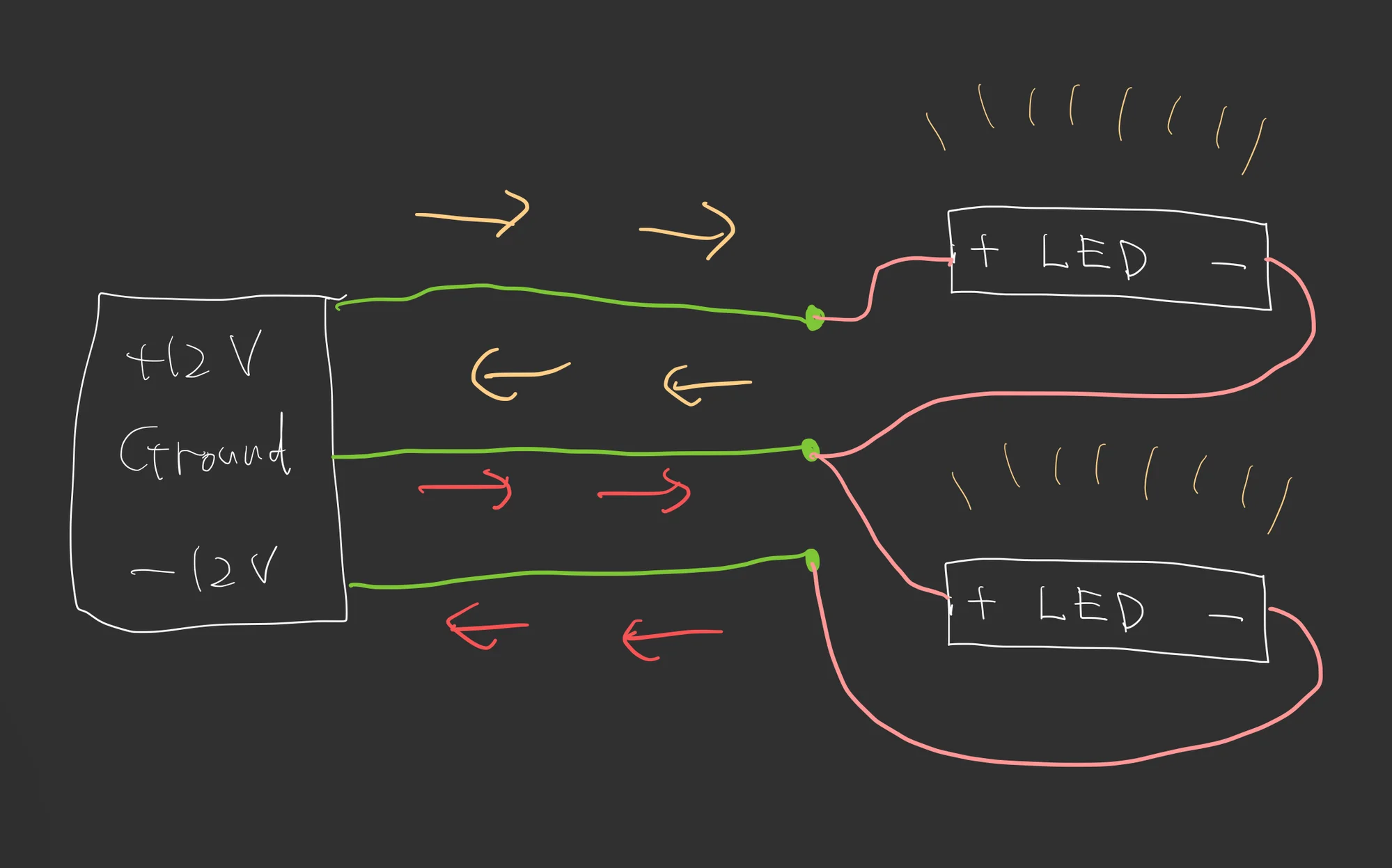
I connected a ribbon cable to my DIY power supply and plugged in cables according to this diagram. Like this:
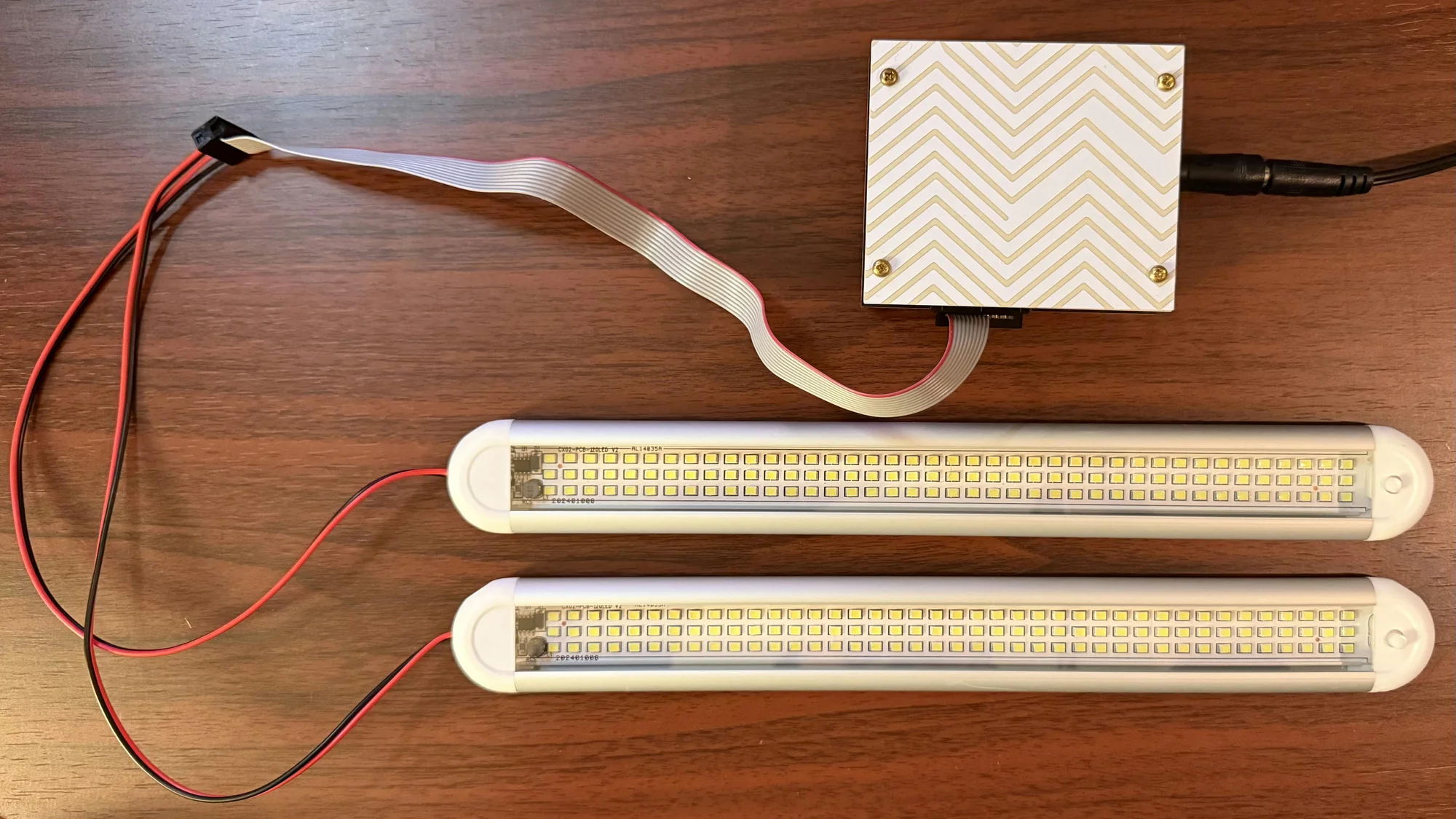
Then I turned on the power, and…
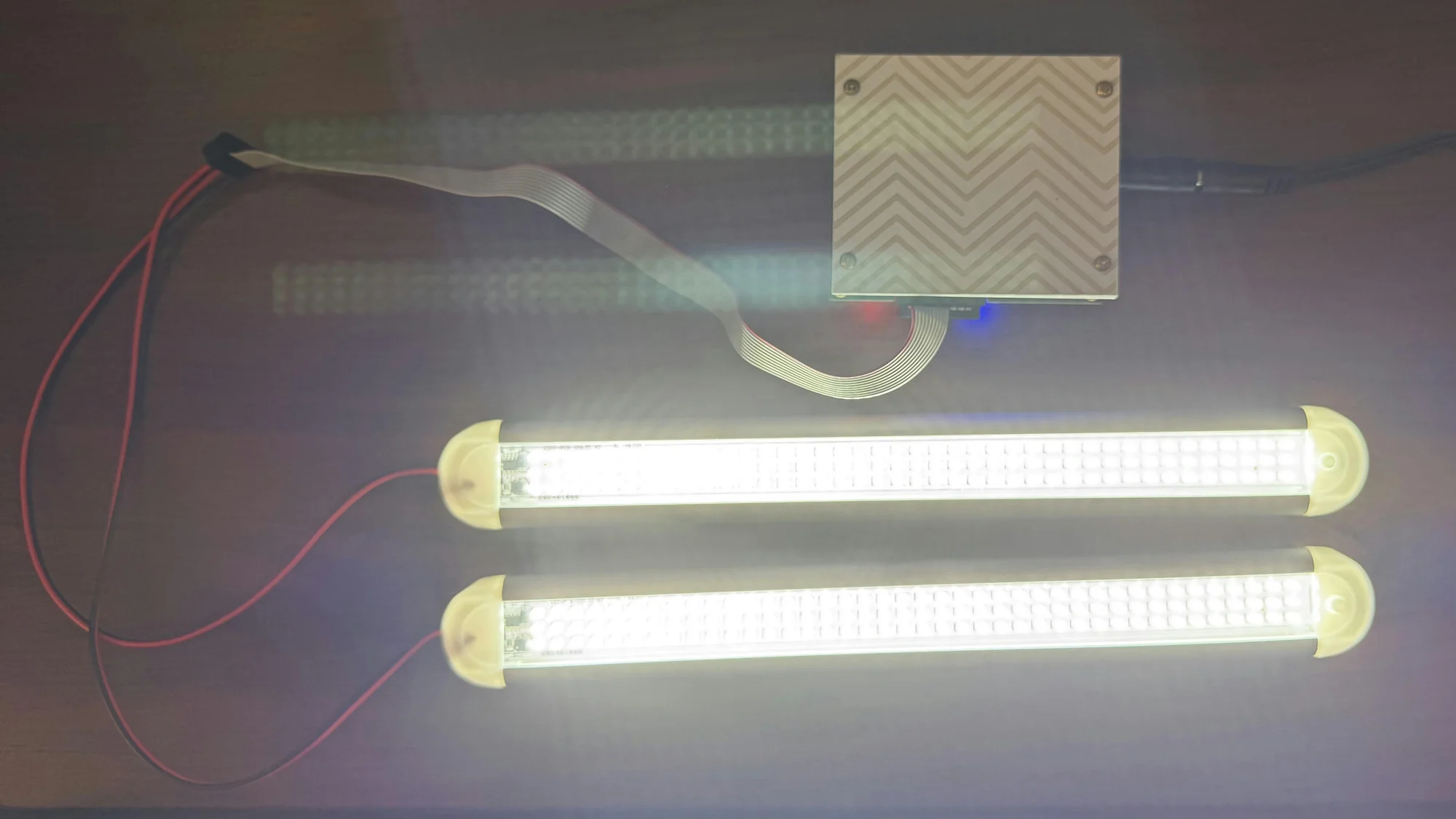
It lit up! And incredibly bright!
So that’s the story about how electricity flows from a modular synth power supply.
Wait, what about +5V? And what about the CV and Gate terminals? And all you did was light up a lamp?
This got longer than expected, so I’ll break it up into multiple installments. This is the first part — please check back for the continuation!
Also, if you spot any errors in my explanations, I’d really appreciate corrections!
Continuation published. See below: