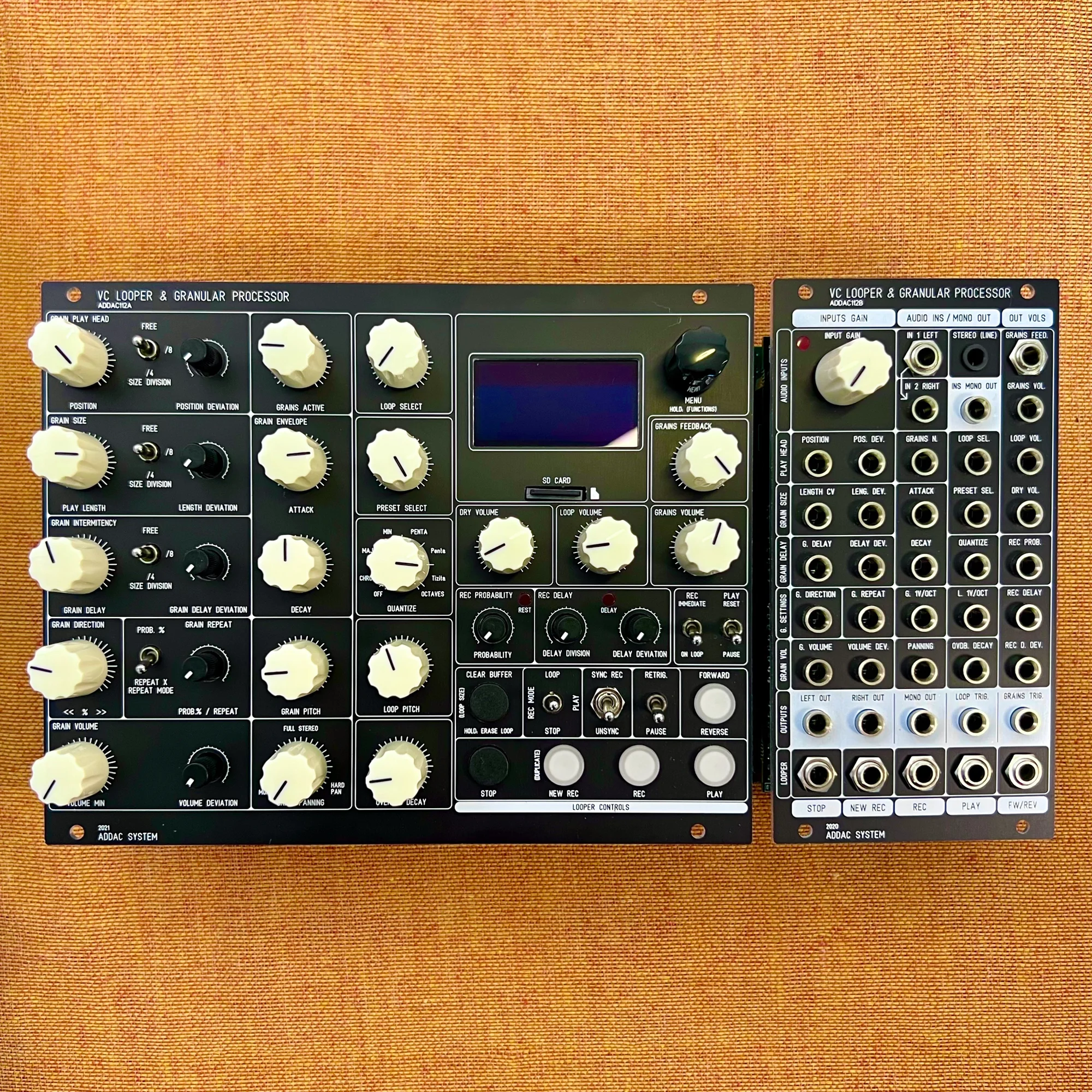
This is an introduction to the ADDAC System: ADDAC112 VC Looper & Granular Processor by ADDAC System, available at Takazudo Modular.
The ADDAC112 is a Looper and Granular Processor with numerous parameters controllable via CV. Built on a user-friendly Looper with a Quantize feature, this module is capable of diverse granular processing and was crafted as an instrument representing ADDAC System’s “soft” approach to granular processing.
This product is available for purchase below.
Takazudo Modularではマニュアル等の日本語訳付きを作成し、公開しています。以下よりご参照下さい。
- Product Photos
- What Are Loopers and Granular Processors?
- What is the ADDAC112?
- Reference Sessions
- Reference Videos
- Technical Specifications
- Included Accessories
- Manual
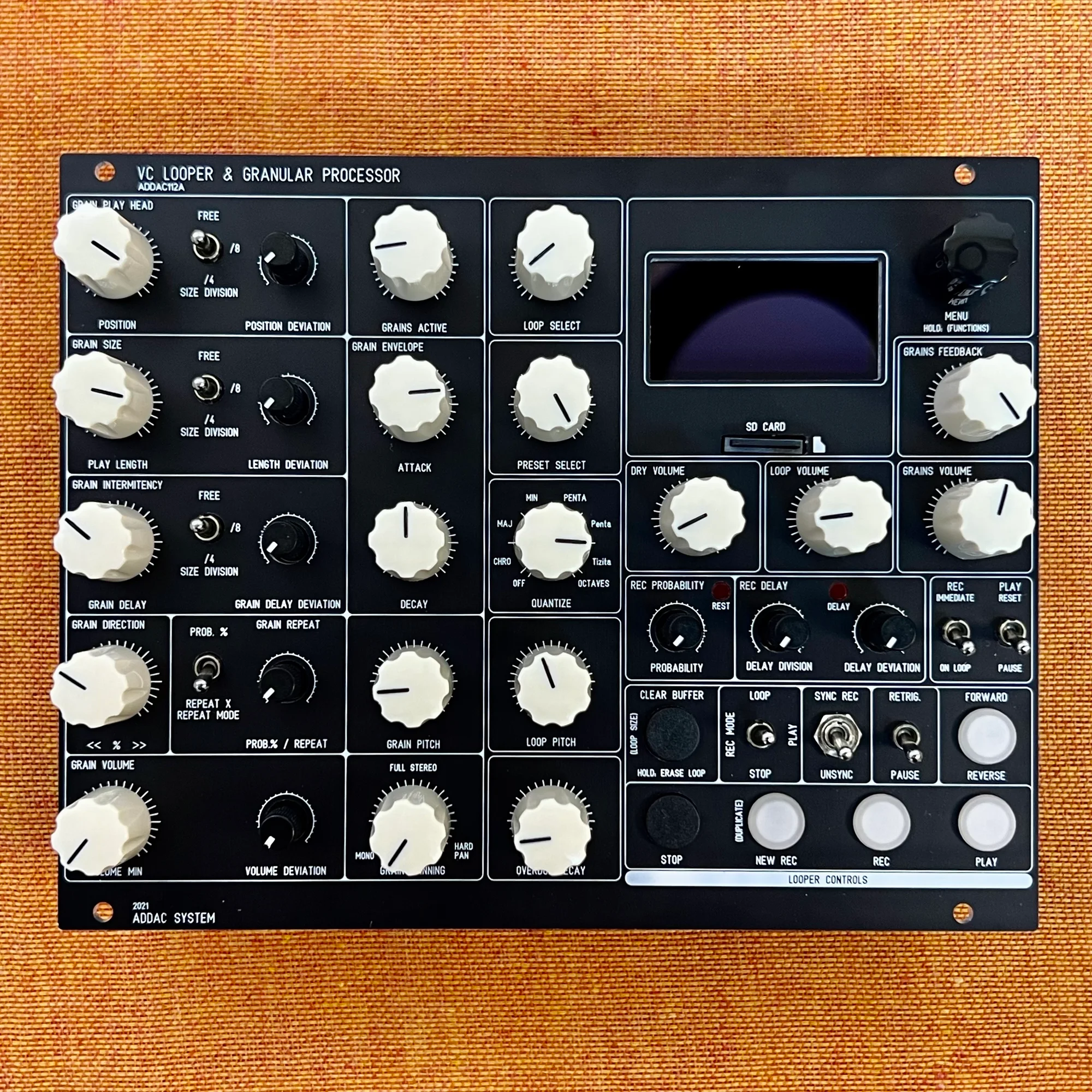
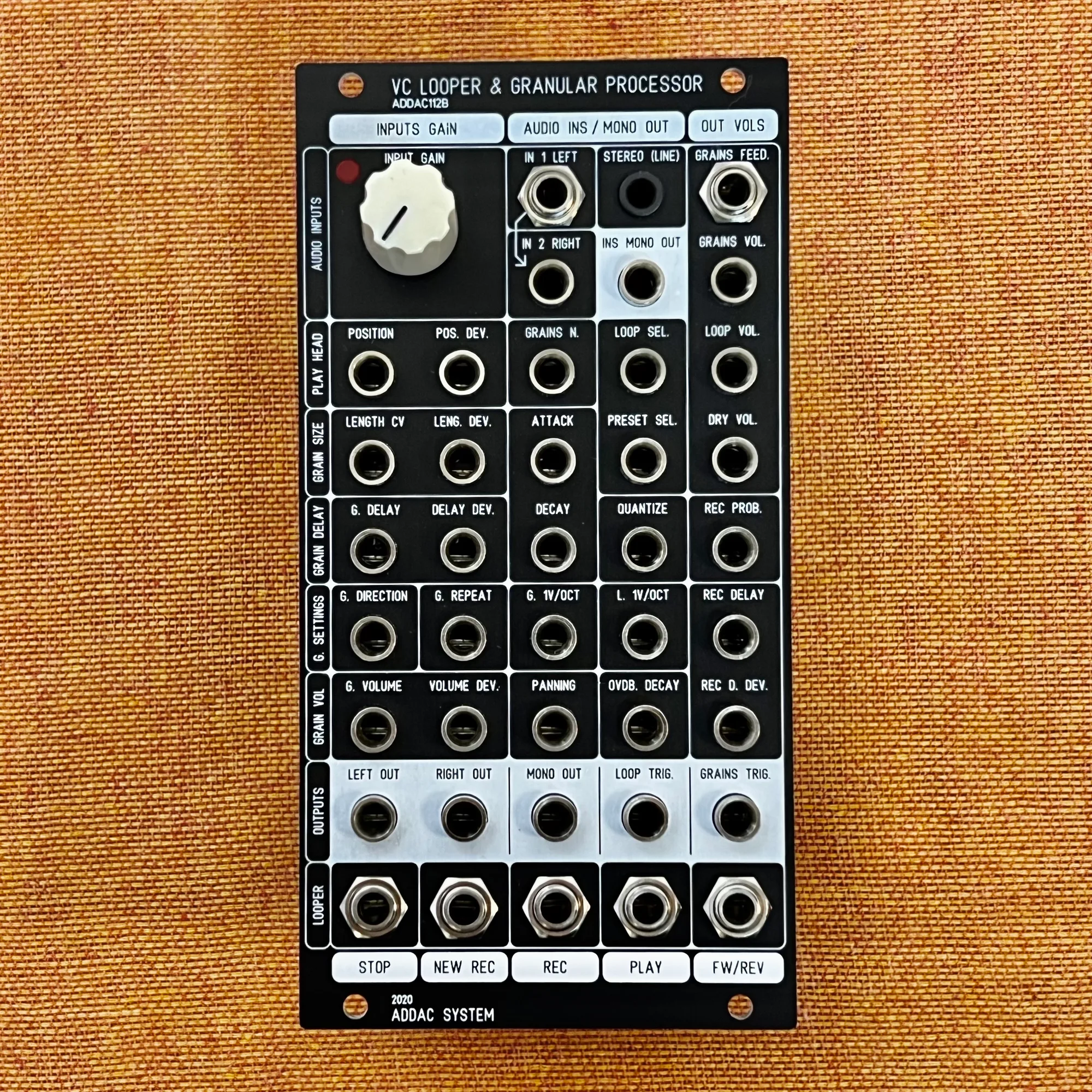
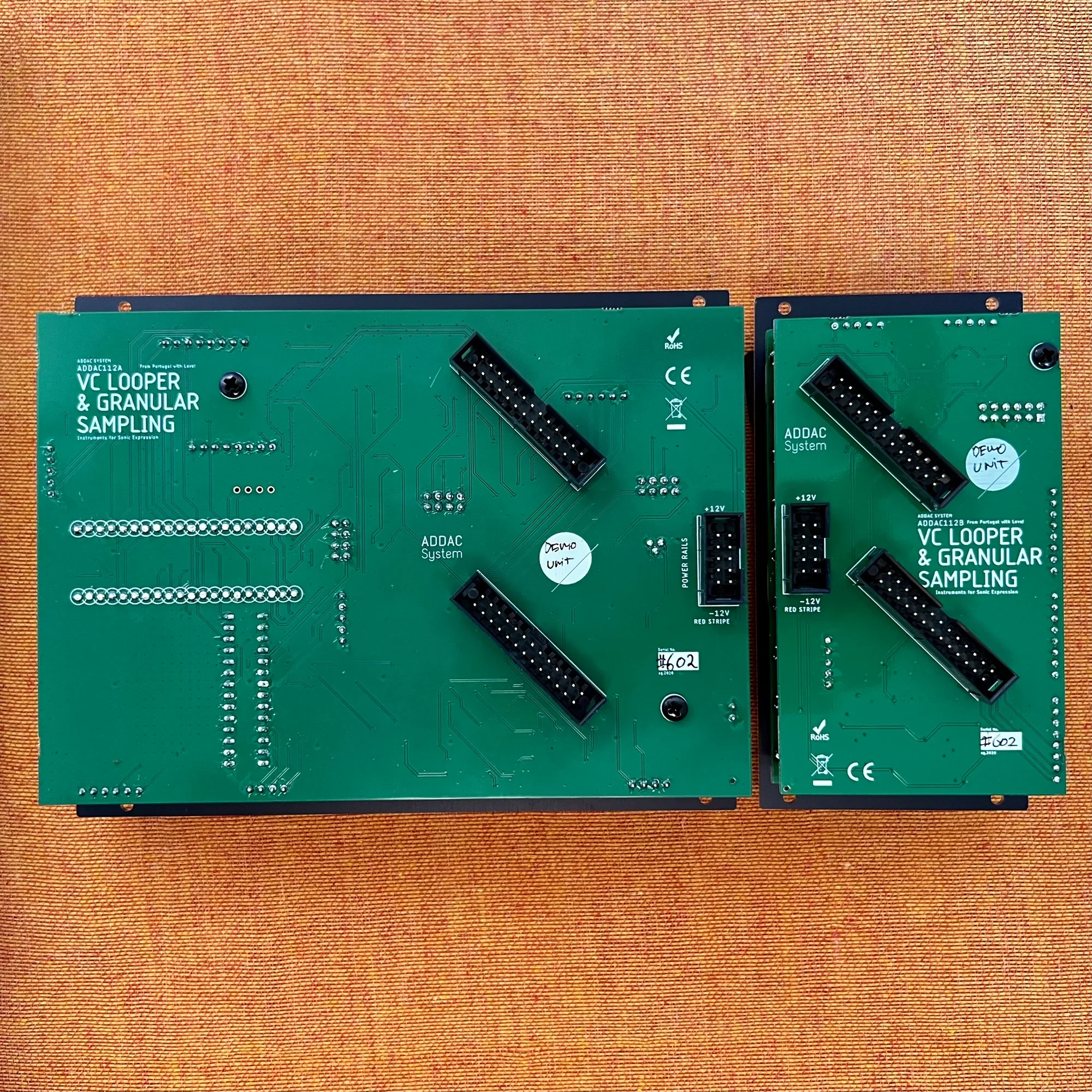
Product Photos
What Are Loopers and Granular Processors?
As the name suggests, this module is a Looper and Granular Processor. A Looper is a type of music equipment that records incoming audio and plays it back in a continuous loop, with features like changing the audio’s speed. The concept likely traces back to the approach of recording sound onto tape reels and looping the playback as a musical instrument.
The “Granular” in Granular Processor means something like “grain-like.” In this context, the grains are fragments of sound — Grains. A Granular Processor divides sound into tiny pieces, sometimes as small as a few milliseconds, breaking them down into Grains. Music equipment that layers multiple Grains, varies their volume, and processes and plays back sound through various other methods is called a Granular Processor.
Within the modular synthesizer world, modules exist that combine both of these functions. Loopers and Granular Processors aren’t strictly separated categories, and some modules incorporate both functions (since both are based on audio recording and playback).
Some well-known examples of modules with these capabilities include:
- Mutable Instruments: Clouds
- Make Noise: Morphagene
- Make Noise: Mimeophon
- Instruo: Lúbadh
- Instruo: arbhar
What is the ADDAC112?
Returning to the ADDAC112 — this module, which serves as both a Looper and a Granular Processor, can be understood as ADDAC System’s interpretation and realization of these two functions. When describing the ADDAC112, ADDAC System uses the phrase “soft” approach to Granular Processing.
What makes it “soft”? This page aims to convey at least some of that softness.
Looper Section and Granular Processor Section
First, trying to grasp all of the ADDAC112’s functionality at once is quite difficult. Based on my (Takazudo’s) experience using the ADDAC112, understanding the module becomes easier when you first recognize that internally it consists of two parts:
- Looper Section
- Granular Processor Section
The Granular Processor section is built on top of the Looper section.
The following shows the main part of this module:
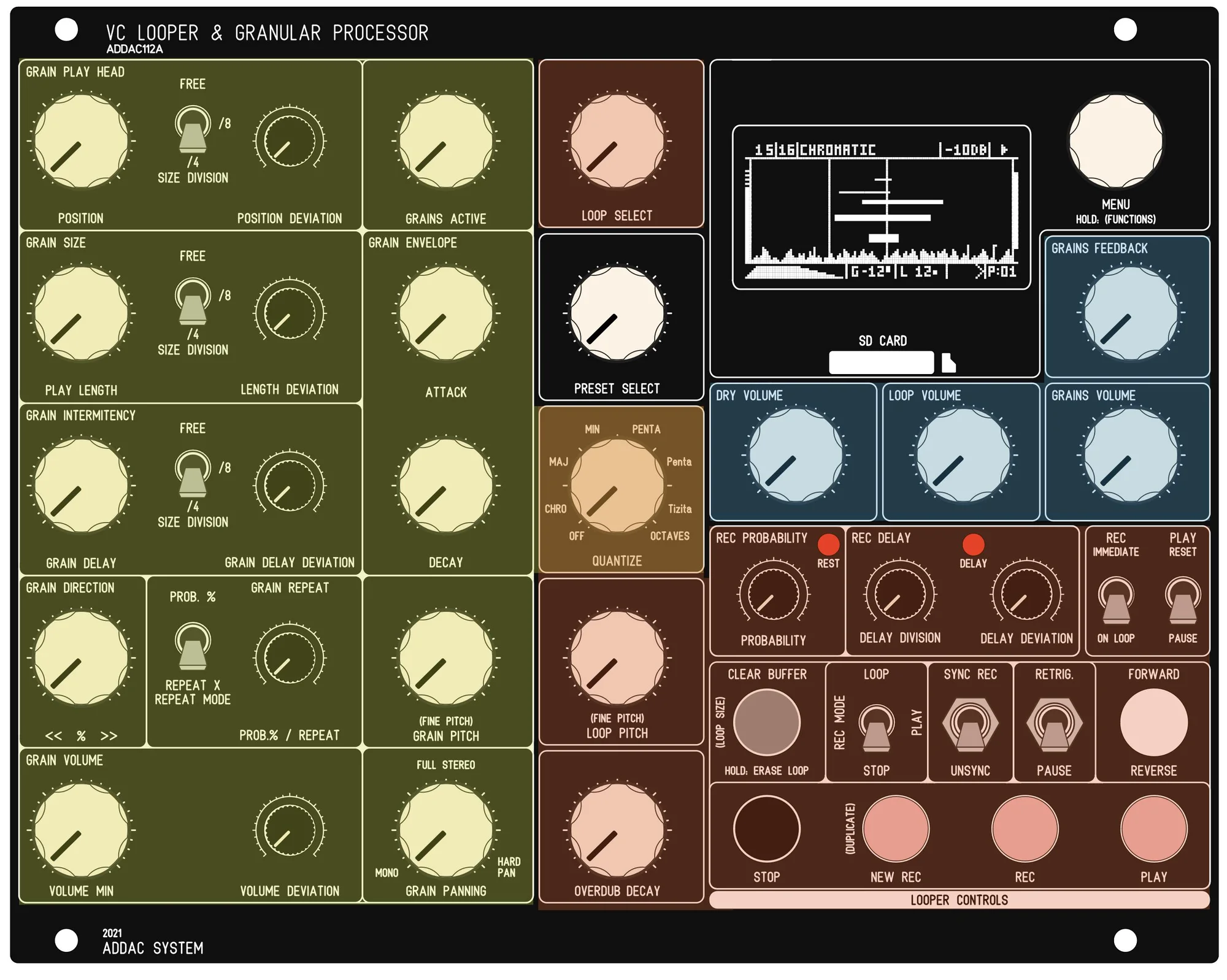
The color-coded areas above correspond to the following, each processing different targets:
- Red: Looper Section
- Yellow: Granular Processor Section
- Blue: Mixer Section
This module has many knobs, but I recommend starting by using only the Looper section with the GRAIN VOLUME and GRAIN FEEDBACK set to zero in the Mixer section, focusing on learning the Looper’s functionality first.
Looper Section
The best approach with this ADDAC112 is to connect the output from another sound-producing module and experiment.

Connect the output from an oscillator or other source to AUDIO INS and press the NEW REC button. This starts recording the Looper. After some time, press STOP. This completes the recording. Then press PLAY and the audio recorded in the buffer plays back on repeat. This is the fundamental Looper functionality.
But of course, there’s much more. Turn the LOOP PITCH knob to change the pitch of the recorded audio. This pitch change can be constrained to notes in a chosen scale using the QUANTIZE knob. On top of that, pressing REC allows overdub recording on top of the existing buffer content. (Imagine recording over a tape multiple times.)
The OVERDUB DECAY knob adjusts the balance between the existing buffer audio and newly recorded audio. Create a buffer of appropriate length, then leave it in REC mode — the initial buffer repeats while recording continuously overwrites it. This creates a manually crafted delay. If the BPM is fixed, matching the buffer length to the beat using a clock creates a clocked delay.
Even with just the Looper functionality, a wide variety of sound creation is possible.
Granular Processor Section
While using the Looper, now raise the GRAIN VOLUME that you initially set to zero and start mixing in the Granular Processor’s sound.

GRAINS ACTIVE is a knob that controls the number of active grains. Turning this knob to the right produces chopped-up sound fragments. The display also shows the positions of grains on the buffer.

The ADDAC112’s Granular Processor uses the audio in the buffer as source material to create Grains. Which part to extract from? How long should they be? Should they be reversed? What envelope? Should they repeat? What’s the L/R balance? Most of the remaining knobs are for configuring these various granular-related settings. On the display, the jagged line at the bottom represents the audio recorded in the buffer, and the rectangles shown above represent Grains.
Which knob produces what sound when turned in which direction — this is hard to imagine until you’ve actually used the ADDAC112. But that’s not knowledge required as a prerequisite for engaging with this instrument. I (Takazudo) feel that this instrument is designed to let users explore expression through Granular Processing on their own terms.
The “Soft” Approach
Because it’s designed with the Granular Processor sitting on top of the Looper, you can start by using it simply as a delay or sample playback module, then layer Grains on top. ADDAC System’s “soft” approach may refer to this design that can be used both lightly and intensively.
In other words, while it may look incredibly complex at first glance, it’s fundamentally a recording and playback device with the ability to add various flavoring — and that flavoring part runs very deep. Furthermore, since most parameters can be CV controlled, combining it with a sequencer expands the expressive possibilities even further.
Personally, I’ve tried several granular modules before, and honestly, I often found it hard to know how to use them effectively. So the ADDAC112 was quite an intriguing module for me.
The ADDAC112 has features like Banks and Presets for managing settings and audio material, essentially functioning as a self-contained operating system. Understanding the full range of features will take some time, but for those who want to seriously explore a Looper & Granular Processor, this is a highly recommended module. (It also took me — Takazudo — quite a while to get to the point of writing this description…)
Reference Sessions
I tried various things with the ADDAC112 to understand it better, so here are two sessions using the ADDAC112.
Using It as a Delay
The first session uses Sycamore and ADDAC701.REV2 VCO.
In this session, I’m basically just playing synth sounds and feeding them into the ADDAC112, using it as a delay. I first created a buffer about 2 bars long synced to the clock, then left it in REC mode, which functions as the delay described earlier. I occasionally mixed in some Grains as well.
With QUANTIZE turned fully up to OCTAVES, the Looper’s playback pitches only to octave intervals. Normally, changing the pitch like this would cause the loop playback to go out of time, like fast-forwarding tape. But by selecting Pitch Shift as the Looper’s pitch change option, the audio in the buffer is pitch-shifted while maintaining tempo, allowing octave-up or octave-down variations. This lets you create an effect of mixing the original synth sound with its octave variants, making the ADDAC112 feel like an elegant delay in this session.
Using It with CV Control
The second session combines it with another Looper module, the Instruo: Lúbadh.
In this session, Lúbadh continuously plays loop material, the ADDAC112’s Looper records it, and then a CV sequence from OXI ONE continuously changes the ADDAC112’s pitch while I adjust various parameters with the knobs.
This session is essentially a recording of me exploring the ADDAC112’s features. Initially, my impression of the ADDAC112 was that it seemed impressive but loaded with complex features. But through exploring and writing this description, I reached a point where I felt I understood what kind of instrument it is.
Creating Textural Sounds
I’ve continued using the ADDAC112 here and there to better understand it. Below, I’m recording The Mystic sounds into the ADDAC112 in real time, changing the looper’s pitch and mixing in granular processing.
Below, I captured chord sounds made with the iOS app AudioThing Noises and processed them in a similar way. In this session, I used the Clocked mode, which syncs the looper’s recording and playback timing to a gate clock — a convenient feature for beat-based music.
While I’m still using it in an exploratory way, the module feels best understood as having a looper and granular processor coexisting in a single module, each finely controllable. It’s like mixing three parts within this module: the original sound, the looper, and the granular processor.
Reference Videos
There are many reference videos for this module on YouTube. This video is a good starting point for learning the basic behavior.
Here are some additional helpful videos for those interested.
Technical Specifications
- Width: 32HP + 13HP
- Depth: 45mm
- Power consumption: 240mA +12V / 70mA -12V
Included Accessories
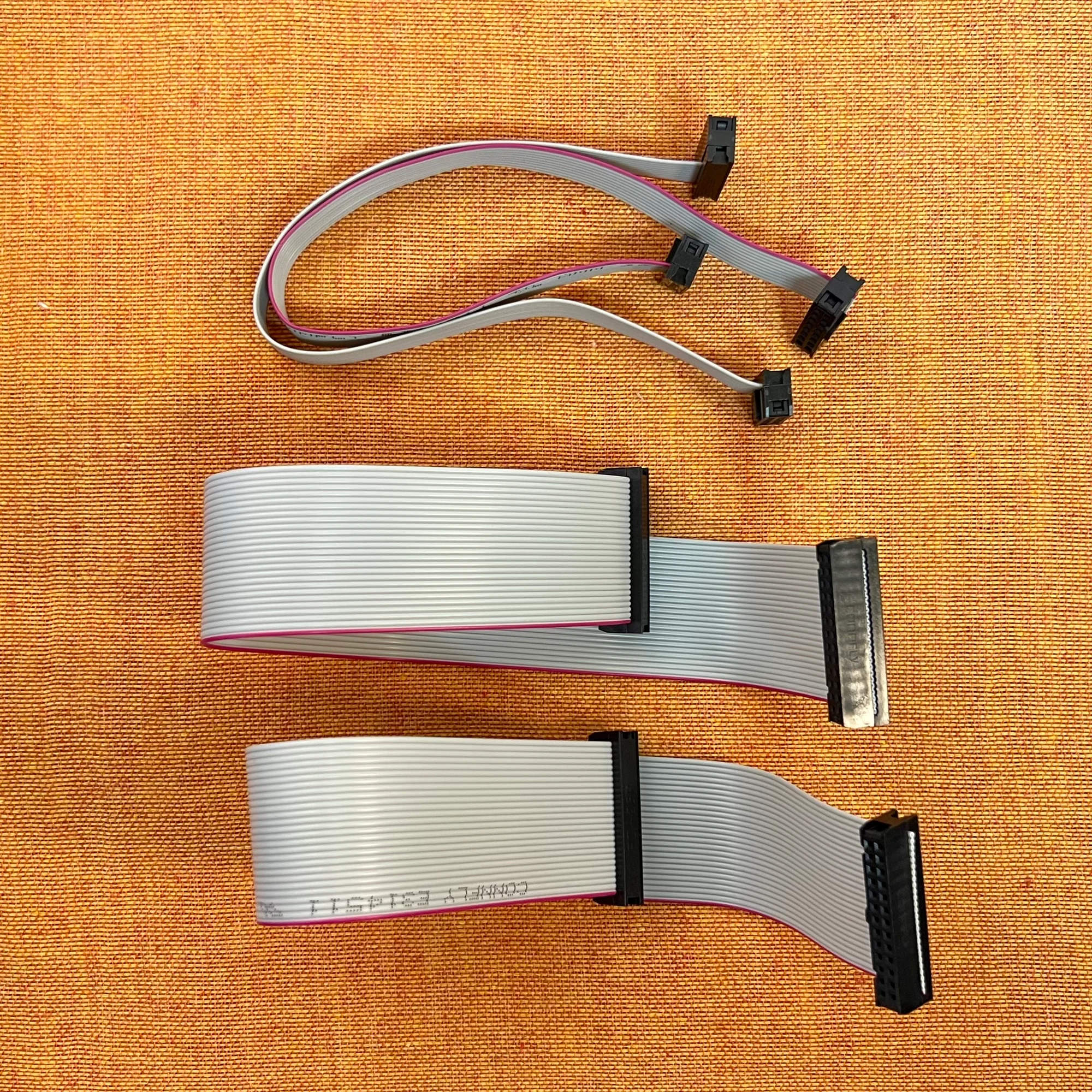
- 4 power ribbon cables (2 thin for power / 2 thick for inter-module connection)
- Screws
Manual
The manual is available on the official website below. This module would be quite difficult to understand without the manual, so we recommend reading through it as you use the module. It is very thoroughly written.
ADDAC Systemについて
ADDAC Systemはポルトガルのモジュラーシンセメーカーです。
アナログ良さを生かした、ベーシックな機能をしっかり形にしているモジュールラインナップを基本としつつも、CVをMIDIに柔軟にコンバートしたり、高度にコントロール可能なグラニュラープロセッサー等、デジタル技術もうまく調和させた独創的なモジュールも数多くリリースしています。
オマケ: 電氣美術研究會モジュラー小物セット付き

モジュラーシンセをもっと多くの方に触って欲しいという願いの元、電氣美術研究會さまにご協力頂き、モジュラー小物セットを本商品にバンドルさせて販売させていただいております。
パッチケーブルや電源ケーブル、ドレスナットのサンプルセット、モノラルスプリッターなど、内容は時期に応じて変化します。商品に同梱しますので是非お試し下さい!
That concludes the introduction to the ADDAC112 VC Looper & Granular Processor.
Takazudo Modularではマニュアル等の日本語訳付きを作成し、公開しています。以下よりご参照下さい。
We hope you found this helpful.