This is an introduction to the ADDAC210 Open Heart Surgery by ADDAC System, available at Takazudo Modular.
The ADDAC210 is a development platform for Eurorack electronics enthusiasts. It’s a module that comes complete with a breadboard, potentiometers, switches, jacks, and more. All onboard components are accessible from the pin headers at the top. An Arduino shield can be mounted on the back, providing powerful support for Eurorack module development.
This product is available for purchase below.
Takazudo Modularではマニュアル等の日本語訳付きを作成し、公開しています。以下よりご参照下さい。
- Product Photos
- ADDAC210 Overview
- Important Note Before Purchase
- Safety Notice
- Partial Feature Introduction of the ADDAC210
- Stand
- Technical Specifications
- Included Accessories
- Manual
Product Photos
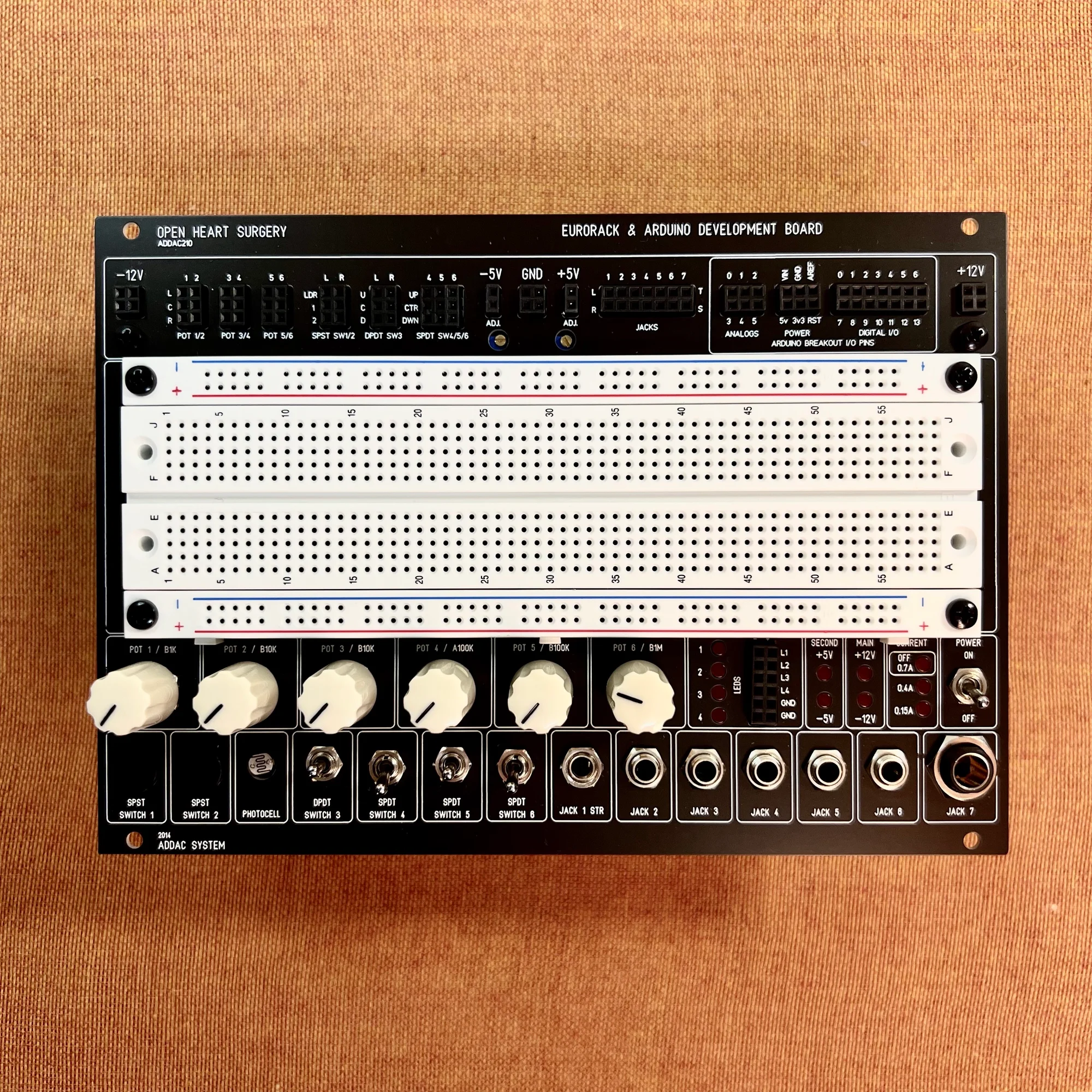
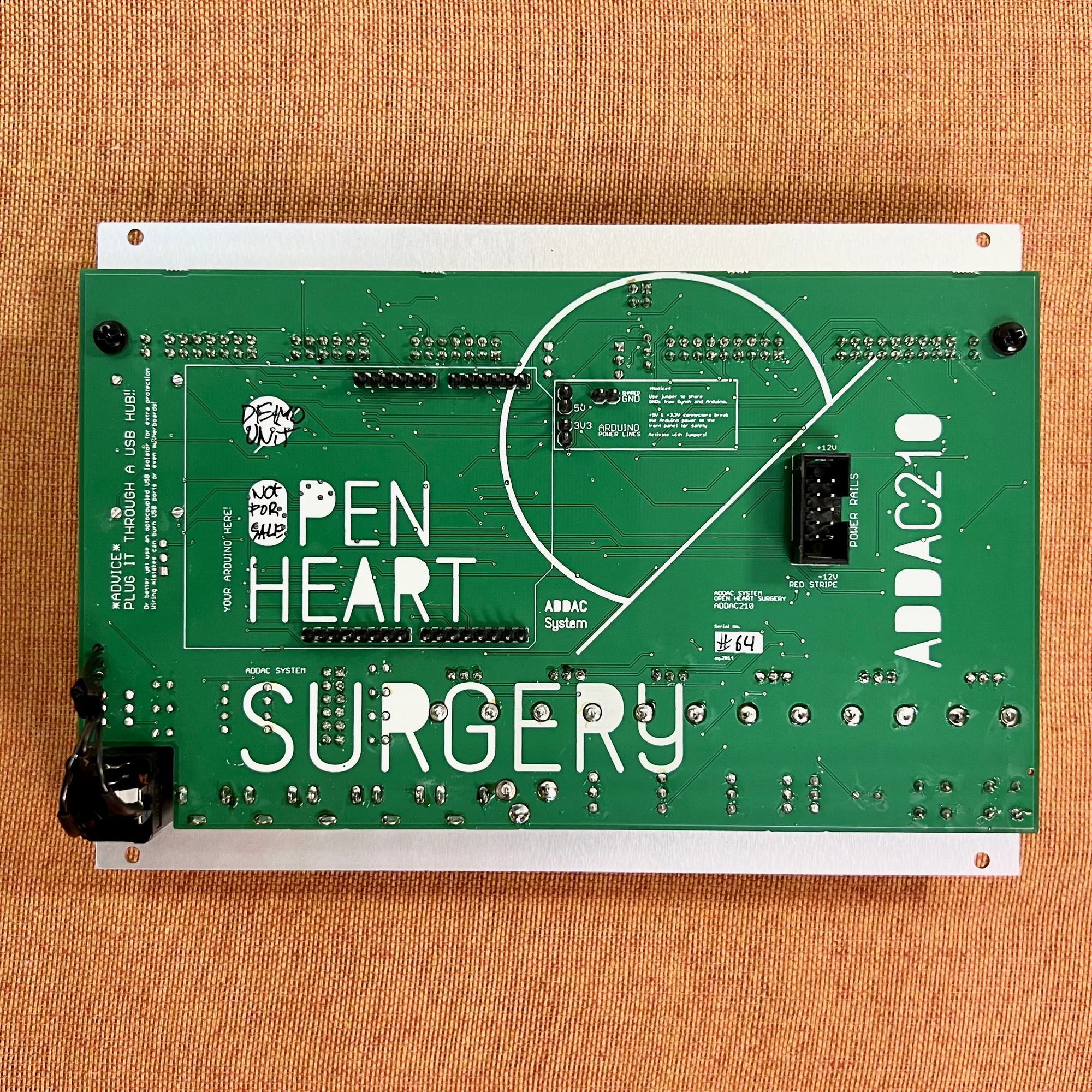
ADDAC210 Overview
This module was created to support users in their development work. In modular synthesizer development, the general process involves soldering various components to a designed PCB to complete a module. Before that board design phase, many developers do prototyping on a breadboard to test connections between components and verify operation.
Using a breadboard, you can easily connect components with jumper pins instead of soldering, allowing you to verify combinations of parts while they’re actually running before committing to board design. During such prototyping, potentiometers, jacks, LEDs, and other components that are nearly always used in modular synths also need to be incorporated. The ADDAC210 is a module that bundles all these components together with a breadboard and power supply.
The lower section of the module has potentiometers with different resistance values, jacks, LEDs, and switches, all connected to pin headers in the upper section. The back side can accommodate an Arduino shield, which is similarly connected to the front-side pin headers at the top.
You can mount this module in a modular synth case, or use the included stand to work with it separately.
This is a product we’d recommend to those who want to learn about modular synth and Arduino technology, or to those who are seriously developing modular synth modules, even if you’re just curious about the fundamentals rather than full-scale development.
Important Note Before Purchase
As described above, this product is not a modular synthesizer module for playing music — it’s a platform for developing modular synthesizer modules, and its use requires knowledge of electronic circuits. Please keep this in mind when considering a purchase.
Safety Notice
If a user accidentally creates a short circuit during development, this product could potentially damage the power supply connected to the ADDAC210 and other modules in the same case. This warning is stated on the first page of the manual, and since it’s critically important when using this product, we include the translation below. Please read and understand the contents before use.
Disclaimer
We are not liable for any damage that may occur during use of this module, including but not limited to damage to power supplies, other modules, personal computers, or the module itself, whether direct, special, incidental, or consequential. Use at your own risk!
Safety Precautions
There are several things to be aware of when using this module. We’ll explain briefly here, but essentially, if you don’t know what you’re doing, you’ll run into trouble. However, even when you think you know what you’re doing, things can still go wrong.
In other words, when something goes wrong, the best-case scenario is that the circuit fails for some reason and simply doesn’t work. The worst-case scenario is that the circuit fails, doesn’t work, and a “short circuit” occurs, causing a high load to pass through the module and draw high current from the connected power supply unit (PSU). Not every mistake causes a short, but this is an example of the worst case.
When a short occurs, the load passes through components in the circuit and ultimately consumes power up to the PSU’s limits. Results may vary depending on the PSU.
Our (ADDAC System’s) PSUs are high-quality switching PSUs with short-circuit and overcurrent protection, so they simply shut down until the short is removed. On the other hand, if you’re using a toroidal PSU, the operating voltage will drop and it will try to supply as much current as physically possible. This can adversely affect other modules connected to the same PSU and the PSU itself.
So how do you stay safe at all times? Simple: “Don’t make mistakes!” Easy, right? From experience, the most learning happens when something gets burned, broken, or starts smoking. Most of the time, it’s because you weren’t paying enough attention, so always stay alert and think ahead to prevent “disasters.”
If you’re tackling electronics for the first time, always pay attention and keep your hand near the off switch! When making new circuit connections or powering on, watch the status LEDs closely!
Pay attention to the temperature of boards and components. The first sign of bad circuit design is heat. If something is getting hot, it will probably burn soon. Heighten your sense of smell — usually when something smells bad, it’s already too late. If you see smoke, that component is already done.
If you’re learning the Arduino platform on your own or only working on the Arduino side, disconnect the Open Heart from the modular system. You can work safely with USB power and avoid other mistakes.
Above content quoted from Manual P.3
Partial Feature Introduction of the ADDAC210
Here’s a brief introduction of what the ADDAC210 can do, with some images from the manual.
Potentiometers
As mentioned, the lower section has many switches and knobs, all connected to the pin header groups at the top of the module. For example, the pins labeled POT 1/2, POT 3/4, POT 5/6 in the upper left are connected to the six potentiometers at the bottom. When you want to incorporate these potentiometers into your circuit, you connect jumpers to these pin groups.
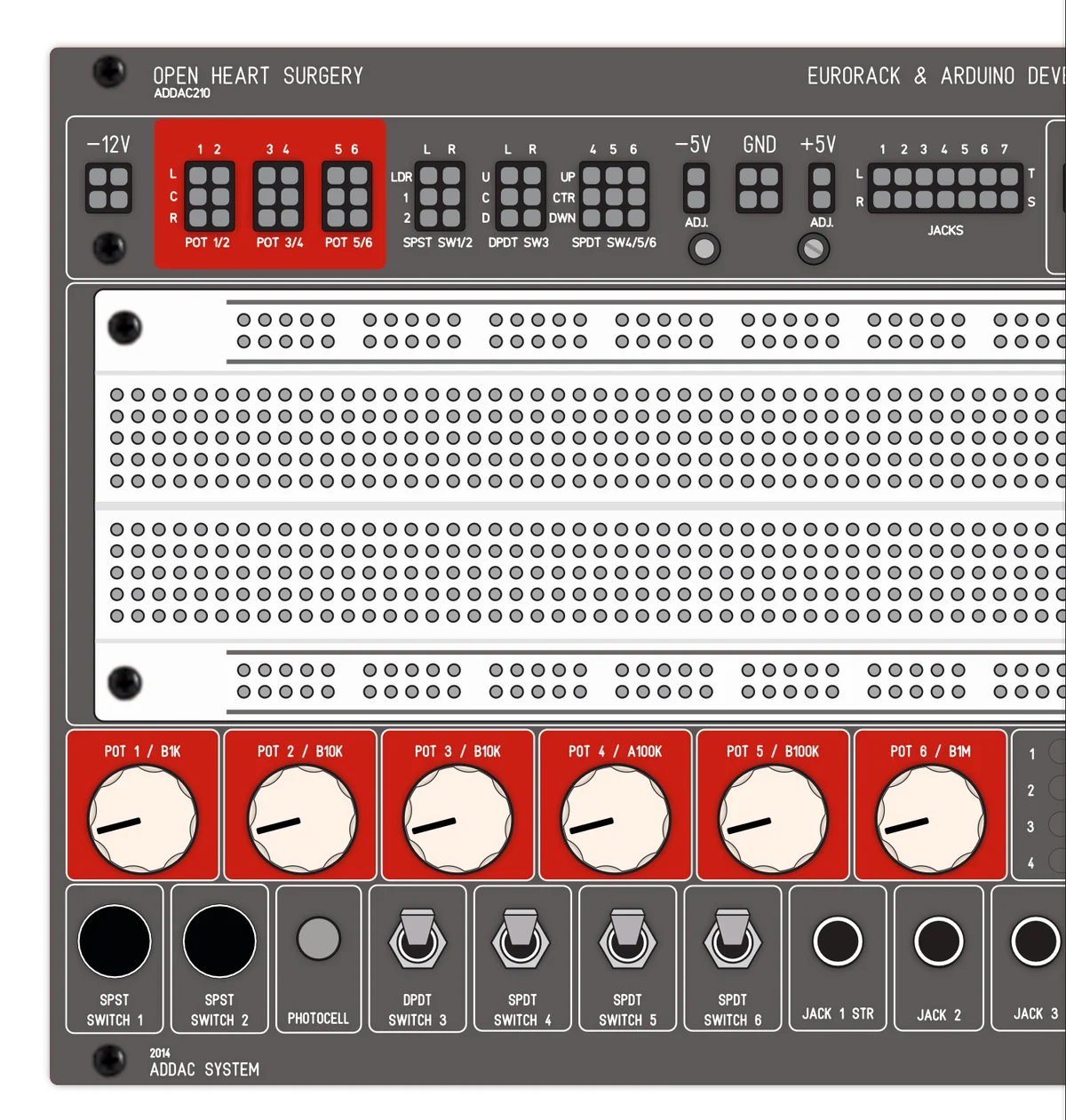
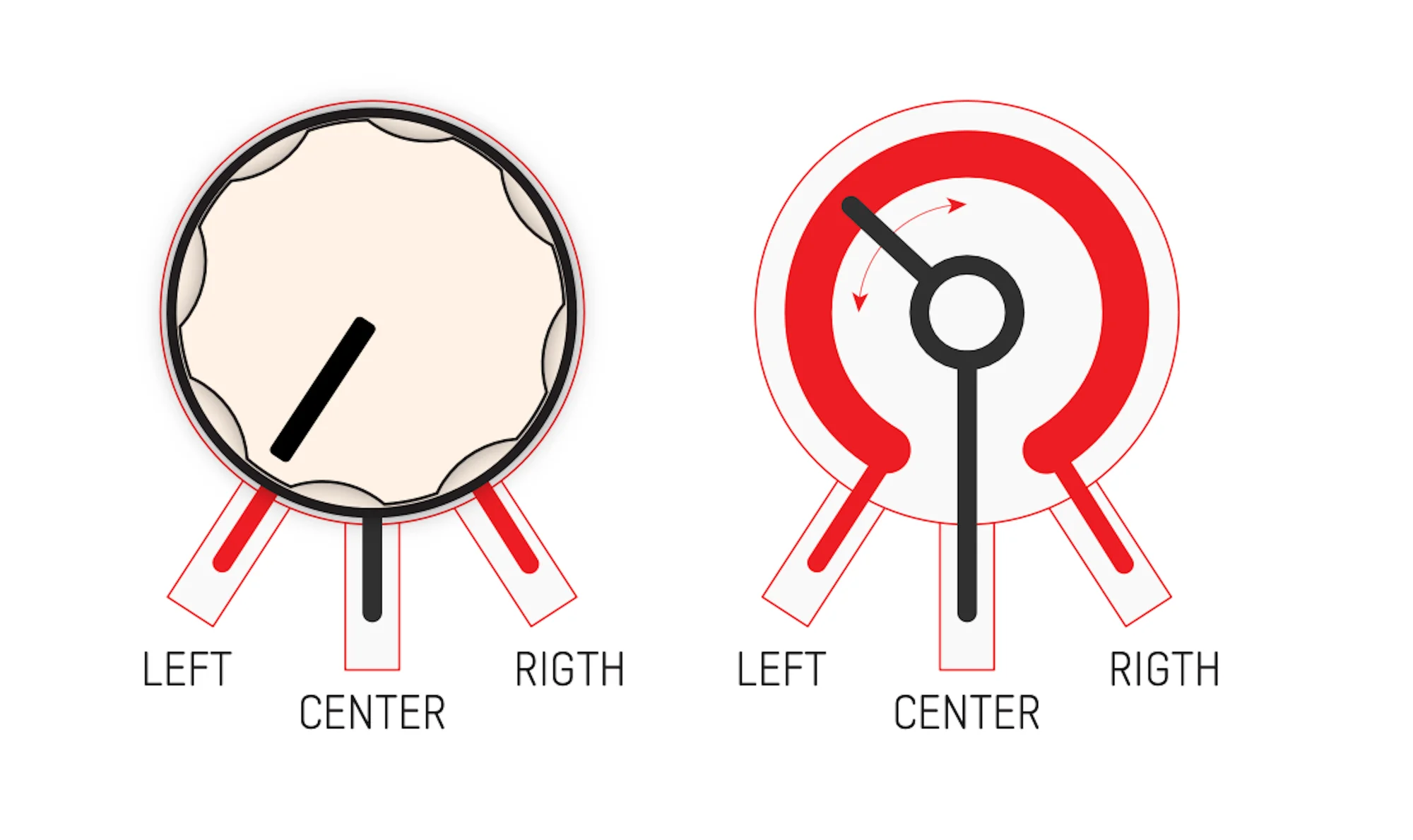

These potentiometers each have different resistance values, making them convenient for circuit design:
- 1: B1K
- 2: B10K (logarithmic)
- 3: B10K (linear)
- 4: A100K
- 5: B100K
- 6: 1M
Switches & Photocell
Next to the potentiometer pins, SPST, DPDT, and SPDT are connected to the various switches and photocell.


Like the potentiometers, different types of switches are provided:
- 1 & 2: SPST, Off - On
- 3: DPDT, On - On
- 4 to 6: SPDT, On - Off - On
Jacks
The jacks are similarly connected to the JACKS labeled pin groups at the top. Only the leftmost JACK 1 is stereo; the rest are mono jacks.


Arduino Support
The back side has pins ready for Arduino mounting. As described in the previous sections, these pins are connected to the pin headers on the front side, allowing you to mount an Arduino shield.
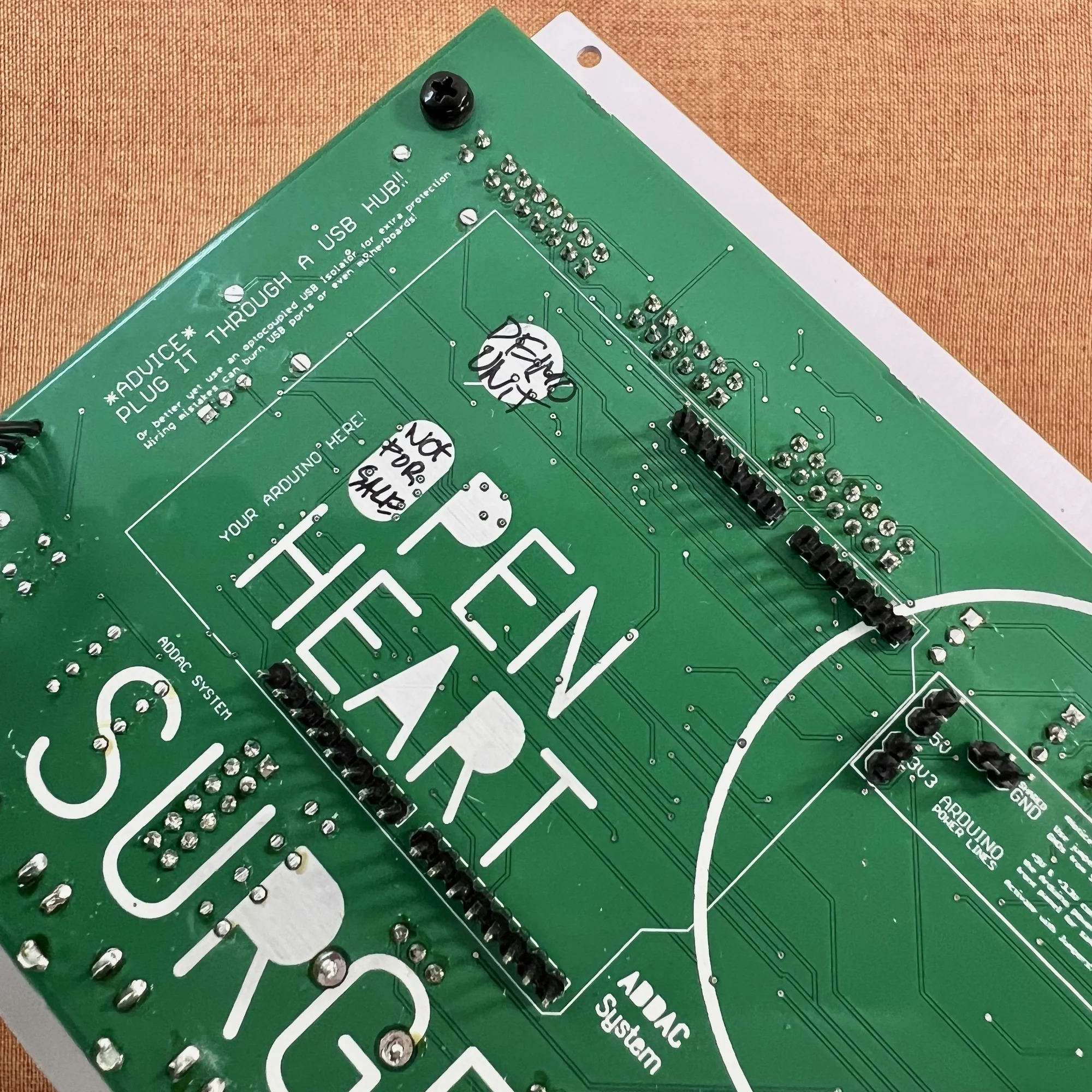

Front Panel Parts
In summary, the ADDAC210 is a module where all the onboard components are connected to the pin headers on the front side. Below is a list of all components included on this module:
- On/Off Power switch
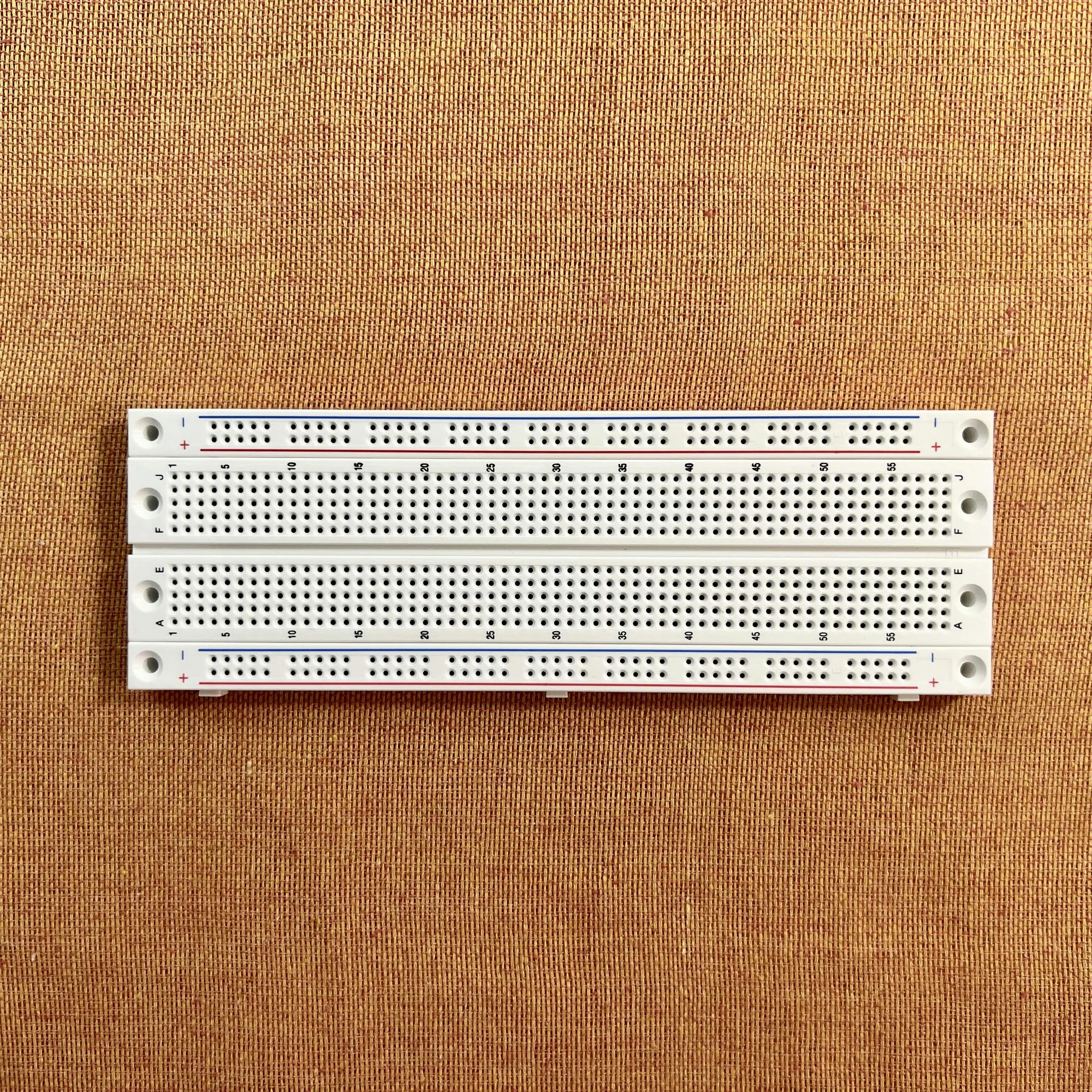
- 1x breadboard
- 1x 1K Pots
- 2x 10k Pot
- 1x 100k Log Pot
- 1x 100k Pot
- 1x 1M Pot
- 4x Leds
- 1x Photocell
- 2x SPST (normally open) push switches
- 1x DPDT (on/on) toggle switch
- 1x SPDT (on/on) toggle switch
- 2x SPDT (on/off/on) toggle switches
- 1x 3.5mm stereo jack
- 5x 3.5mm mono jack
- 1x 1/4inch mono jack
Stand
The ADDAC210 is a 3U Eurorack format module, but with the included stand attached, it can be used for development independently from a case.
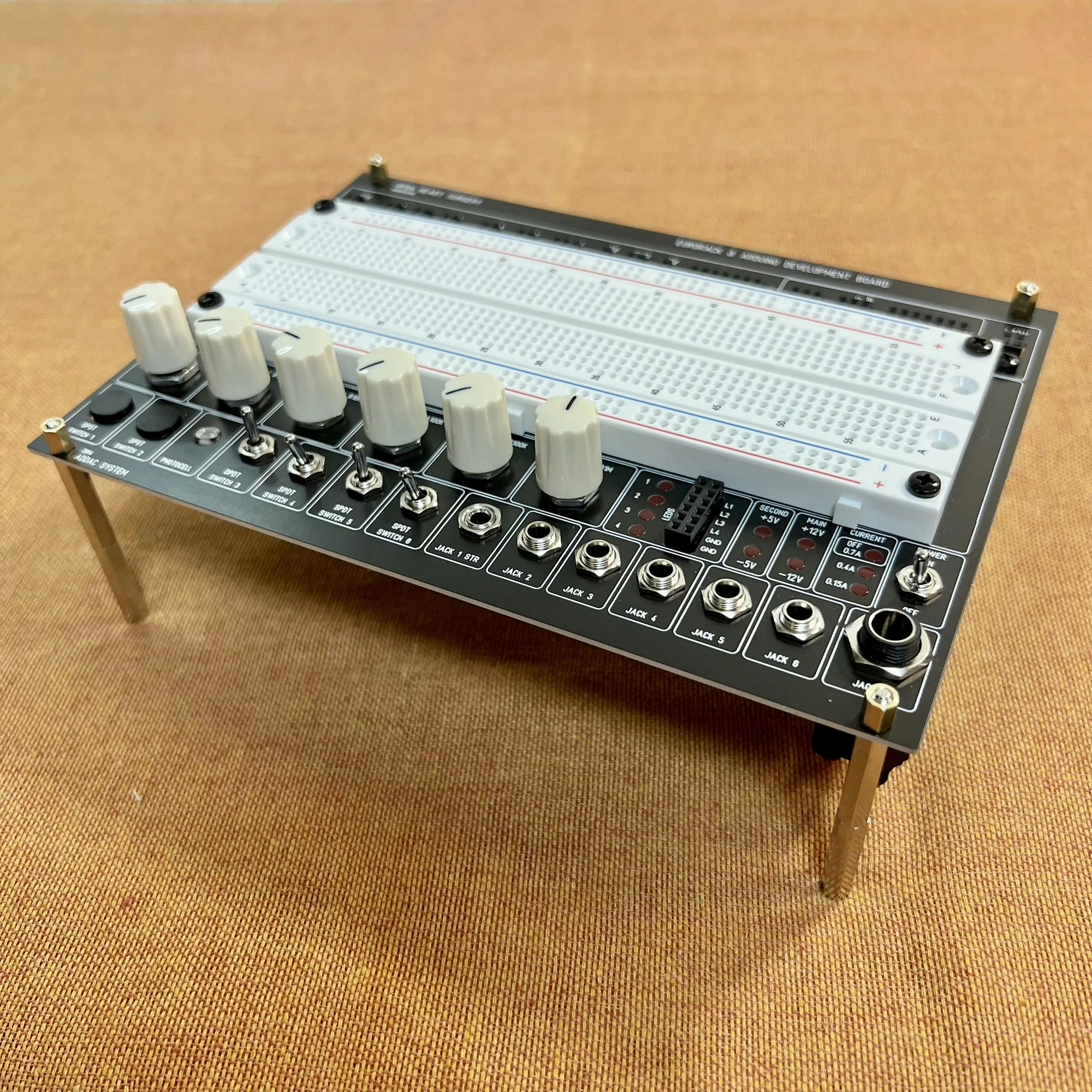
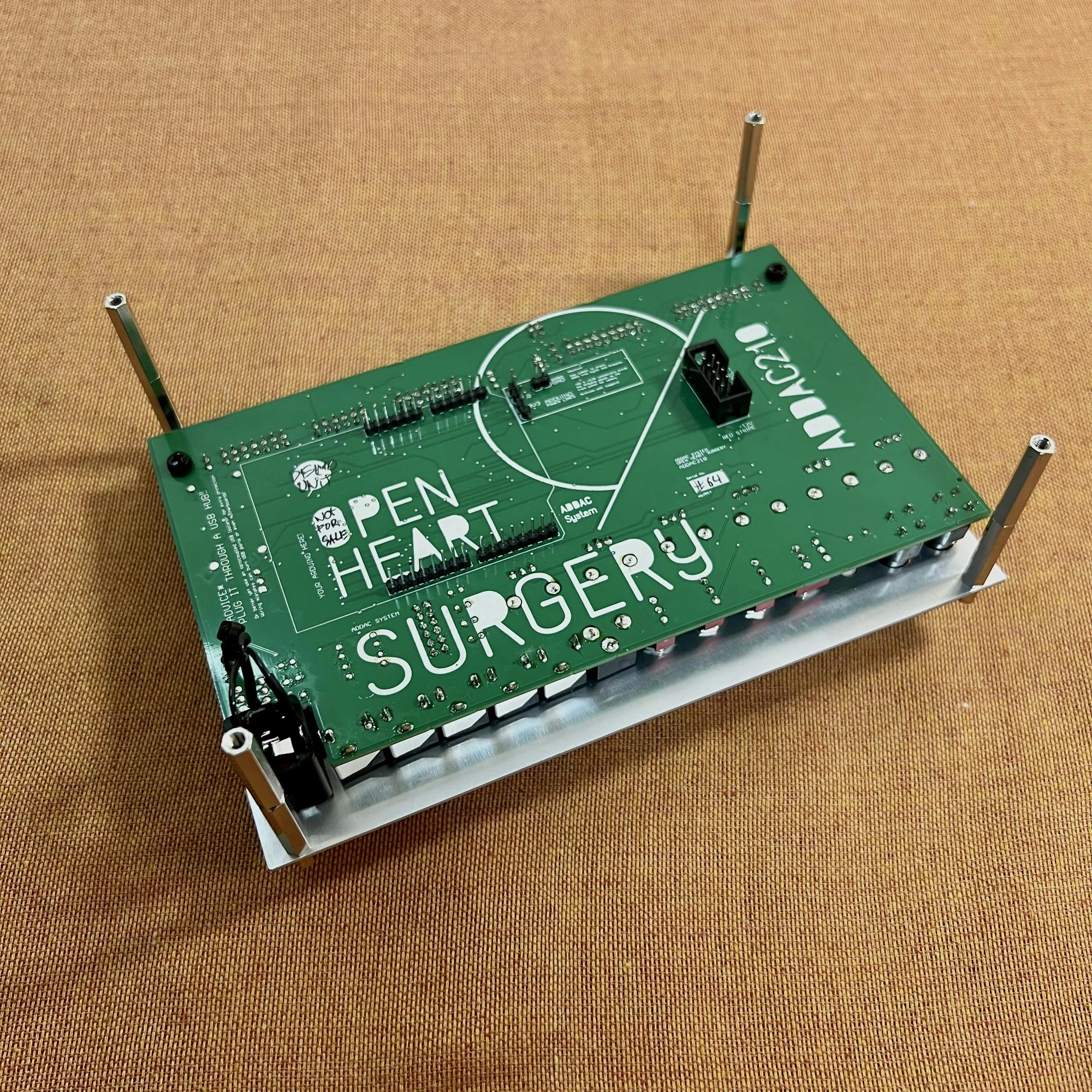

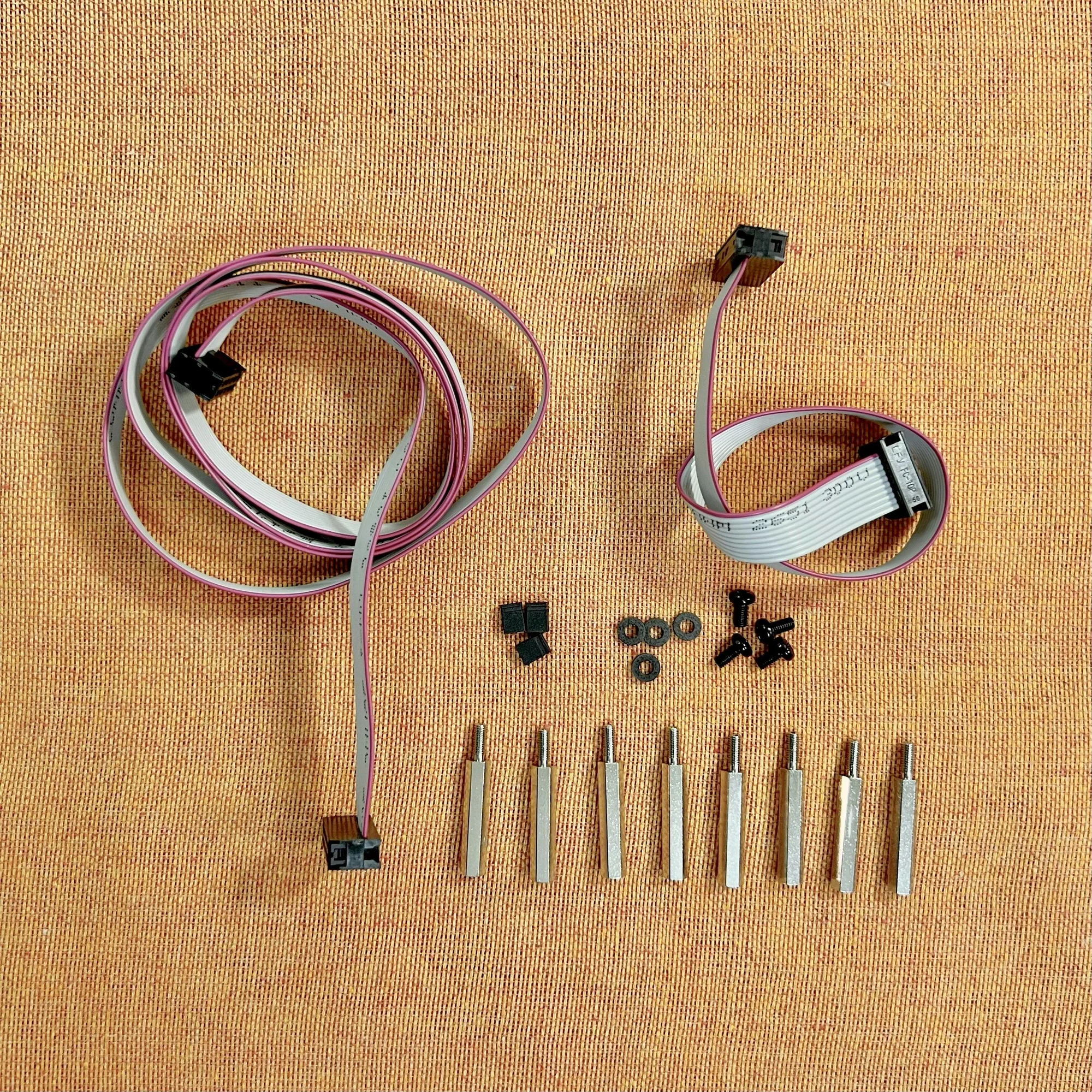
To enable development in this configuration, a 1-meter long ribbon cable is included along with the standard-length ribbon cable.
Additionally, since washers or similar fasteners are needed to secure the stand, we include four brass standoff spacers as a bonus from our shop, as shown in the photo above.
Technical Specifications
- Power: -12V, +12V / -3/10V, +3/10V
- Width: 36HP
- Depth: 35mm (additional depth is added when an Arduino shield is mounted)
Included Accessories
- Screws, washers
- Ribbon cable
- 1M ribbon cable
- 55mm standoff spacers for desktop use
- M3 standoff spacers (brass: additionally included by Takazudo Modular)
Manual
The manual is available on the official website below. When using this product, please refer to the manual and pay careful attention to safety.
ADDAC Systemについて
ADDAC Systemはポルトガルのモジュラーシンセメーカーです。
アナログ良さを生かした、ベーシックな機能をしっかり形にしているモジュールラインナップを基本としつつも、CVをMIDIに柔軟にコンバートしたり、高度にコントロール可能なグラニュラープロセッサー等、デジタル技術もうまく調和させた独創的なモジュールも数多くリリースしています。
オマケ: 電氣美術研究會モジュラー小物セット付き

モジュラーシンセをもっと多くの方に触って欲しいという願いの元、電氣美術研究會さまにご協力頂き、モジュラー小物セットを本商品にバンドルさせて販売させていただいております。
パッチケーブルや電源ケーブル、ドレスナットのサンプルセット、モノラルスプリッターなど、内容は時期に応じて変化します。商品に同梱しますので是非お試し下さい!
That concludes the introduction to the ADDAC210 Open Heart Surgery.
I (Takazudo) recently purchased an Arduino starter kit and was learning when I came across this product from ADDAC System and placed an order. Everyone enjoys modular synths in their own way, but DIYing your own modules, understanding the mechanisms, and experimenting with ICs and other components is a uniquely rewarding experience that’s hard to find elsewhere.
We hope you’ll make use of this for module development and learning.
Takazudo Modularではマニュアル等の日本語訳付きを作成し、公開しています。以下よりご参照下さい。
We hope you found this helpful.