This is an introduction to the ADDAC511 VC Stochastic Voltage Generator by ADDAC System, available at Takazudo Modular.
The ADDAC511 VC Stochastic Voltage Generator is a 4-channel CV generation module capable of high-precision, multi-layered control of stochastic voltage generation. It integrates quantization, distribution selection, interpolation, probability modulation, and other features for intuitive per-step CV generation control. An evolved CV generation control center inheriting the design philosophy of the 2013 ADDAC501 Complex Random. With state saving, clock sync, CV control, a sequencer, and a quantizer, it is an advanced random CV generation module.
This product is available for purchase below.
Takazudo Modularではマニュアル等の日本語訳付きを作成し、公開しています。以下よりご参照下さい。
- Product Photos
- A Multi-Functional 4-Channel Stochastic Voltage Module
- Reference Videos
- Takazudo’s Impressions
- Manual
- Technical Specifications
Product Photos
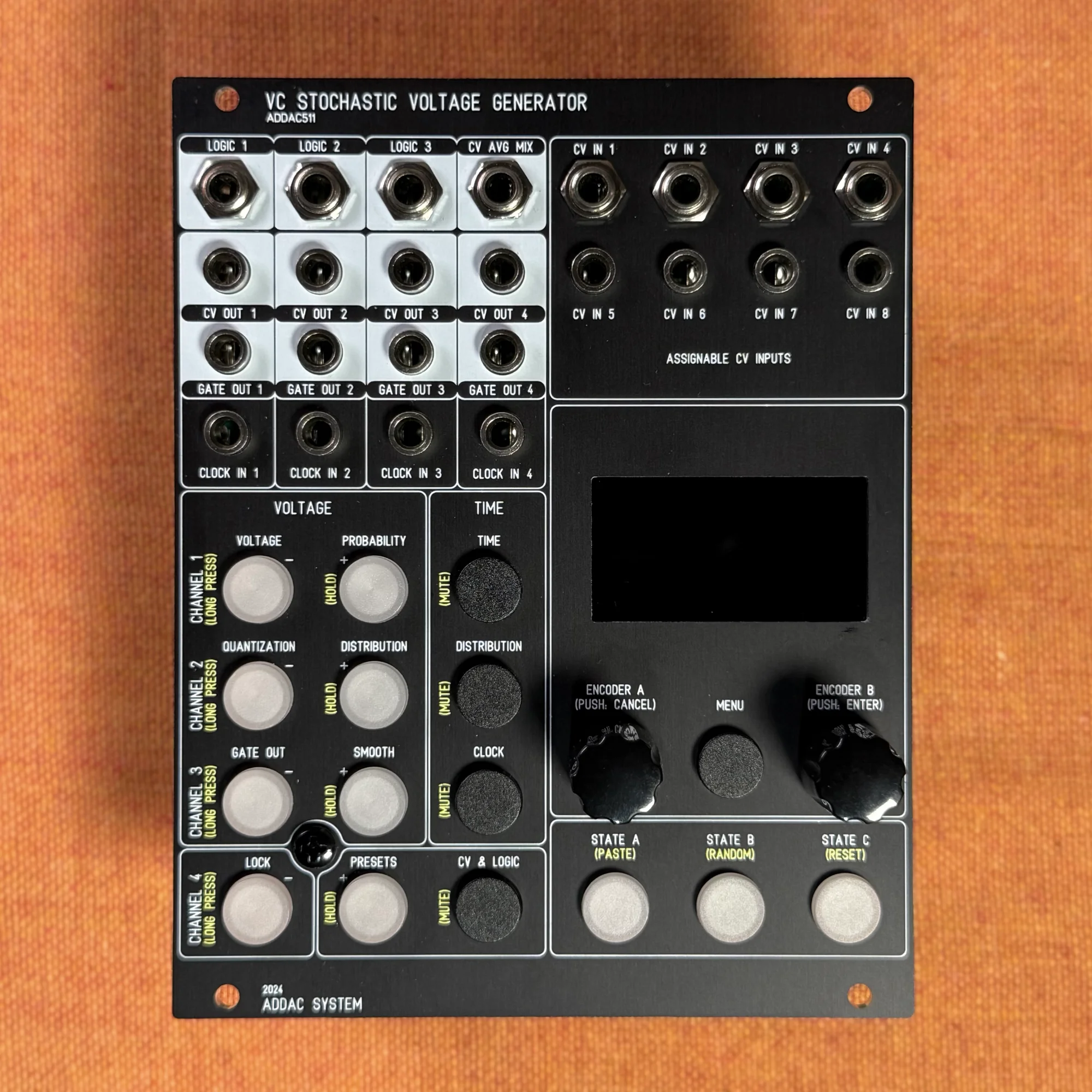
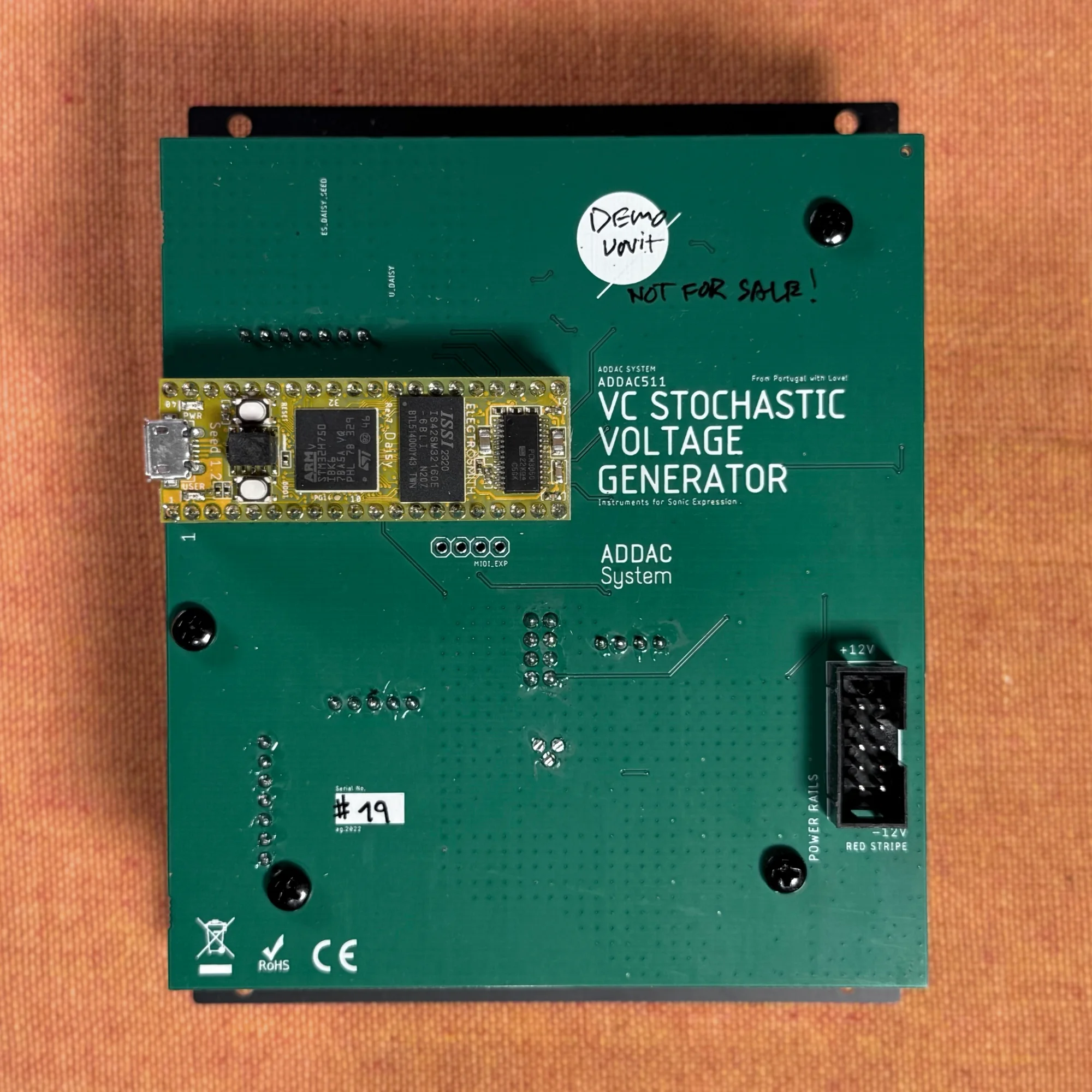
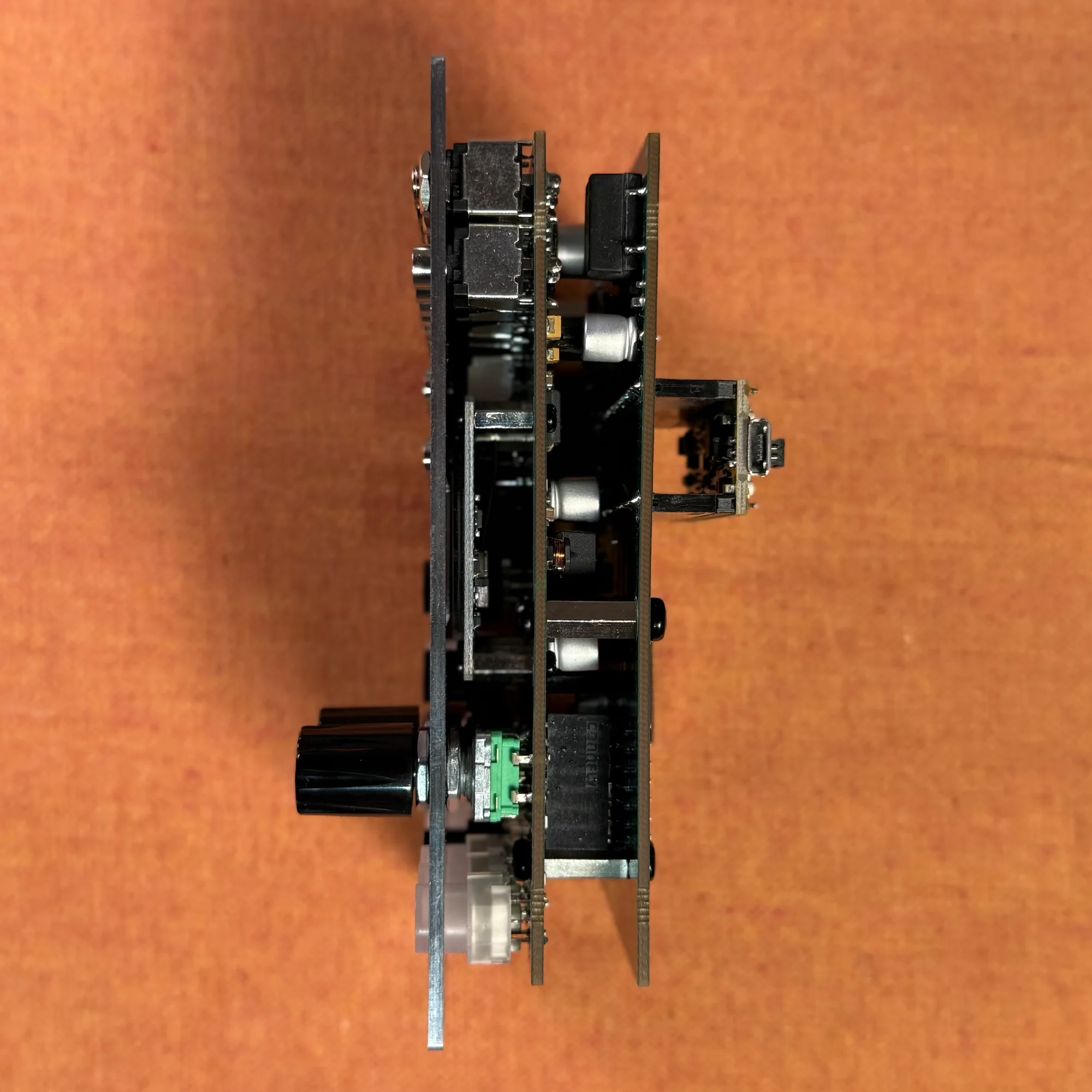

A Multi-Functional 4-Channel Stochastic Voltage Module
The ADDAC511 is a probability-based CV generator with a 4-channel configuration that achieves a high-level balance between randomness and structure. Each channel operates in three modes — random voltage generation, random envelope generation, and quantizer — with completely different behavior per mode. This allows it to handle everything from free-form random generation to structured CV processing across a wide range of use cases.
Basic Configuration and Parameters of Each Channel
Each channel of the ADDAC511 consists of the following elements:
- Virtual clocks (4 per channel)
- Physical clock inputs (4 per channel)
- Gate output (1 per channel)
- CV output (1 per channel)
- 32-step memory
- 3 states (presets)
*“Virtual clocks” are software-based clocks that generate and control timing internally without physical jacks.
Parameter settings are saved per state, and up to 75 global presets can be saved and recalled.
Mode-Specific Features
Random Voltage Generation Mode
- Probabilistically generates a new voltage at each step, outputting it continuously or in stepped form
- Interpolation curves (linear, exponential, logarithmic, stepped, Bezier) for smooth voltage transition control
- Distribution types (Uniform, Free, Walk) for distinct voltage distribution characteristics (Uniform produces even spread, Free favors center values, Walk generates values close to the previous step)
- Output correction snapped to scales (scale, root, transpose)
Random Envelope Generation Mode
- Generates an envelope triggered at each step
- Time and Value parameters control envelope duration and target level
- Smoothing and curve settings for gradual transitions
Quantizer Mode
- Accepts external CV input and snaps it to a specified scale for output
- CV-controllable root, scale, and transpose changes
- Supports complex pitch changes when combined with envelope modulation
Time Control and Clocking
- Each channel can independently select internal/external clock
- BPM mode/millisecond mode switching supports both musical and free-time expressions
- Clock delay and skip probability enable asynchronous and polyrhythmic expressions
- Clock sources can use logic operations (AND/OR/XOR) and counters
State and Preset Management
- Each channel has 3 states, each holding a different parameter set
- Supports inter-channel state linking and external signal-triggered state changes
- Up to 75 preset saves ensure reproducibility between sessions
CV Control and External Integration
- 8 CV inputs assignable to any parameter
- Each CV input supports gain, offset, polarity inversion, and range limiting
- Inputs are shared across all channels, enabling dynamic control of the entire module
- Suitable for CV cross-modulation and integration with external LFOs
Input CV signals are used to modulate various parameters in real-time from external sources, including timing, voltage level, probability, interpolation curve, and scale settings. This enables dynamic pattern generation through integration with LFOs and other modules, going beyond static configurations.
Logic Outputs and Operations
- 3 logic outputs configurable to the following modes:
- Clock (from any channel)
- Counter (triggers after a specified count)
- Logic operations (AND, OR, XOR, etc.)
- Flexible use as clock routing or event triggers
Step Sequence and Sequence Lock
- Each channel has an independent 32-step memory capable of recording and playing back different values and timing per step
- Randomly generated outputs can be recorded up to 32 steps and looped
- Per-step parameter editing allows it to function as a full step sequencer
- Performance controls include “Change Once” (changes only once) and “Change Always” (changes every time)
Interface and Usability
- OLED display provides clear parameter readout, reducing confusion even in multi-layer navigation
- Dual encoders enable rapid parameter selection and adjustment
- Shortcut operations via long press and simultaneous press
- State and channel status displays offer high visibility, enabling instant response even in live settings
The ADDAC511 is a precision tool for working simultaneously with chance and planning, randomness and structure. Beyond CV generation, it takes on diverse signal design tasks including time, pitch, triggers, and logic, serving as a central hub for complex modular setups.
Reference Videos
Takazudo’s Impressions
As of this writing (May 2025), I haven’t yet had hands-on experience with the actual unit, but this module appears to be one expression of ADDAC System’s approach to sequencer-type modules.
Within ADDAC System’s lineup, there is no straightforward step sequencer that plainly outputs CV step by step. Instead, the emphasis seems to be on methods for shaping CV through the randomness created by circuits and the combinations of knobs and switches. This feels like a fundamentally different philosophy from the step-by-step programming approach of something like the OXI ONE. (The OXI ONE has many features too, but this is an impression based on UI differences.)
Put another way, no matter how much digital technology advances, there seems to be an underlying belief at ADDAC System that sound creation should remain rooted in the analog realm — where human hands interact with knobs, switches, and CV. I often sense this philosophy in ADDAC System’s modules.
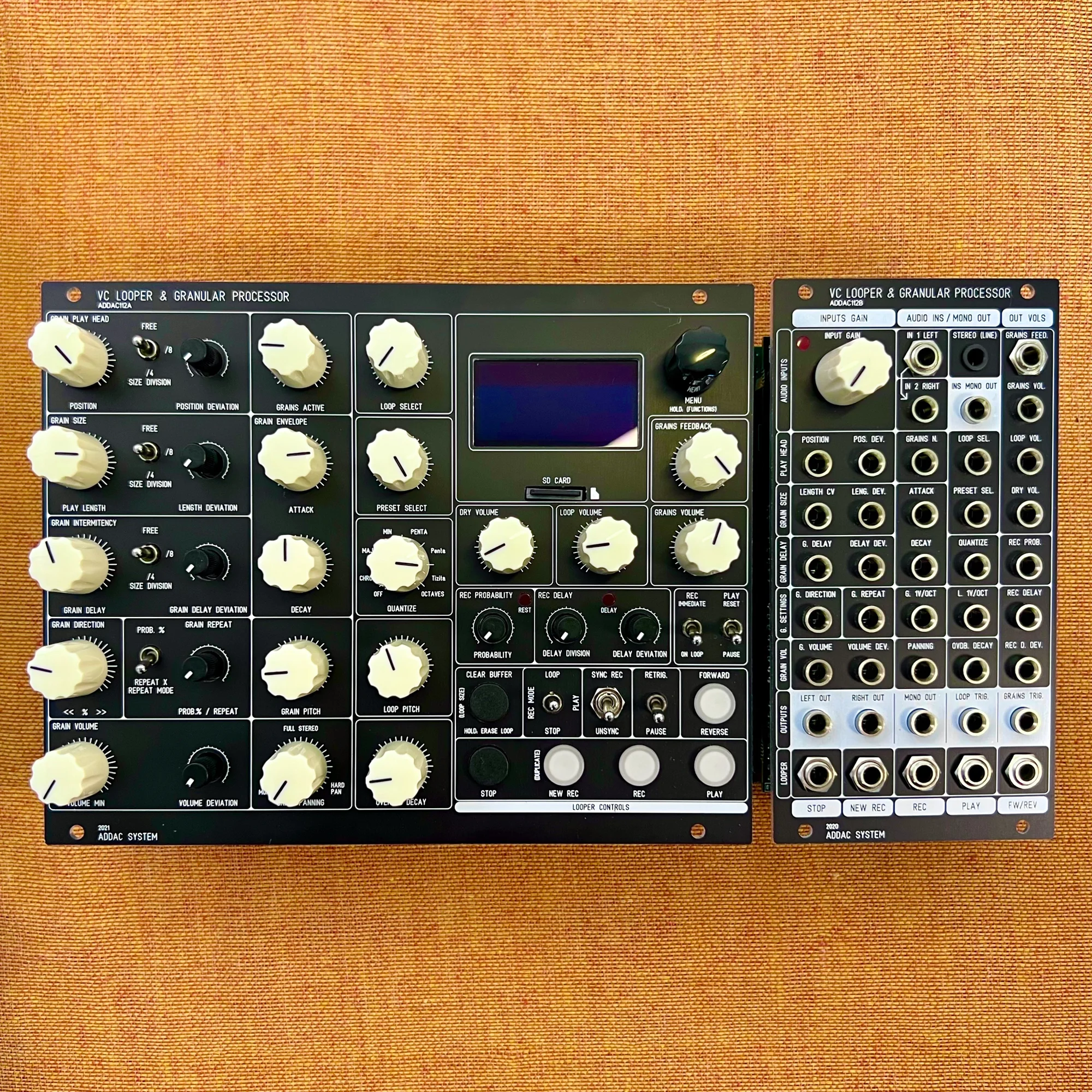
That’s not to say ADDAC System doesn’t make digital modules. Specifically, there’s the ADDAC112 looper and granular processor:
Granular processing is very much a product of digital technology — recording sound, slicing it into tiny grains, and playing them back. Many granular processors in the market tend to lean toward the approach of sounding good without much tweaking. Compared to those, the ADDAC112 feels more rigorous — every element is made controllable, retaining an analog sensibility.
I sense that same spirit in the ADDAC511. My guess is that it’s probably not the type of module where you can randomly press buttons and knobs and have it probabilistically produce a nice-sounding melody. Like the ADDAC112, it likely rewards deep exploration as you gradually come to understand the module and learn to control it the way you envision. That’s the kind of module this feels like.
This is purely a personal feeling from Takazudo, but doesn’t fully random CV generation sometimes feel like it lacks a sense of personal control? For example, you could sample white noise with a Sample & Hold on every beat and run it through a quantizer to get a constantly changing melody. But as-is, the pitch range might be too wide, so you attenuate the CV, add an offset, set a scale on the quantizer, and explore which scales you prefer — there’s an approach in modular synthesis like that. This module seems to pack all of those approaches into a single unit. That’s the impression I get.
Manual
Technical Specifications
- Width: 20HP
- Depth: 45mm
- Power consumption: 200mA +12V / 100mA -12V / 0mA +5V
ADDAC Systemについて
ADDAC Systemはポルトガルのモジュラーシンセメーカーです。
アナログ良さを生かした、ベーシックな機能をしっかり形にしているモジュールラインナップを基本としつつも、CVをMIDIに柔軟にコンバートしたり、高度にコントロール可能なグラニュラープロセッサー等、デジタル技術もうまく調和させた独創的なモジュールも数多くリリースしています。
オマケ: 電氣美術研究會モジュラー小物セット付き

モジュラーシンセをもっと多くの方に触って欲しいという願いの元、電氣美術研究會さまにご協力頂き、モジュラー小物セットを本商品にバンドルさせて販売させていただいております。
パッチケーブルや電源ケーブル、ドレスナットのサンプルセット、モノラルスプリッターなど、内容は時期に応じて変化します。商品に同梱しますので是非お試し下さい!
That concludes the introduction to the ADDAC511 VC Stochastic Voltage Generator.
Takazudo Modularではマニュアル等の日本語訳付きを作成し、公開しています。以下よりご参照下さい。
We hope you found this helpful.