
This is an introduction to the AI106 West Coast Mixer by AI Synthesis, available at Takazudo Modular.
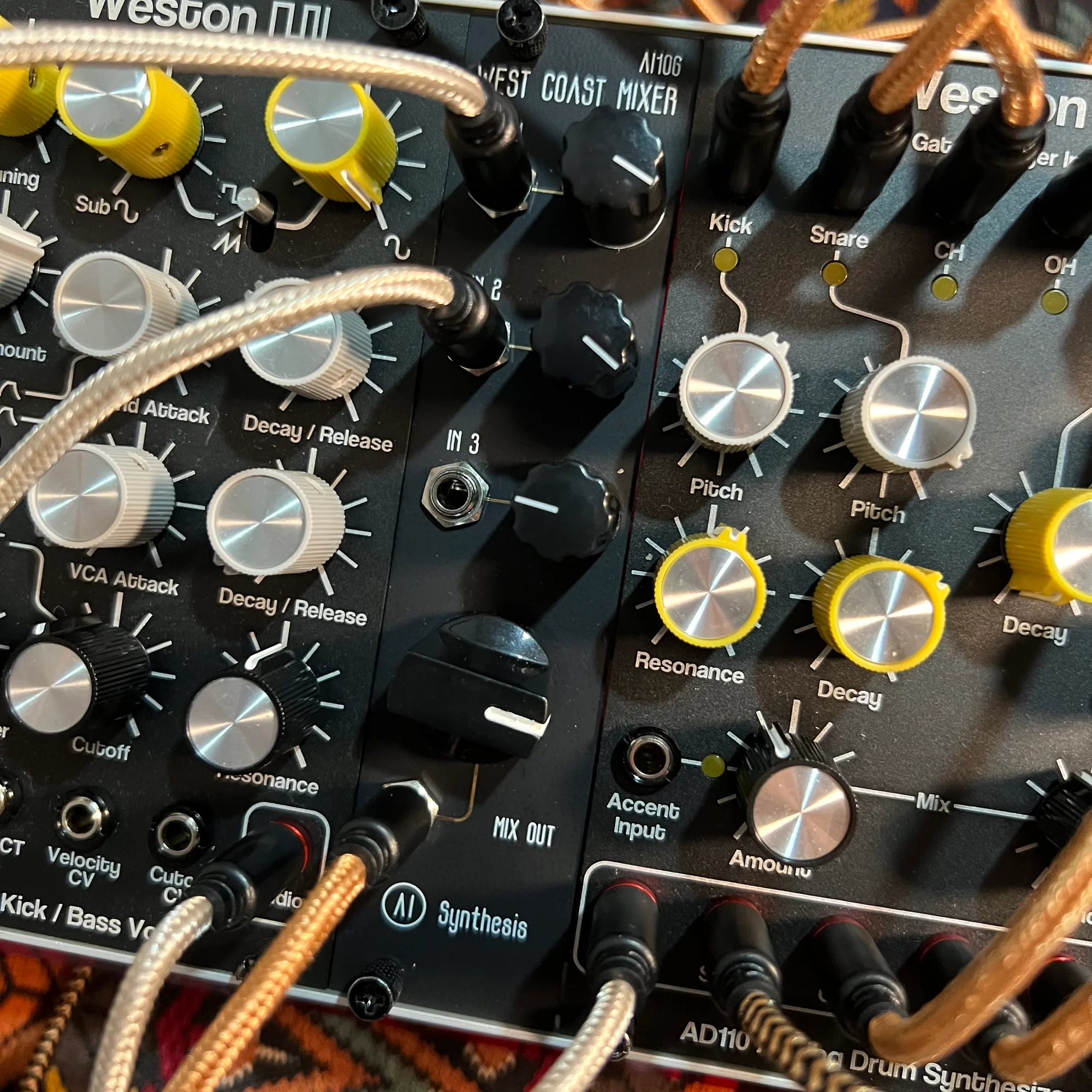
The AI106 is a mono 3-channel mixer module that incorporates mixer design elements from vintage West Coast synthesizers — a mixer module that adds character and changes to input waveforms.
It comes in two panel options — aluminum and black — and DIY kits are also available.
This product is available for purchase below.
Takazudo Modularではマニュアル等の日本語訳付きを作成し、公開しています。以下よりご参照下さい。
- Product Photos: Assembled
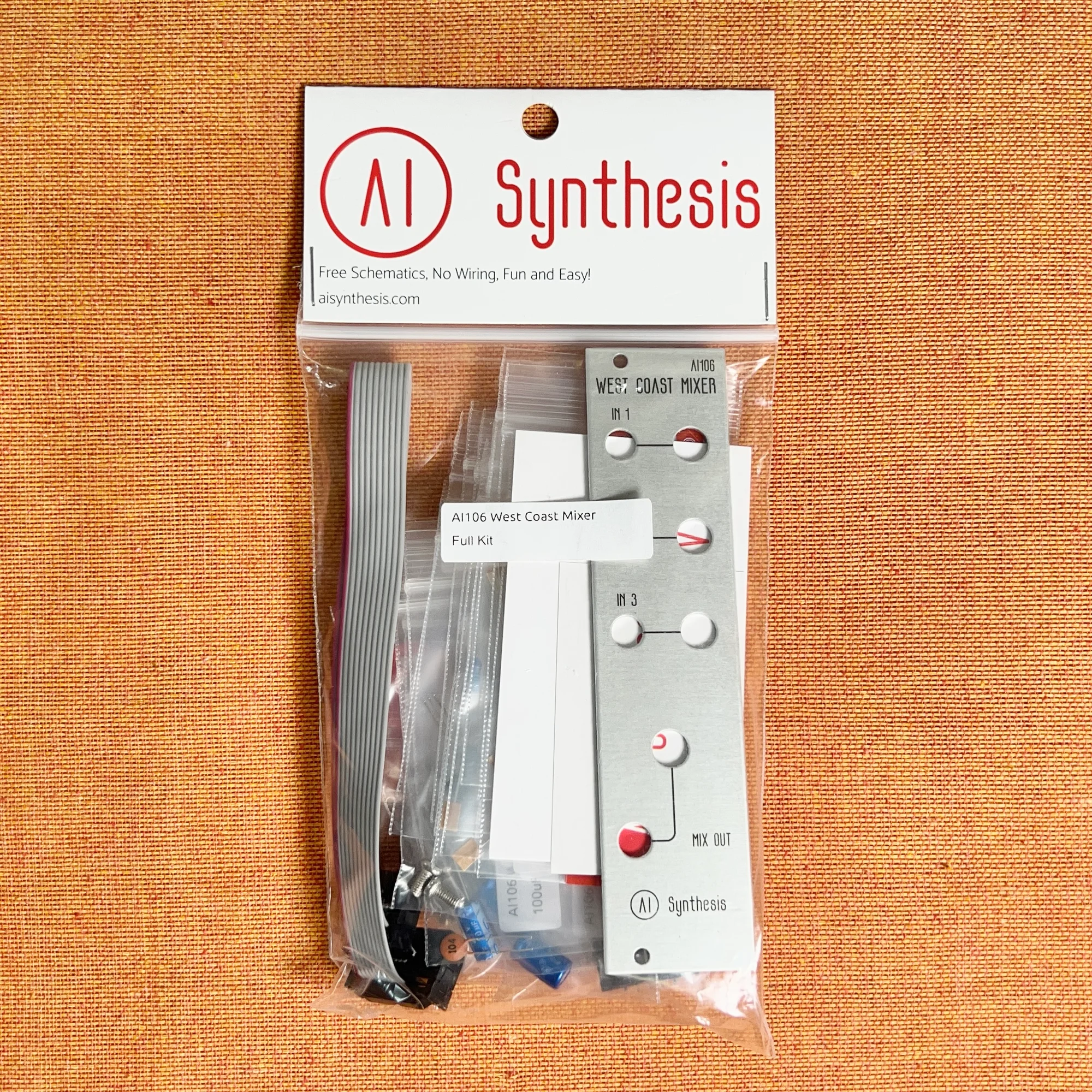
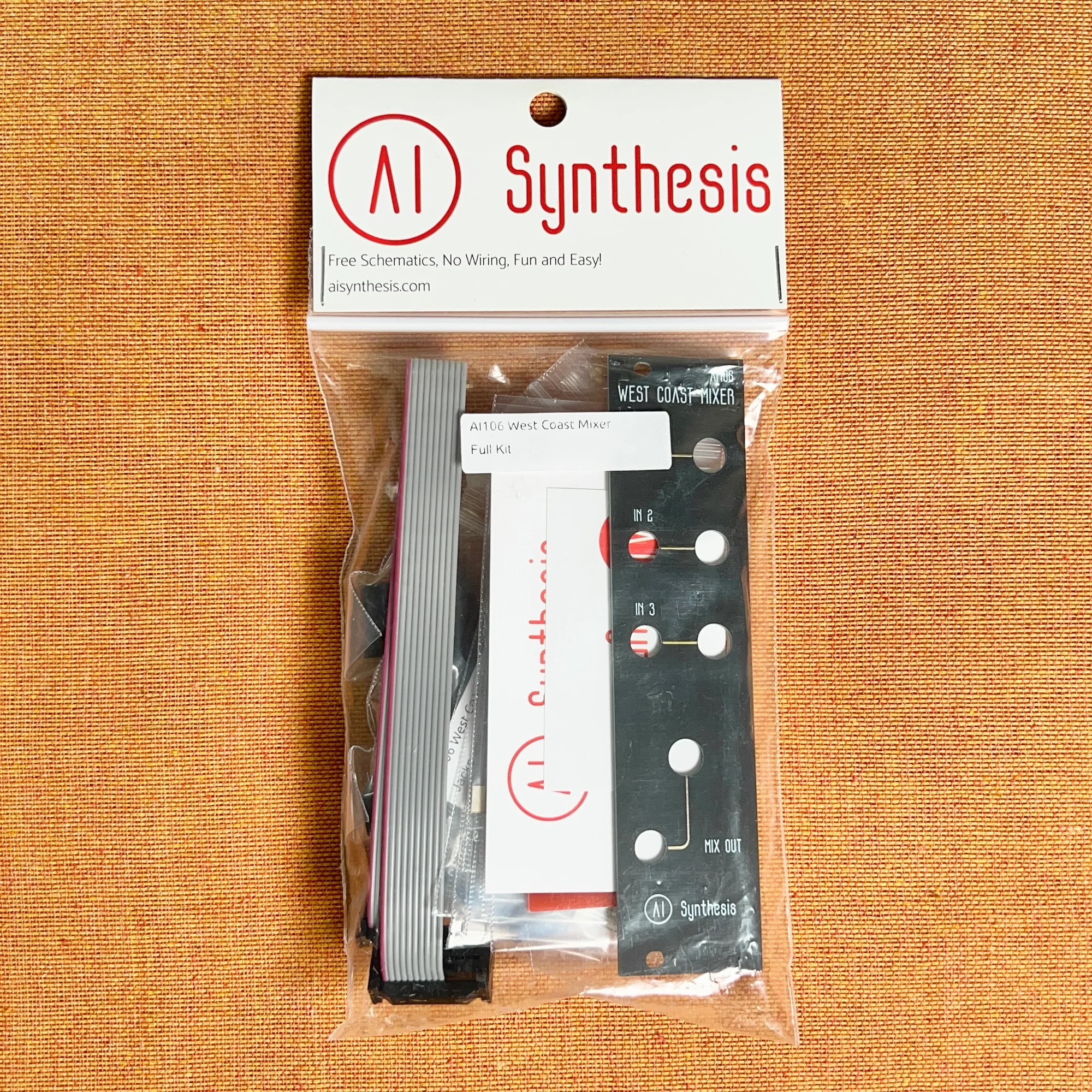
- Product Photos: DIY Kit
- AI106 West Coast Mixer Features
- What is West Coast?
- Can a Mixer Change the Sound?
- How to Use the West Coast Mixer
- Similar Modules
- Related Article
- Other Reference Videos
- Technical Specifications
- DIY Guide
Product Photos: Assembled
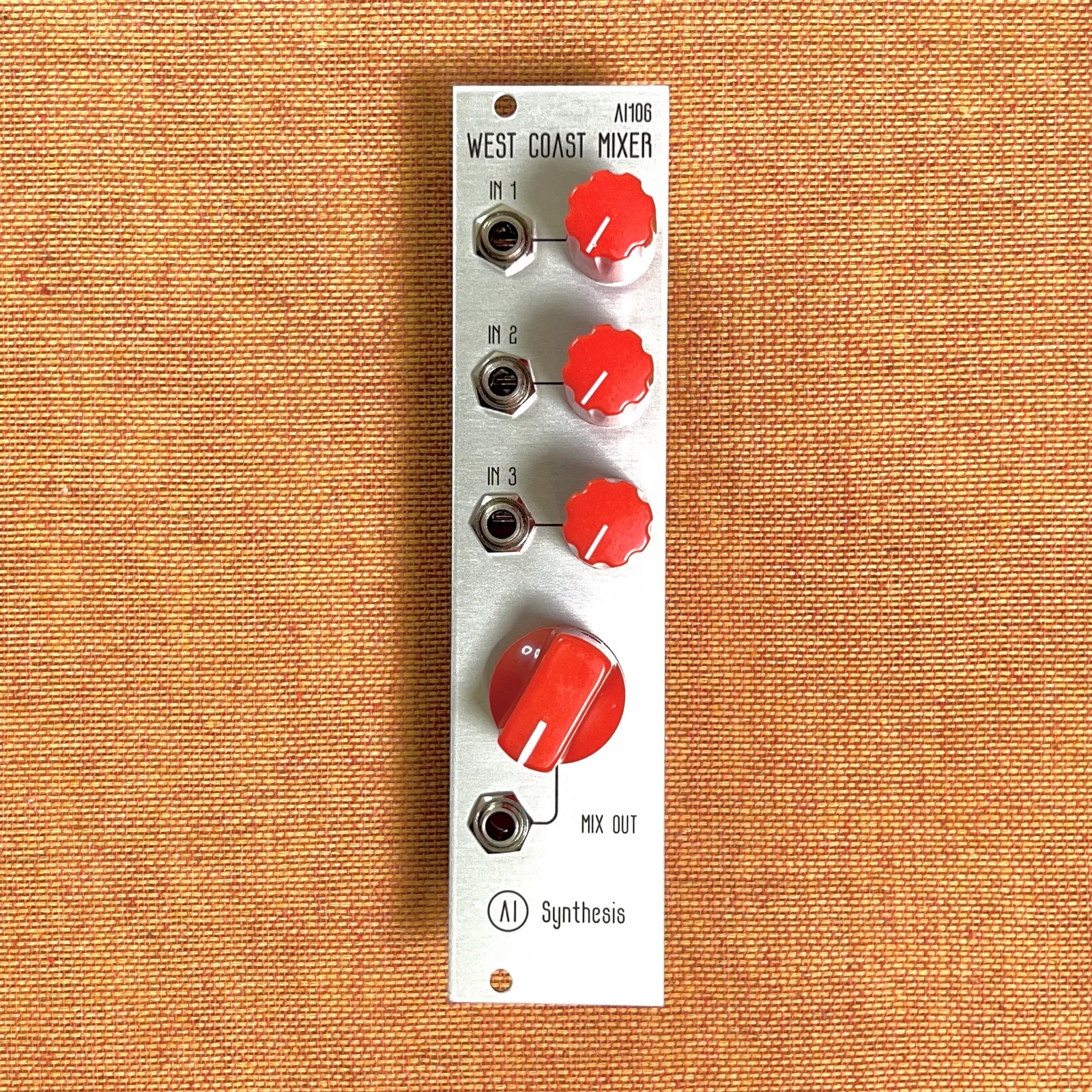
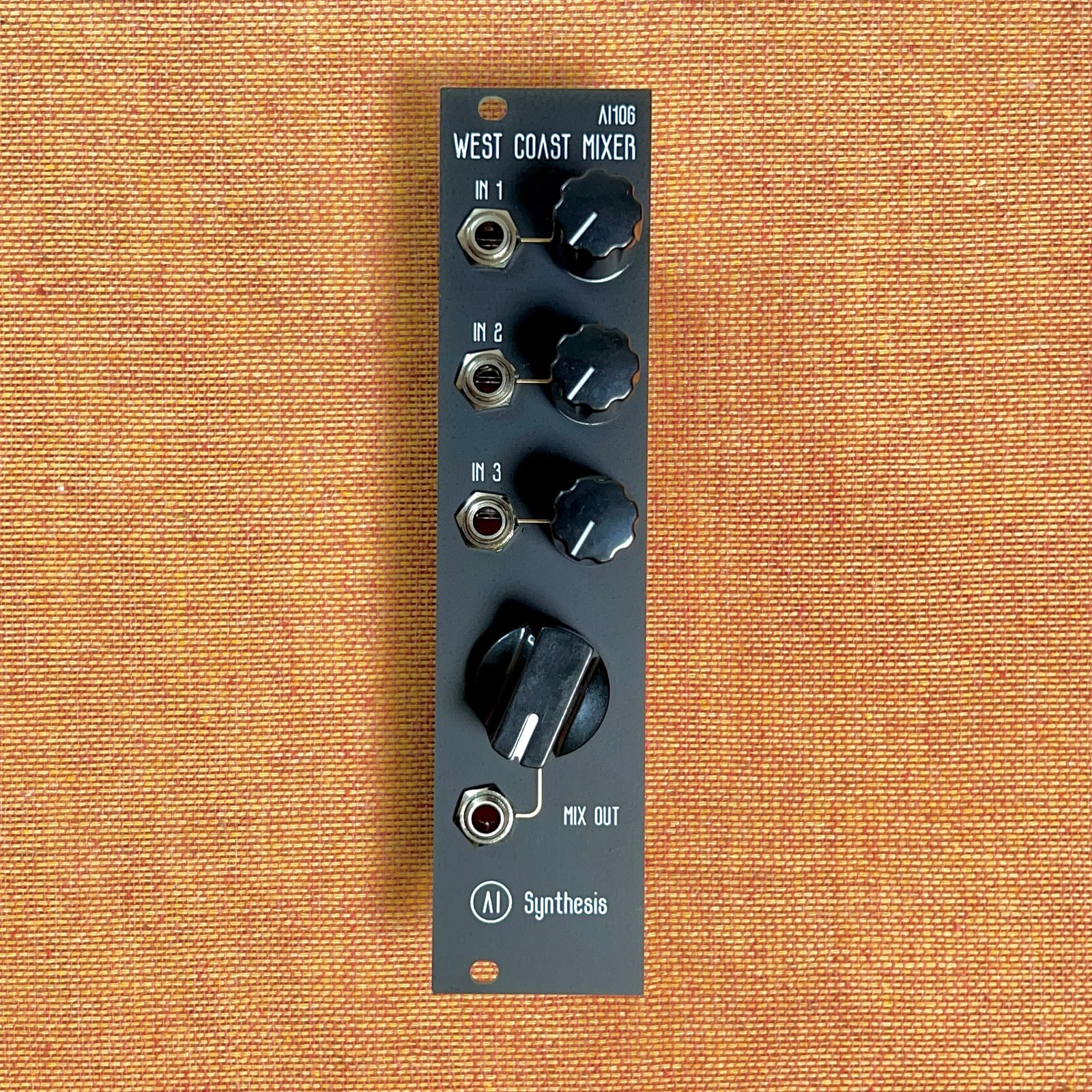
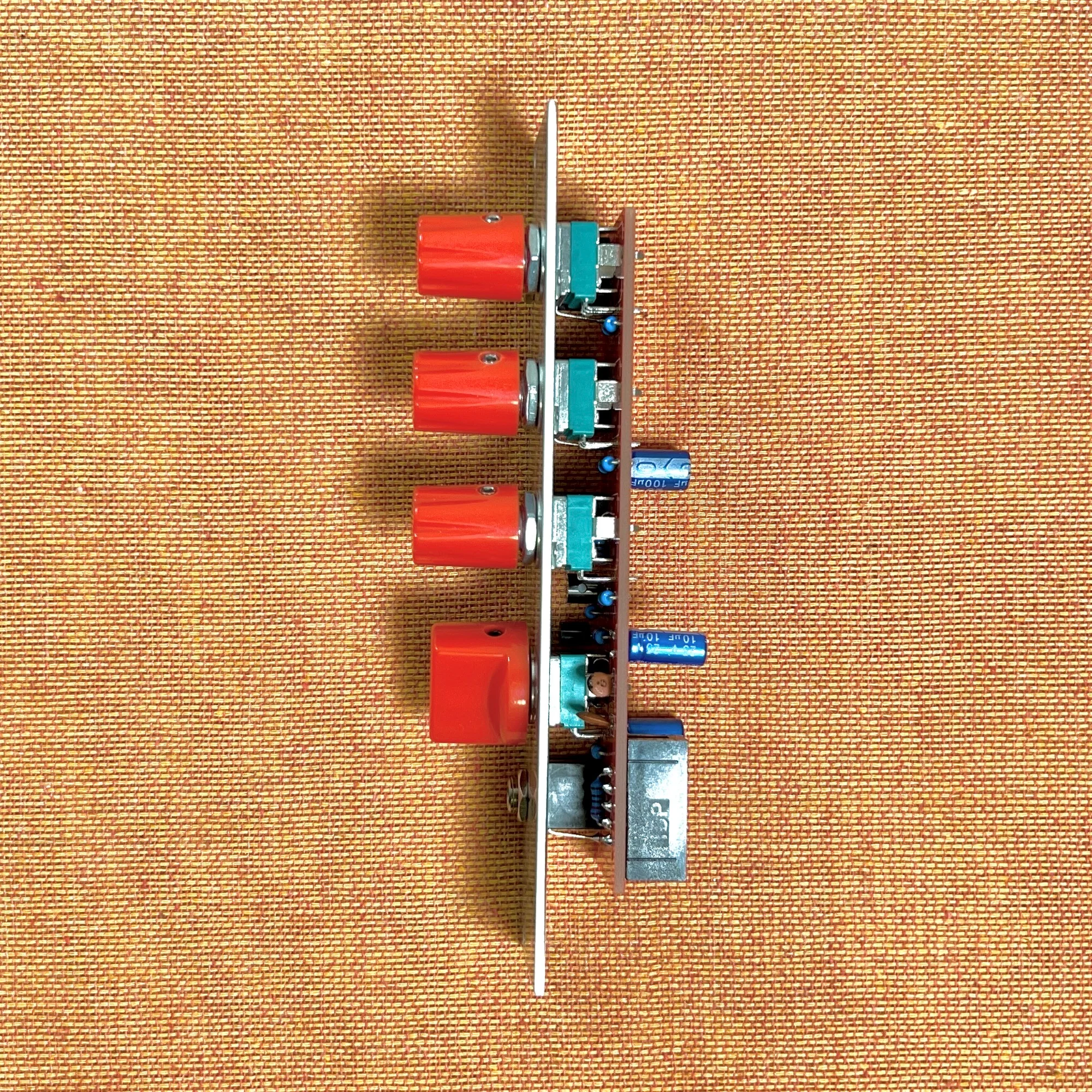
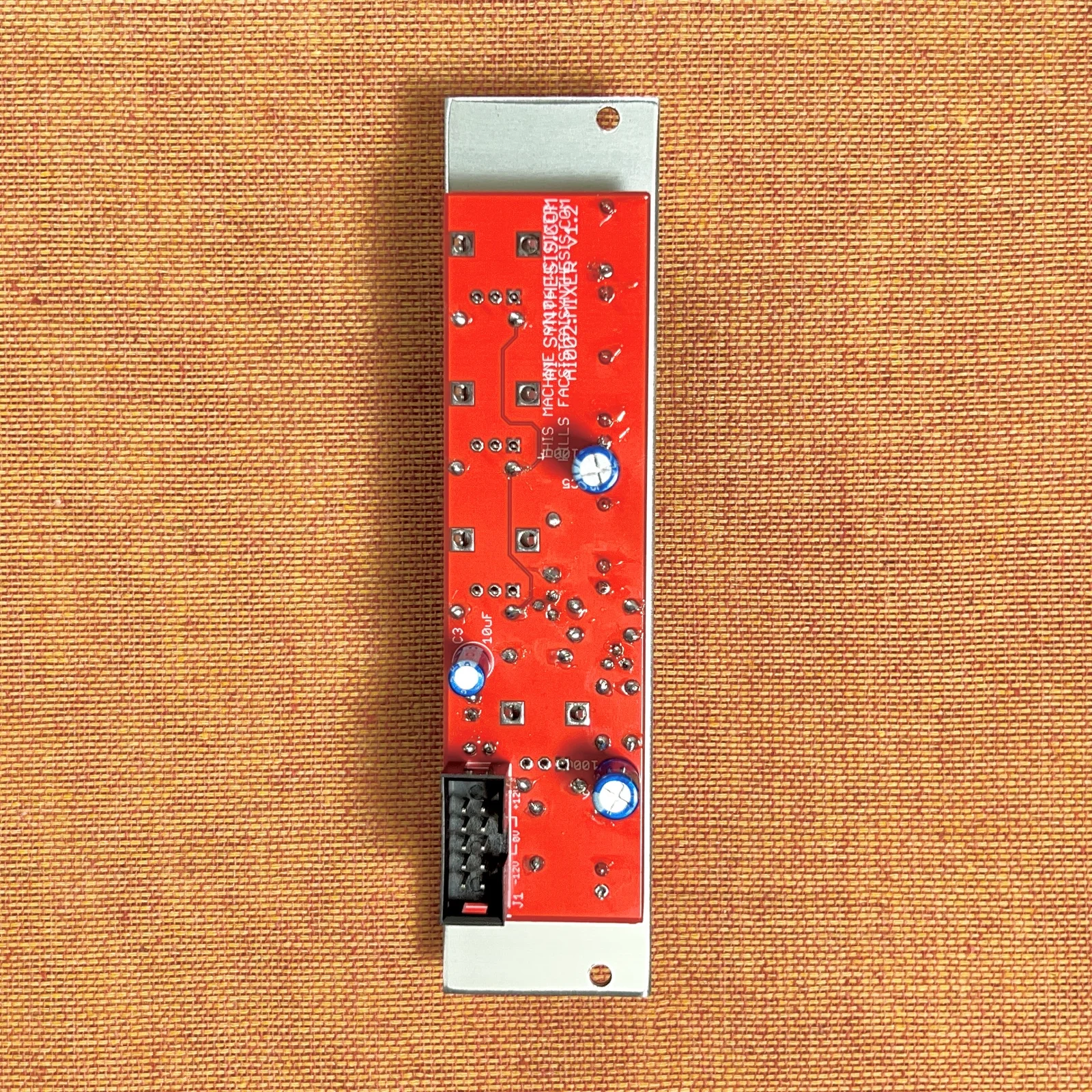
Product Photos: DIY Kit
AI106 West Coast Mixer Features
The AI106 West Coast Mixer is a modern update of the mixer designs found in vintage 1960s-70s West Coast synthesizers. It is a fully discrete mixer module that uses no ICs or digital components, housed in a Eurorack format module.
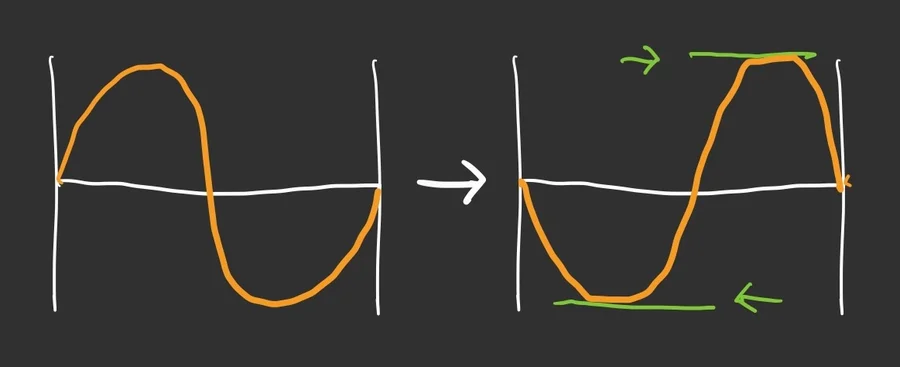
True to the original circuit, the output of this mixer is an inverted sum of the input values. When using audio signals, the phase inversion is barely noticeable, but with CV signals, please note that the output voltage will be inverted. Additionally, due to the nature of the circuit, when the mixed voltage gets high, clipping-like waveform distortion occurs relatively early, adding character to the sound.
The following diagram gives a rough idea of the input-to-output relationship.
Below is an official demo video from AI Synthesis.
What is West Coast?
The term West Coast in this module’s name refers to the American West Coast. Synthesizers developed primarily on the U.S. West Coast during the 1960s-70s extensively employed Wave Shaping techniques and designs with multiple VCOs. Synthesizer designs following this style are referred to as West Coast Synthesis or the West Coast style.
Representative brands of West Coast synthesizers include Buchla and Serge, both of which continue to release outstanding instruments today. Many synthesizers are influenced by the West Coast design philosophy, and you’ll frequently encounter this term when exploring the characteristics of modern modular synthesizers.
For more on West Coast Synthesis, the following articles from Perfect Circuit provide detailed explanations.
- Perfect Circuit: East Coast vs. West Coast Synthesis Explained
- Perfect Circuit: What is West Coast Synthesis? Buchla + Beyond
The AI106 West Coast Mixer is a module built based on the mixer designs used in these West Coast style synthesizers.
Can a Mixer Change the Sound?
This module is functionally a mixer that additively sums three inputs. Throughout this article, I’ve described it as “adding character to input waveforms,” but what exactly does that mean? Isn’t a mixer just something that blends sounds together? Let me briefly explain the mechanism.
What Happens Inside a Mixer
First, like all modules, whether CV or audio, the waveform output cannot reach infinitely high voltage. In a typical modular synth system, outputs are designed to produce voltage swings of roughly ±5V.
Simply adding three ±5V signals together could produce ±15V, but the internal circuit design constrains the result to the ±5V range. How this constraining happens depends on the combination of components used, and this becomes the module’s character.
For example, digital modules use internal software for waveform synthesis, so they might simply clip anything beyond ±5V, or the voltage summing process might be programmed to avoid such extreme clipping. Analog modules use combinations of resistors, diodes, op-amps, and transistors to reduce, mix, amplify, and compress voltages. The interesting part is that this processing produces output that isn’t simply a mix of the input signals.
Examples of Input Signal Alteration
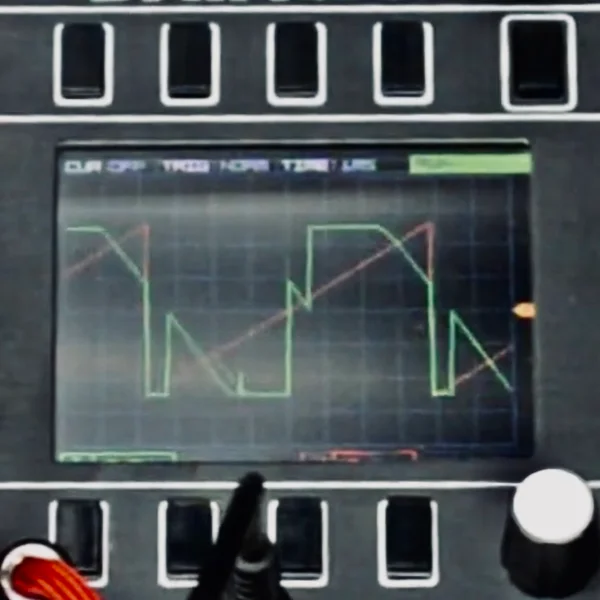
Below are screenshots from the official AI Synthesis demo video, showing waveforms on a Mordax: DATA oscilloscope.
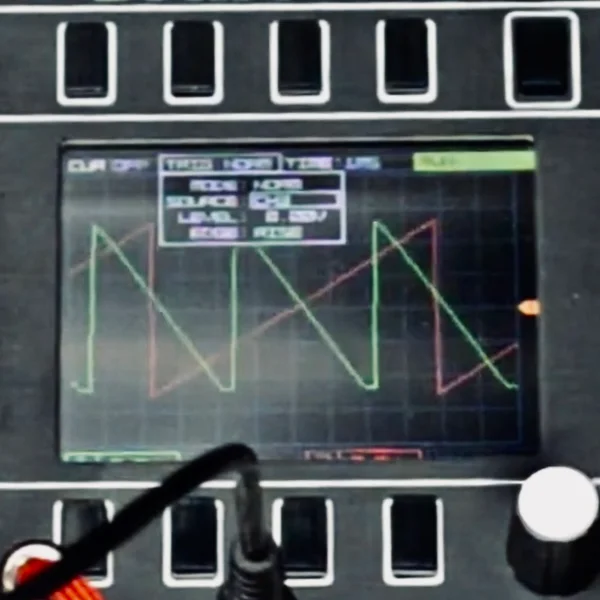
On the left, the red trace is a Sawtooth Wave output from a VCO, and the green trace is the result of passing a higher-pitched Sawtooth Wave through this mixer. Notice that the green waveform is an inverted version of the red waveform.
The green trace on the right shows the result of mixing a Square Wave (at the same frequency as the red VCO) with a Sawtooth Wave through this mixer. As mentioned, the additive synthesis result gets clipped, creating complex timbres from two different waveforms with different shapes and periods.
In this way, the AI106 West Coast Mixer flips and clips waveforms. Mixing outputs from multiple VCOs and enjoying these characteristics is a great way to use this module.
How to Use the West Coast Mixer
I (Takazudo) have also tried using this West Coast Mixer. My impression is that it’s convenient for casually combining things in a compact way.
Mixing VCO Waveforms
One recommended use is mixing multiple waveform outputs from a VCO to create your desired sound. For example, from our lineup, the following are basic oscillator types:
These can output multiple waveforms such as Sine Wave, Triangle Wave, and Square Wave. Mixing them with this mixer and adjusting the blend lets you craft your ideal sound. When a sine wave is too soft and a square wave is too harsh, blending them to find your preferred balance is one enjoyable approach.
You can then pass the sound from this mixer to a Low Pass Gate or Low Pass Filter, treating the VCO and mixer combination as a set:
- Meng Qi: DPLPG
- AI Synthesis: AI017 Low Pass Gate
- ADDAC System: ADDAC604 Dual Filter
- Weston Precision Audio: SF1 Dual / Stereo VCF
Compact Mixing of Drums and Other Sources
Another use is as a general mixer for combining multiple sound sources before routing to effects — a typical mixer application.
For example, our AD110 from the lineup can output CH (closed hi-hat) and OH (open hi-hat) separately:
If you want to apply Delay or Reverb only to hi-hats (using something like the OAM: Time Machine), you can mix CH and OH with this mixer and route the output to the effect.
Early Clipping
In both use cases above, the West Coast Mixer’s characteristic of clipping the sound relatively early actually works quite nicely.
This is a matter of personal taste, but I (Takazudo) tend to prefer harder-edged music, so I often want to clip and distort sounds regardless of what they are. This mixer brings that kind of character fairly early on, making it a good fit for those with similar preferences.
Similar Modules
Similar modules include the AI022 Harmonic Mixer from the same brand. Additionally, ADDAC System’s ADDAC712 Vintage Pre and ADDAC714 Vintage Clip, while not mixers, are distortion modules focused on the kind of clipping discussed in this article — worth checking out if you’re interested.
- AI Synthesis: AI022 Harmonic Mixer
- ADDAC System: ADDAC712 Vintage Pre
- ADDAC System: ADDAC714 Vintage Clip
Related Article
I wrote a column comparing and explaining mixers of this type that we carry. If interested, please check it out as well.
Other Reference Videos
For more on the differences in mixer characteristics discussed in this article, the following video from YouTube: Sound + Voltage is very helpful. It references circuit diagrams of both the AI106 West Coast Mixer and the AI022 Harmonic Mixer while explaining the differences.
Technical Specifications
- Width: 6HP
- Depth: 22mm
- Power consumption: 12mA +12V / 0mA -12V / 0mA 5V
DIY Guide
The DIY kit includes the panel, PCB, all components, a power ribbon cable, and mounting screws.
AI Synthesis provides detailed DIY guides on their website. The guide below includes a build video and step-by-step instructions with photos, making it great for DIY beginners as well.
Build Impressions
I (Takazudo) also built one myself. The video below shows the process. It’s not a particularly instructional video, but it may give you a feel for the kit. You’ll notice that the parts come neatly sorted into individual bags — a thoughtful touch.
All components are through-hole and easy to solder. The circuit is quite simple with few parts, and it can be assembled quickly. It’s a versatile module — great for compactly mixing drum sounds, summing VCO outputs, and adding a bit of distortion along the way. At the DIY kit price, it’s even more affordable, making it a module you might want multiples of. Both DIY beginners and experienced builders can enjoy this one.
モジュラーシンセのDIYとは?
モジュラーシンセサイザーのDIYについて詳しくご存じない方向けに、以下にDIYの導入的なコラムを用意しました。DIYについてご興味のある方、始めてみようと思う方は、是非ご参照いただければと。
また、組み立てに際して不明点や不安な点がございましたら、以下Takazudo Modularのdiscordチャンネルにてお気軽にご質問等、頂ければと思います。
AI Synthesisについて
AI Synthesisはアメリカポートランド州に拠点を置くモジュラーシンセメーカーです。
AI Synthesisのモジュールラインナップは、シンプルで実用性の高いベーシックなタイプのモジュールで構成されています。ユーザーの学習とDIYサポートに力を入れており、すべてのモジュールに丁寧なDIYガイドが用意され、設計図、BOMも合わせて公開されています。AI SynthesisのDIYキットで、シンセDIYを初めてみませんか?
オマケ: 電氣美術研究會モジュラー小物セット付き
モジュラーシンセをもっと多くの方に触って欲しいという願いの元、電氣美術研究會さまにご協力頂き、モジュラー小物セットを本商品にバンドルさせて販売させていただいております。
パッチケーブルや電源ケーブル、ドレスナットのサンプルセット、モノラルスプリッターなど、内容は時期に応じて変化します。商品に同梱しますので是非お試し下さい!
That concludes our introduction of the AI106 West Coast Mixer.
Takazudo Modularではマニュアル等の日本語訳付きを作成し、公開しています。以下よりご参照下さい。
We hope you find this helpful.