This is an introduction and overview of the M185 by RYK Modular, available at Takazudo Modular. M185 is a melodic sequencer designed with performance in mind, letting you configure step repeats and how gates fire in detail for each of its 8 stages.
The manufacturer positions the M185 as a sequencer focused on playability, and it's also the design that became the prototype for modules like Metropolis and Metropolix.
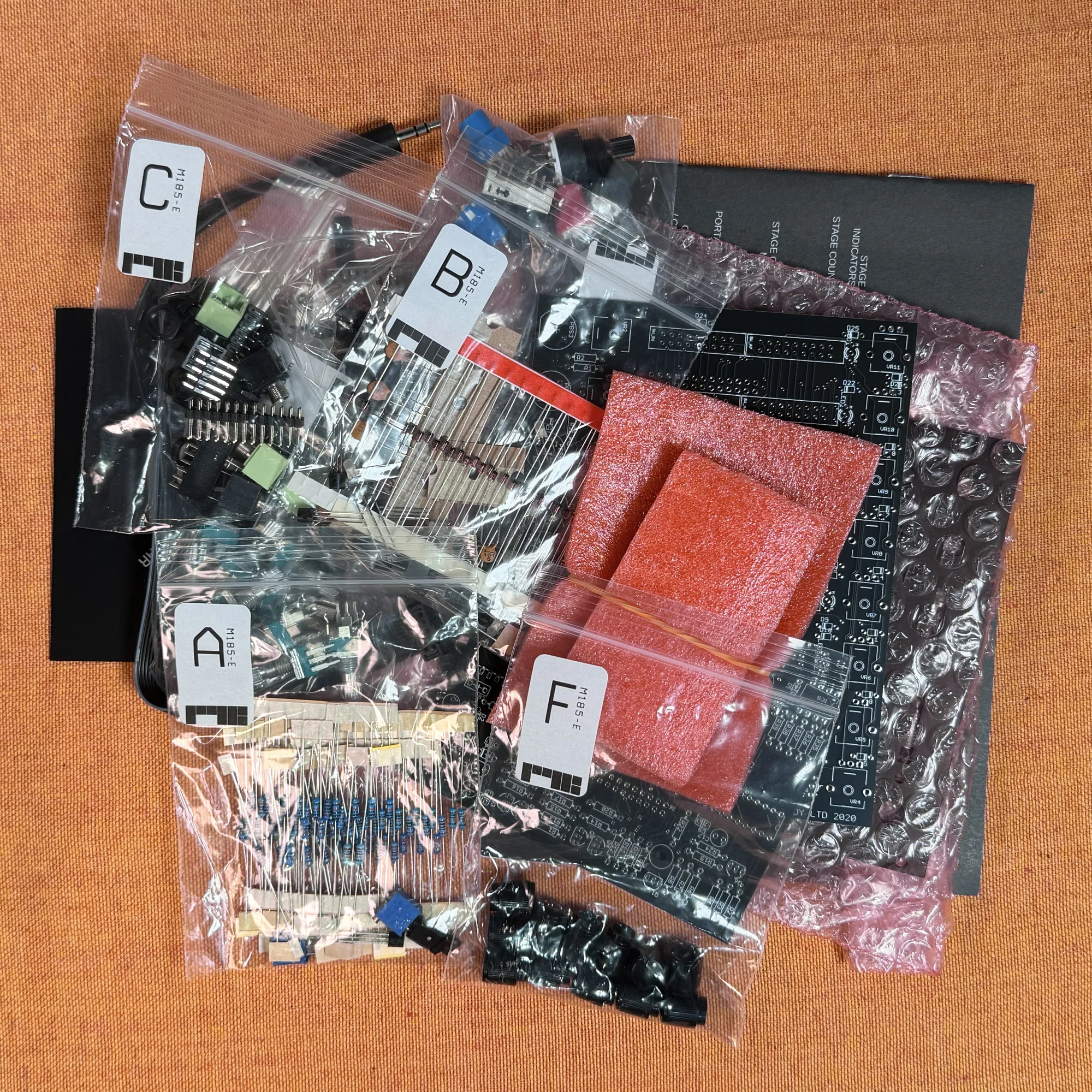
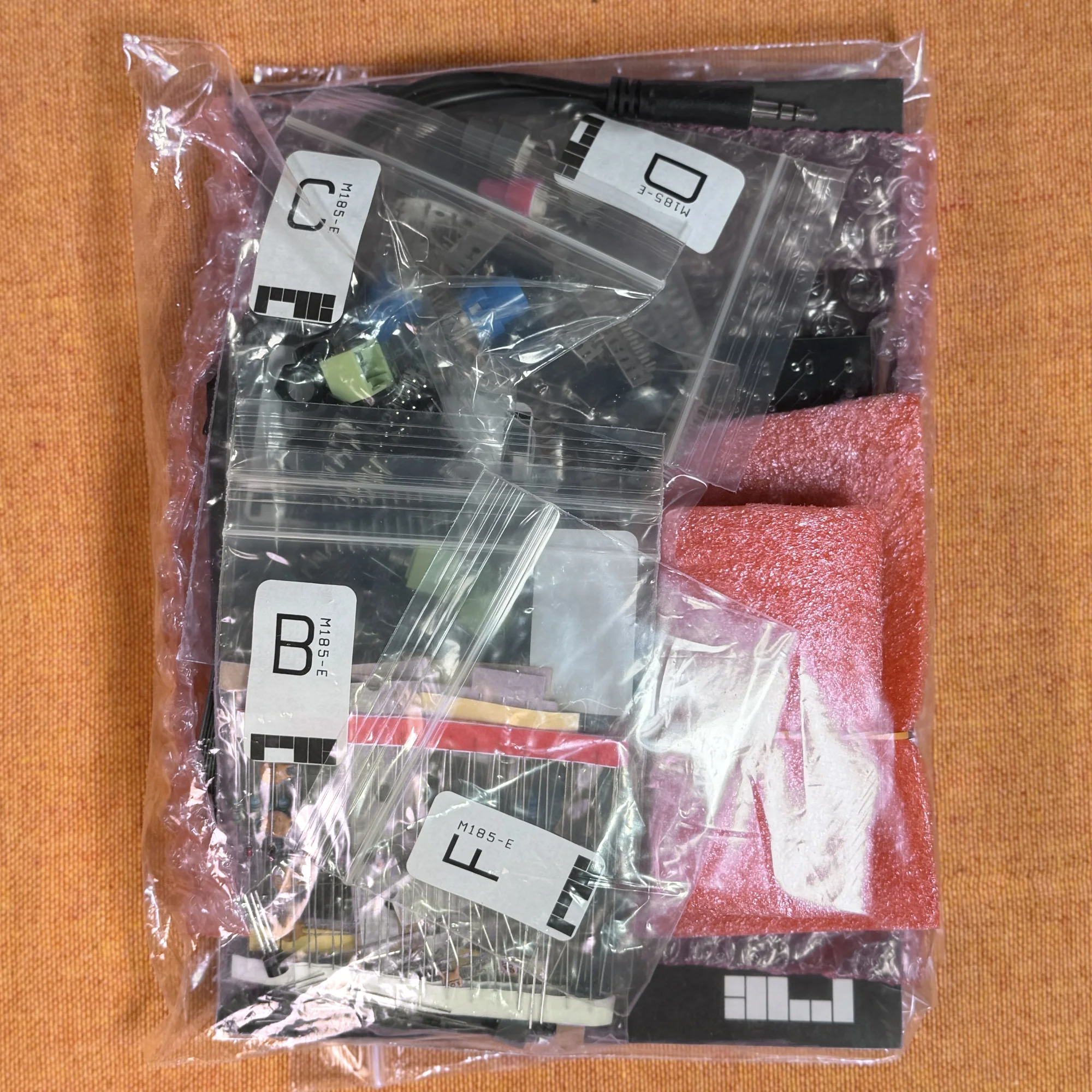
In addition to the assembled unit, we also carry a through-hole DIY kit.
- Product Photos: Assembled
- Product Photos: DIY Kit
- Manuals and Guides
- Overview
- Per-Stage Step Repeats and Glide
- Gate Modes
- A/B Split Mode
- Quantization and CV Output
- Clock and MIDI
- 16-Stage Configuration via the Expansion Header
- Panel and Firmware
- Technical Specifications
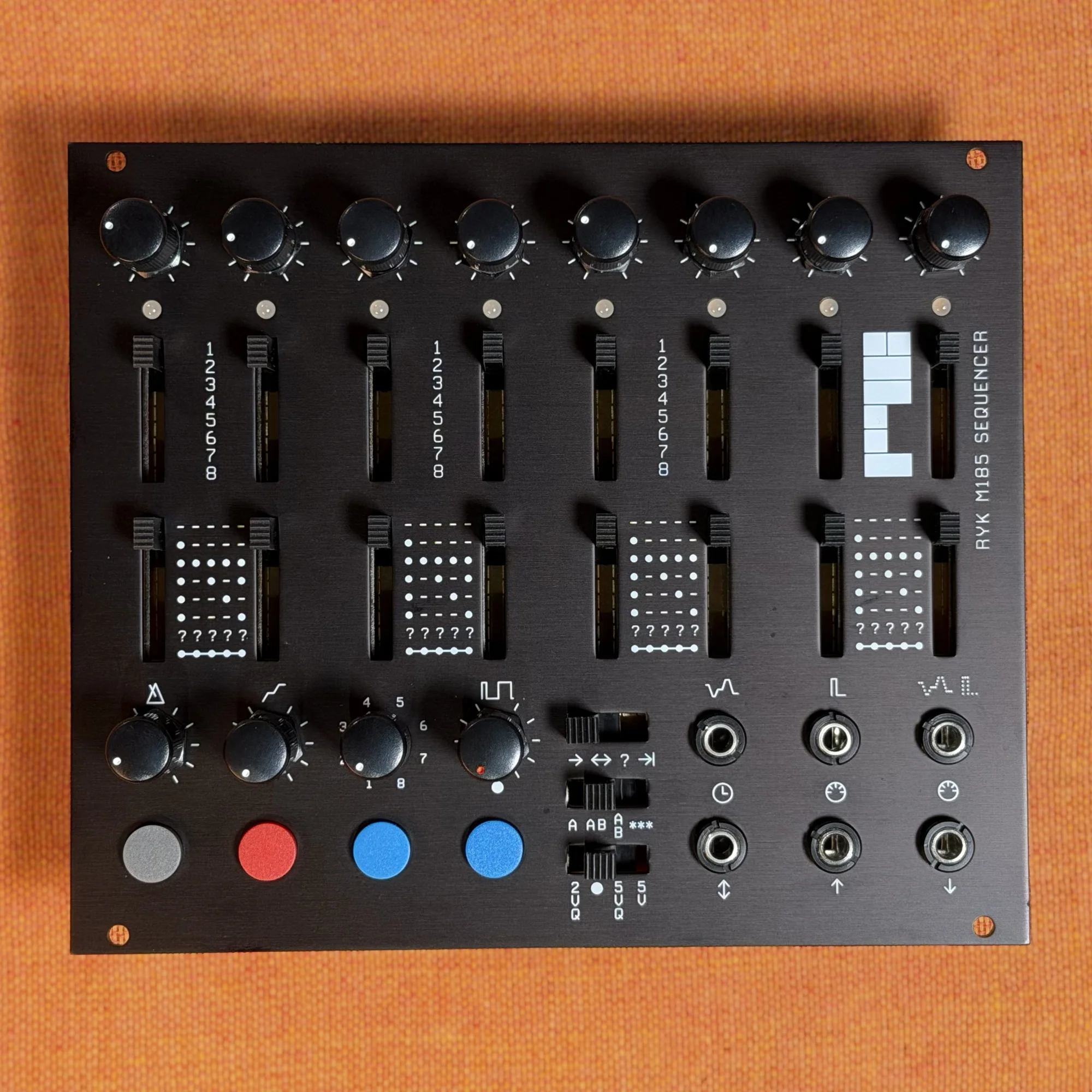
Product Photos: Assembled
Product Photos: DIY Kit
Manuals and Guides
Takazudo Modular publishes manuals and guide articles for this product. Please see below.
Overview
M185 is an 8-stage sequencer. One pitch can be set per stage, and what makes it distinctive is that how many times that stage repeats, and how gates fire within those repeats, can be decided individually for each stage.
Outputs include 2-channel CV/GATE as well as MIDI I/O. It has 15 built-in scales for pitch quantization, and microtonal CV output is also possible. Furthermore, chaining two units via the expansion header lets you treat them as a 16-stage sequence.
Per-Stage Step Repeats and Glide
Each of the M185's 8 stages can be set to 1–8 step repeats. By specifying that one stage sounds only once while another repeats four times, and so on, you end up with a sequence that has a length and contour different from a simple 8-step loop, even though the structure is only 8 stages.
M185 also has per-stage programmable glide. By choosing which stages get glide, the pitch connects smoothly when moving into that stage.
Gate Modes
Gate modes are what you use in combination with step repeats. Each stage can be set to one of the following 8 gate modes.
Off
Once
All
1/2
1/3
1/4
Probability or Programmable
Long
Once outputs a gate only on the first repeat of that stage, and All outputs a gate on every repeat. 1/2, 1/3, and 1/4 output a gate at that fraction of the repeats, Probability outputs gates probabilistically, and Long stretches the gate out.
And with Programmable, you can write the timing of gates within the repeats directly as a pattern, in the manner of X0X-style step entry. By setting the three elements of step repeat, pitch, and gate mode for each stage, you can build the rhythmic character on the sequencer side as well.
A/B Split Mode
M185 provides an A/B split mode. This is a mode that divides the 8 stages into two and treats them as two separate sequences. Since M185 has 2-channel CV/GATE outputs, this mode lets you output each of the two divided sequences from a different channel, running two sound sources at the same time.
Below is a demo video of the M185's A/B split mode (serial) from the official RYK Modular YouTube channel. It shows how things behave when the 8 stages are split into two, so please have a look.
Below is a demo video of the M185's A/B split mode (parallel, 2-channel CV/GATE output) from the official RYK Modular YouTube channel. It shows two sequences running simultaneously, so please have a look.
Quantization and CV Output
M185 has 15 built-in quantization scales. When setting pitches with the knobs, they're corrected to notes that fit the selected scale, which makes it harder to play a wrong note even while performing.
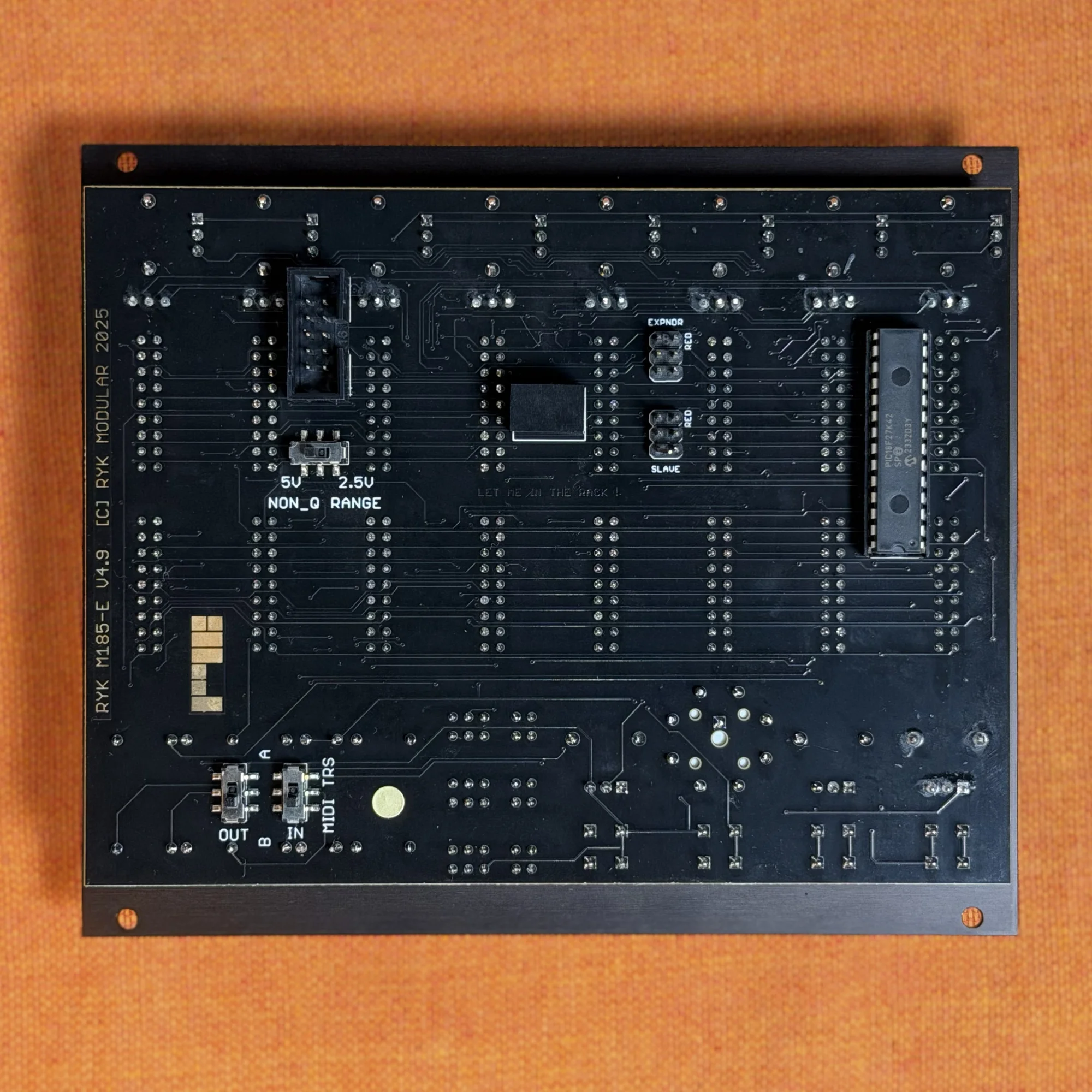
The CV output range can be selected from 2.5V and 5V. It also supports microtonal CV output that bypasses quantization, so it can be used when you want to work with tunings outside equal temperament.
Clock and MIDI
Clock I/O works in both directions. You can run the M185 from an external clock, or make the M185 the master and send clock to other gear.
As for MIDI, in addition to MIDI clock I/O, it supports transposition via MIDI notes. By sending notes from an external keyboard or sequencer, you can transpose the key of the entire running sequence.
16-Stage Configuration via the Expansion Header
M185 has an expansion header on its PCB, allowing two M185 units to be chained. When chained, the stages of both units are treated as one continuous sequence, operating as a 16-stage sequencer.
Panel and Firmware
The panel is black anodized aluminum, with RAL 9002 silkscreen.
The firmware can be updated by the user via MIDI sysex.
Technical Specifications
Width: 30HP
Depth: 25mm
Power consumption: 75mA (peak 110mA) +12V / 10mA -12V
About RYK Modular
RYK Modular is a modular synthesizer maker based in the UK.
RYK Modular makes modules that are unique yet genuinely practical. Their most talked-about module right now is the M185 — a classic sequencer reimagined in a form that feels right at home in a modular rig. Their VectorWave FM oscillator module is another standout.

Bonus: Modular Accessory Set by 電氣美術研究會 (Denki Bijutsu Kenkyukai) Included
In the hope that more people will get hands-on with modular synths, we have teamed up with 電氣美術研究會 to bundle a modular accessory set with this product.
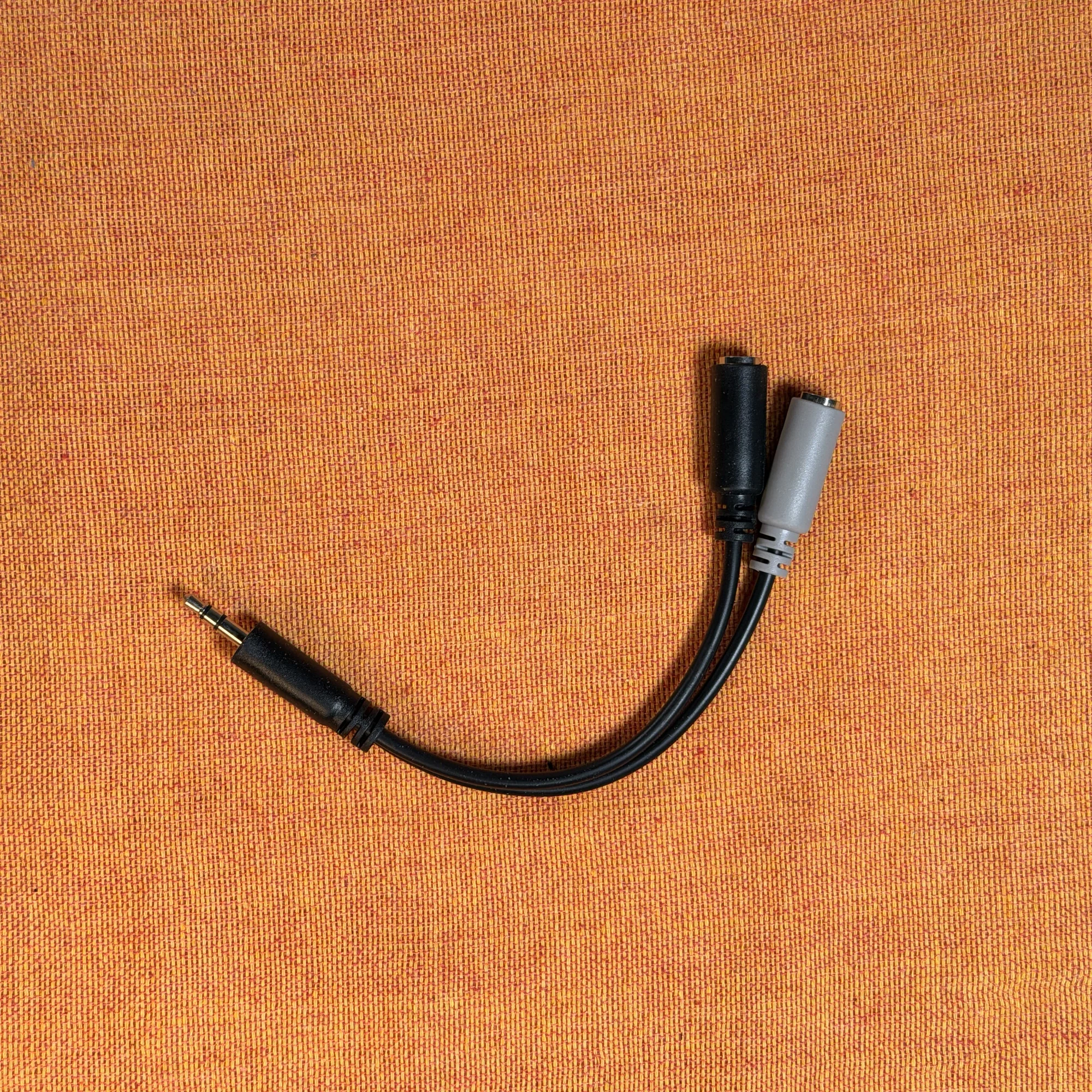
The contents vary by season — patch cables, power cables, a dress-nut sample set, a mono splitter, and more. The set is included with the product, so please give it a try!
That concludes our introduction of the M185.
Through the combination of per-stage step repeats, gate modes, and scale quantization, this module lets you build sequences with variation despite its 8-stage scale. With 2-channel CV/GATE, MIDI I/O, and 16-stage operation by chaining two units, it's a sequencer that covers a wide range, from simple melody lines to building multiple parts.
We hope you find this helpful.