This is an introduction to Cricket, a standalone electronic instrument by Meng Qi, available at Takazudo Modular.
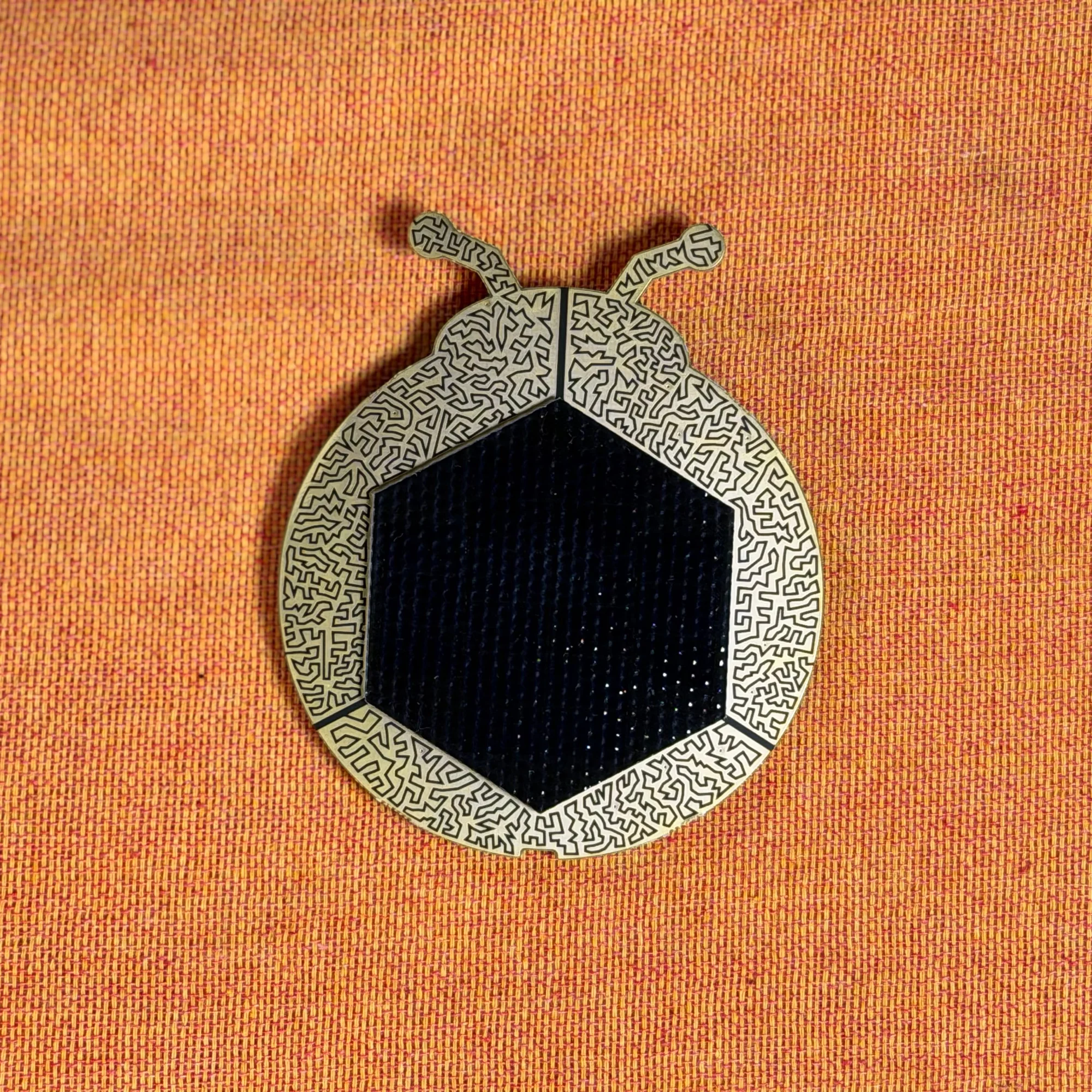
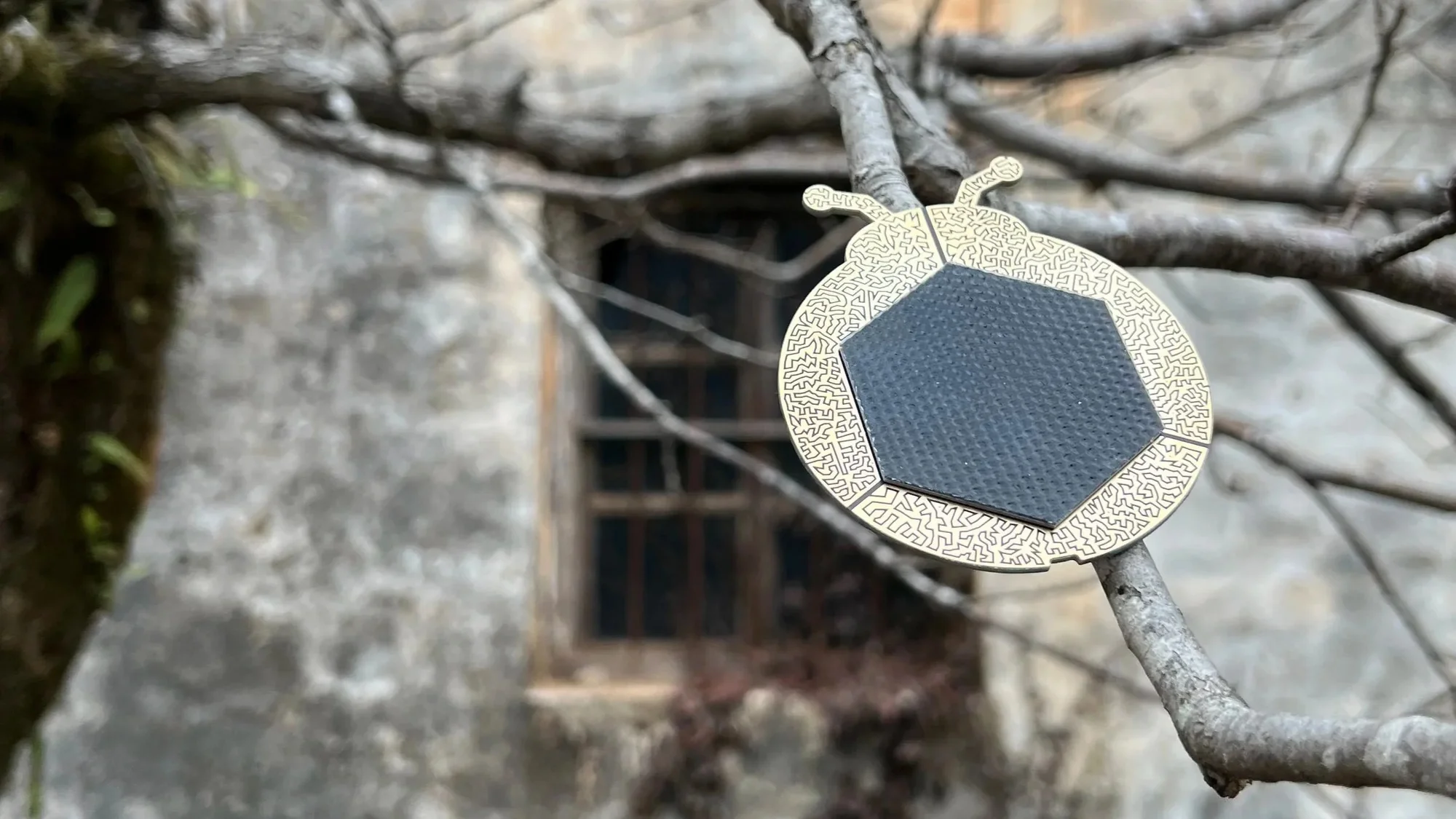
Cricket is a palm-sized standalone sound instrument that runs on solar power. It requires no batteries or external power; it makes sound when bright light hits its solar panel. The body is designed to accept a pin, so you can attach it to your clothes or bag and carry it around—a jewelry-like instrument.
This product is available for purchase below.
Product Photos

Overview
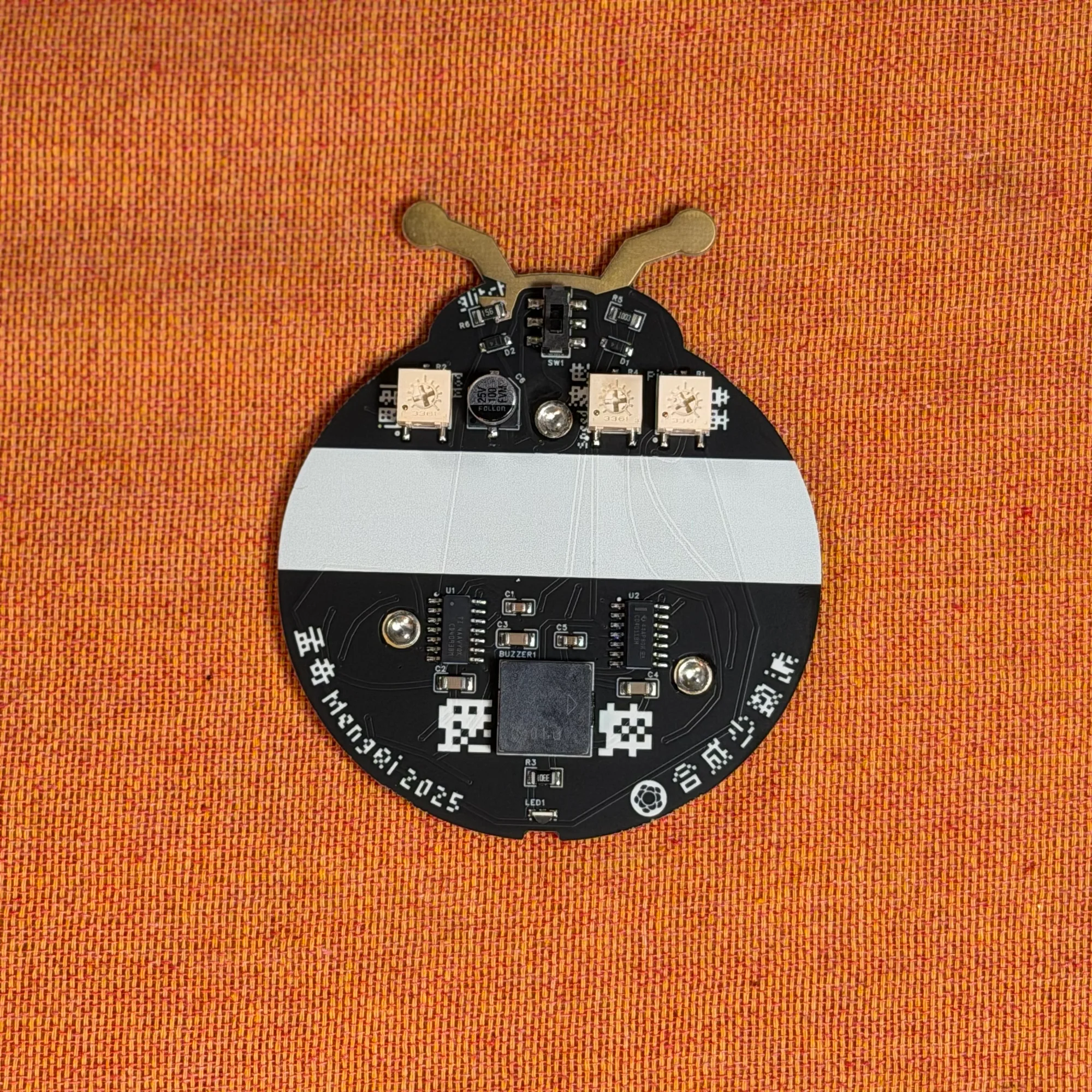
Cricket is a small, self-contained electronic instrument that makes sound on its own. It operates when light hits the central solar panel, and it has no patch cables or audio jacks. Sound is output directly from the piezo speaker built into the body.
You play it by blocking the light reaching the solar panel with your hand, or by touching the gold touch points on the body. The combination of how the light hits and your touch changes the intermittent, fluctuating sound—reminiscent of the chirping of a cricket.
When not in use, you can stop the sound with the unit's on/off switch.
How the Sound Works
According to Meng Qi's explanation, Cricket is based on a circuit published in an old electronics hobbyist magazine. At the heart of the sound is the CD4093, an IC with built-in Schmitt trigger NAND gates. It's in the same family as the 40106, a chip commonly used in DIY synths.
Inside Cricket, there are three oscillators built around this CD4093.
The main oscillator (sets the pitch)
The modulation oscillator (modulates the main oscillator)
The rhythm oscillator (determines how the sound is interrupted, reproducing the way a cricket chirps at intervals)
The combination of these three produces Cricket's characteristic chirping-like sound.
Controls
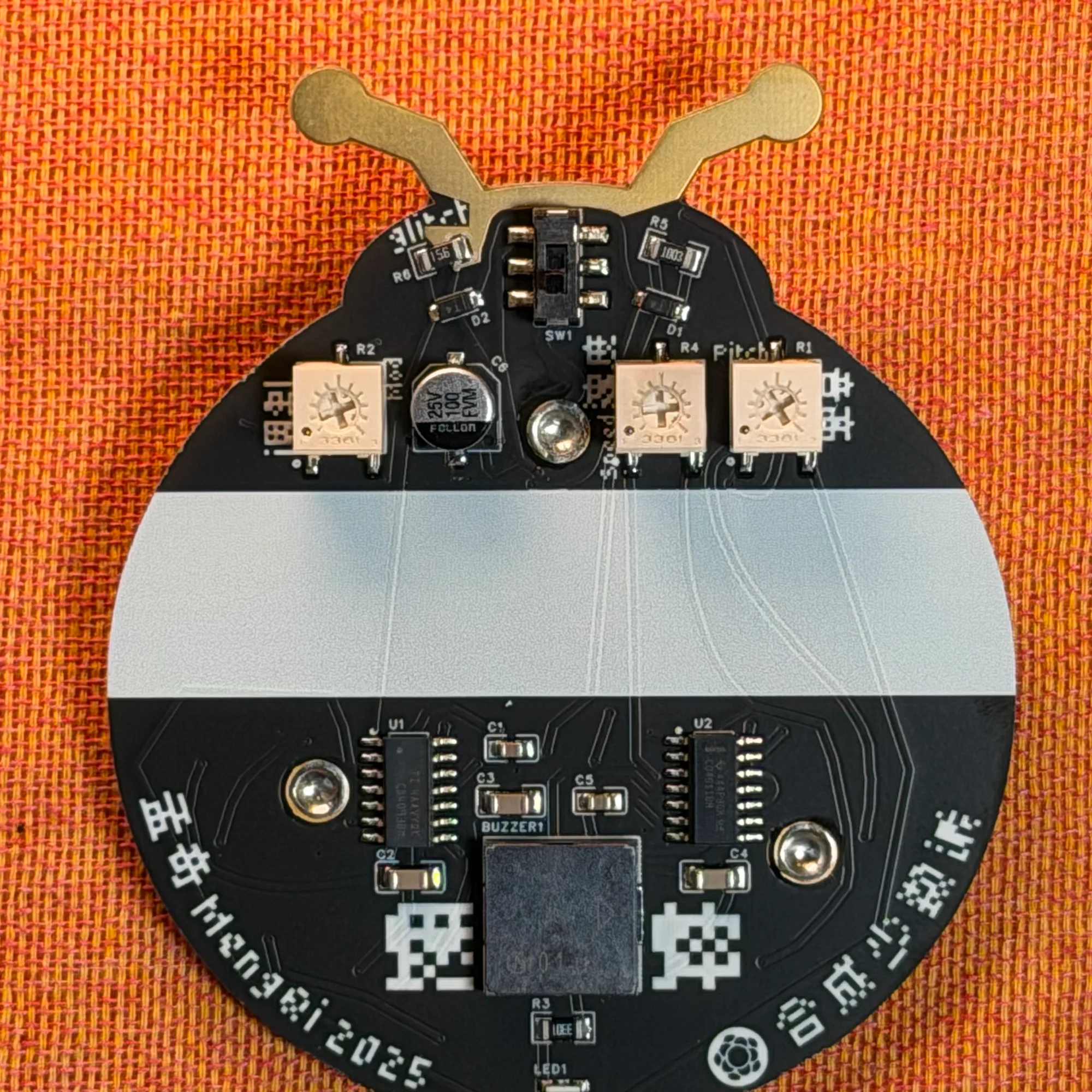
Cricket's controls are placed on both the front and rear of the body.
Solar panel (front): Played by blocking the incoming light with your hand.
Gold touch points (front): Touching them changes the pitch of each oscillator.
Glitch points (rear): Touch points on the antenna section on the rear; touching them changes the timbre. These are points Meng Qi incorporated as playable spots from a chance occurrence that arose during circuit design.
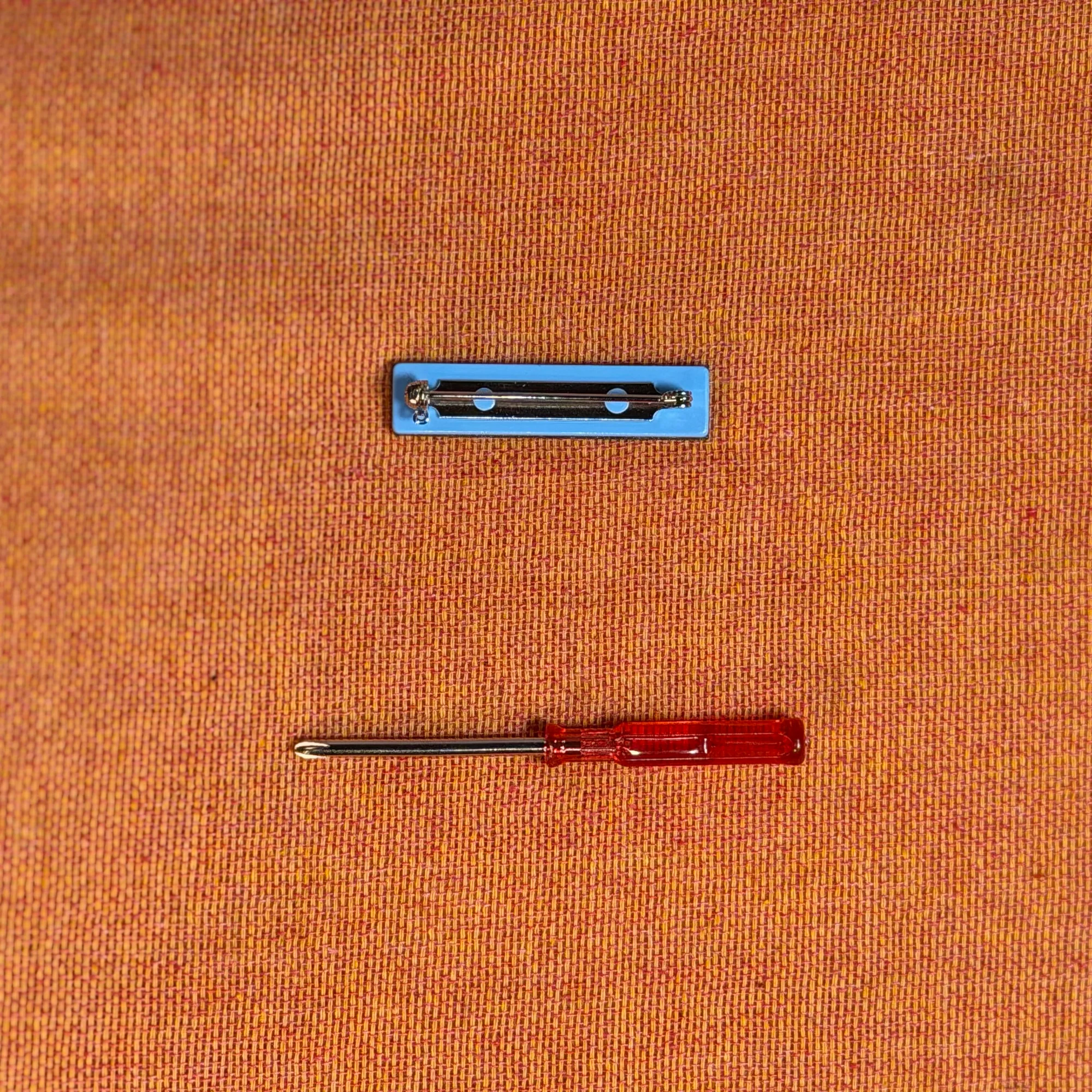
Preset trimmers (rear): Semi-fixed adjustment points tuned with the included precision screwdriver, used to preset the pitch, speed, and other aspects of the internal oscillators.
On/off switch
Reference Video
Below is Meng Qi's own introduction video for Cricket. You can check how it actually sounds and how it's played.
Specifications
Solar-powered (no batteries or external power required; bright light is needed to operate)
No audio jack; sound is output from the built-in piezo speaker
On/off switch
Supports pinning for wear
Accessories
Wearing pin
Precision screwdriver for adjustment
About Meng Qi
Meng Qi is an electronic instrument designer based in Beijing, China.
Every instrument he makes is one of a kind. His work blends the analog and the digital with a real sense of playfulness, never losing sight of what makes something feel like a physical instrument — exactly the kind of thing that keeps electronic music enthusiasts coming back for more.
That concludes our introduction to Cricket.
Please try this small instrument—one that makes sound by being exposed to light, a bit different from other modular gear or electronic instruments—for yourself.
We hope you find this helpful.