This is an introduction and overview of the ADSR by Recovery Effects And Devices, available at Takazudo Modular.
As its name suggests, the ADSR packs a basic ADSR-type Envelope Generator into an analog circuit condensed into just 2HP. It fits effortlessly into any spare space, making it a staple module you can never have too many of. A recommended product as a fundamental module, especially for Eurorack beginners.
This product is available for purchase below.
- Product Photos
- About the Recovery Effects And Devices ADSR
- The ADSR-Type Envelope Generator
- Attack Decay Sustain Release
- How to Use ADSR Envelopes
- The Freedom of Envelope Triggering in Modular
- More Advanced Envelope Generators
- Reference Videos
- Specifications
- Included Items
Product Photos
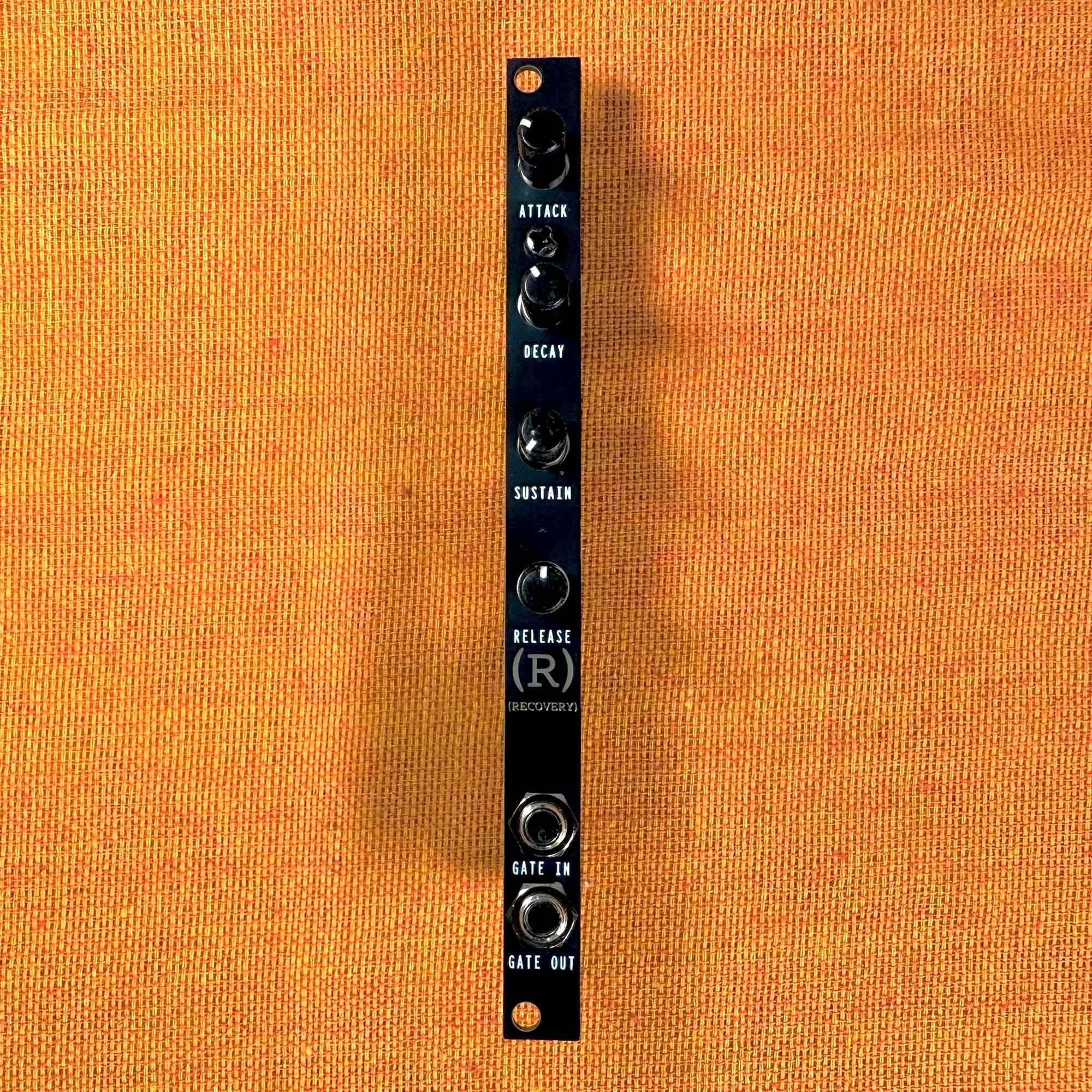
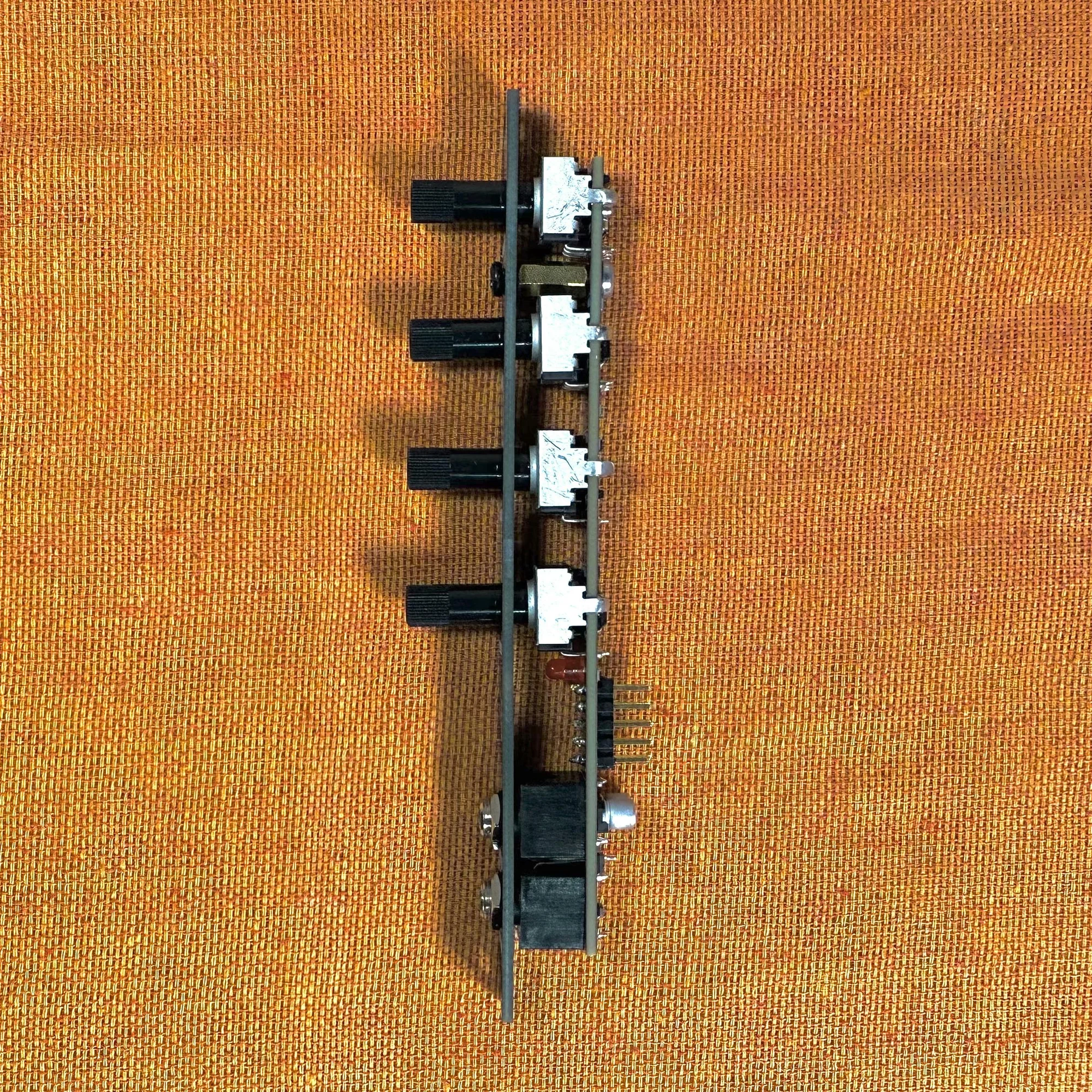
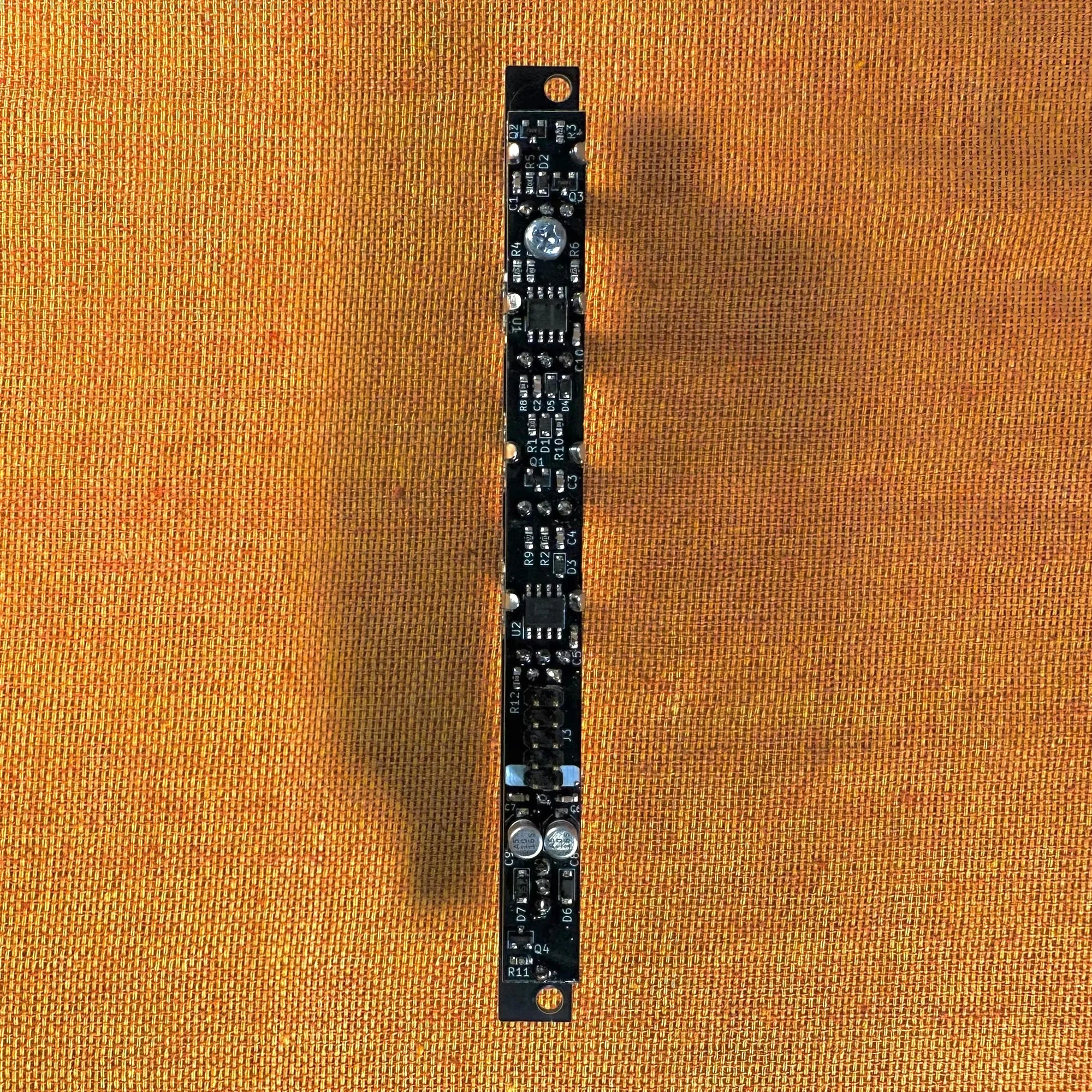
About the Recovery Effects And Devices ADSR
This ADSR doesn’t have any special features; it’s a very simple ADSR Envelope Generator. The original circuit for this module is reportedly based on Rene Schmitz’s publicly available Fastest Envelope in the West. Its standout feature is that such an Envelope Generator is packed into just 2HP, making it easy to incorporate into any system.
Honestly, there’s not much more to say about the product itself. So in this article, I’ll provide a general explanation of ADSR and how it can be used in combination with other modules.
The ADSR-Type Envelope Generator
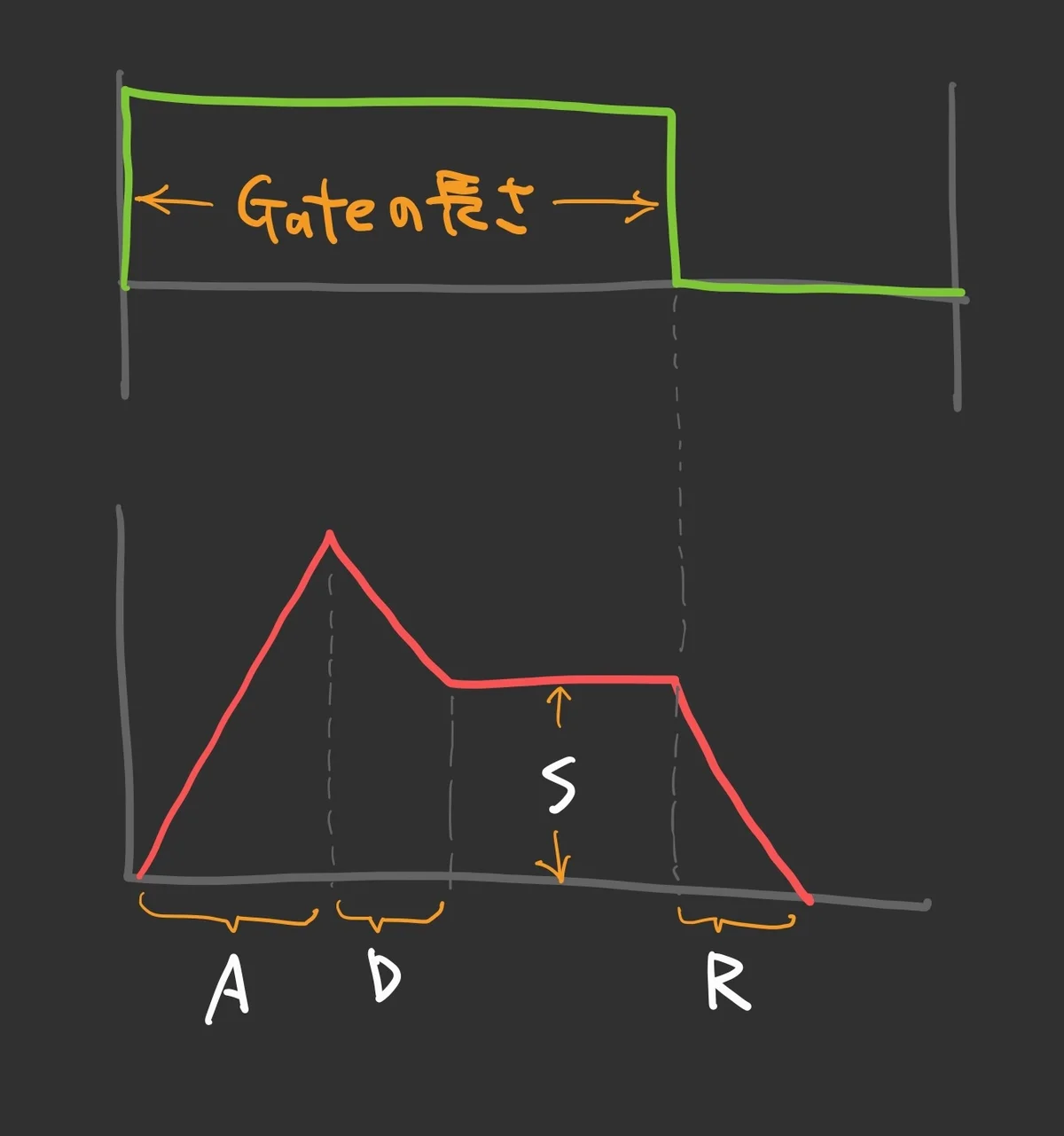
First, what is an Envelope Generator? In modular synthesis, it refers to a function that, upon receiving a Gate signal, produces a shaped CV that rises and falls over time.
The CV pattern produced is called an Envelope. The word “envelope” means something that wraps or encloses, referring to the shape of the generated CV.
A basic Envelope Generator produces an envelope divided into four phases. These four phases are Attack, Decay, Sustain, and Release, abbreviated as ADSR.
This module, like typical ADSR-type Envelope Generators, begins generating the envelope when a Gate signal is received, progresses through the Attack-Decay-Sustain phases while the Gate signal is active, transitions to the Release phase after the signal ends, and completes the CV generation when the Release phase finishes.
This module has GATE IN and GATE OUT terminals. By receiving a Gate signal at GATE IN, it generates an envelope and outputs the result from GATE OUT.
Attack Decay Sustain Release
Each phase of ADSR has the following meaning. More precisely, an Envelope Generator that behaves in the following way is called an ADSR-type Envelope Generator.
- A:
Attack - The time from when the gate signal is received until the envelope rises to its maximum value. A short attack creates an immediate onset, while a longer one gives a gradual fade-in.
- D:
Decay - The time it takes to decay from the maximum value down to the Sustain level. This determines the character of the sound immediately after the attack.
- S:
Sustain - The constant level at which the envelope is held while the gate remains on. This is specified as a level (value), not a time, and the envelope maintains this value until the gate is released.
- R:
Release - The time it takes for the envelope to return to 0 after the gate signal turns off. This determines the length of the sound’s tail.
How to Use ADSR Envelopes
What are the use cases for such ADSR Envelopes? The simple answer is “you can use them for anything.”
In modular synthesis, almost every parameter can be controlled via CV, so whenever you want to change a parameter over time as you see fit, you can use this ADSR.
Volume Control
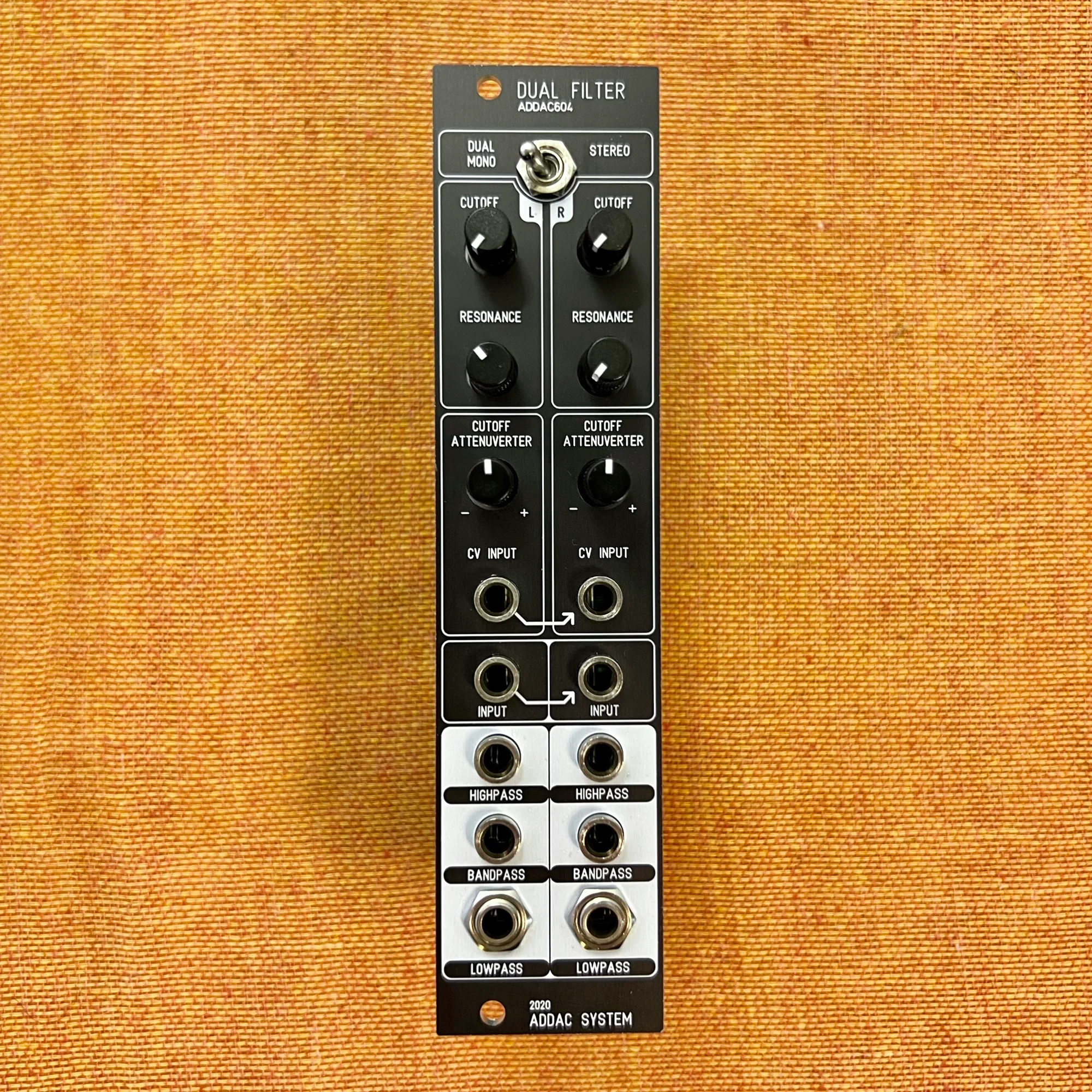
While you can use it for anything, the first concrete use case to mention would be volume control. Among modules we carry, you can send the envelope CV to the cutoff of a Low Pass Filter on modules like:
Unless you’re going for a drone-style continuous sound, you can use these with a VCF or VCA, sending Gate signals from a sequencer like the OXI ONE to generate envelopes and create sounds at each trigger point.
Modular synths offer great flexibility, so this is just one option among many. However, when discussing synthesizers in general, “envelope” often refers to volume changes.
Pitch Control
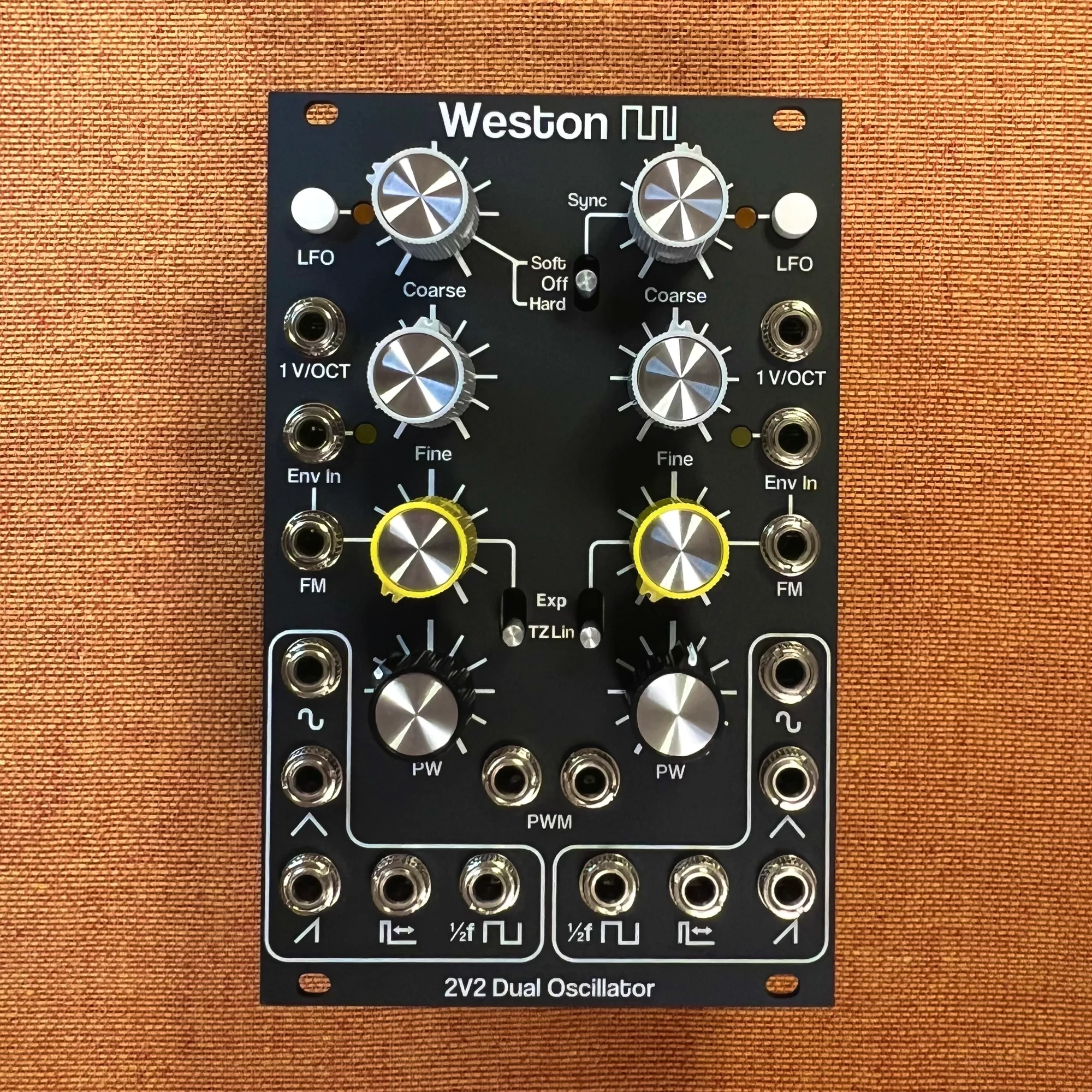
Beyond volume control, you can also use envelopes to modulate pitch. Specifically, we carry oscillators such as:
By sending an envelope to the FM (Frequency Modulation) input of these oscillators, you can create effects where the pitch rapidly sweeps up or down at each Gate trigger.
With such techniques, you can generate punchy kick-like sounds, or combine it with volume gating to create interesting effects where the pitch wobbles at the onset. Pitch is just one example, but look at your modular setup; there are plenty of CV input jacks. There are no rules about what you must do. Whether it’s PWM (Pulse Width Modulation), Resonance, or anything else, I encourage you to freely experiment with patching.
The Freedom of Envelope Triggering in Modular
Not only is the use of the generated envelope flexible, but Envelope Generators also offer great freedom in when they’re triggered.
I’ve been writing about Gate signals, but a Gate signal is essentially just a voltage change going above +3V or similar, at which point it’s determined as “ON.” So, for example, you could select a square wave from an oscillator/LFO and connect it to this module’s GATE IN.
What happens then? If the oscillator’s frequency is very fast, envelopes are generated continuously at ultra-high speed. This kind of free-form patching is one of the unique joys of modular synthesis.
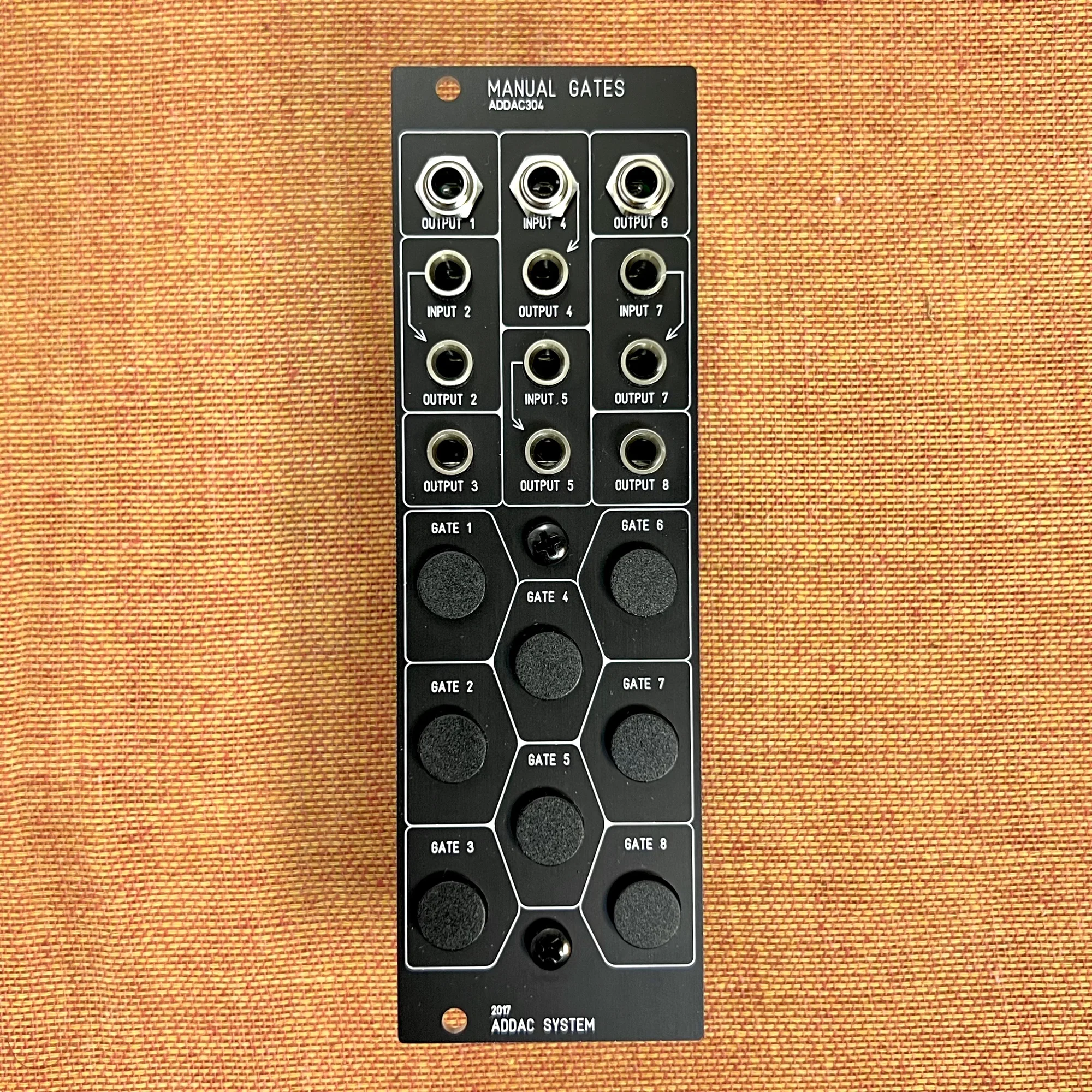
Additionally, combining it with a module that outputs a Gate when a button is pressed can be very useful:
For instance, when you want to create a dramatic moment by temporarily raising the Reverb level on Motion Pictures and then bringing it back down, combining it with the ADDAC304 Manual Gates works great for such one-shot uses. The envelope is created only when you press the button, raising the Reverb level at that moment. The 2HP compactness really shines here.
Also, with ADSR envelopes, the generated envelope changes depending on the Gate length. If you place a module that controls Gate length before the Gate input, you can add another layer of variation:
There are so many patching possibilities.
More Advanced Envelope Generators
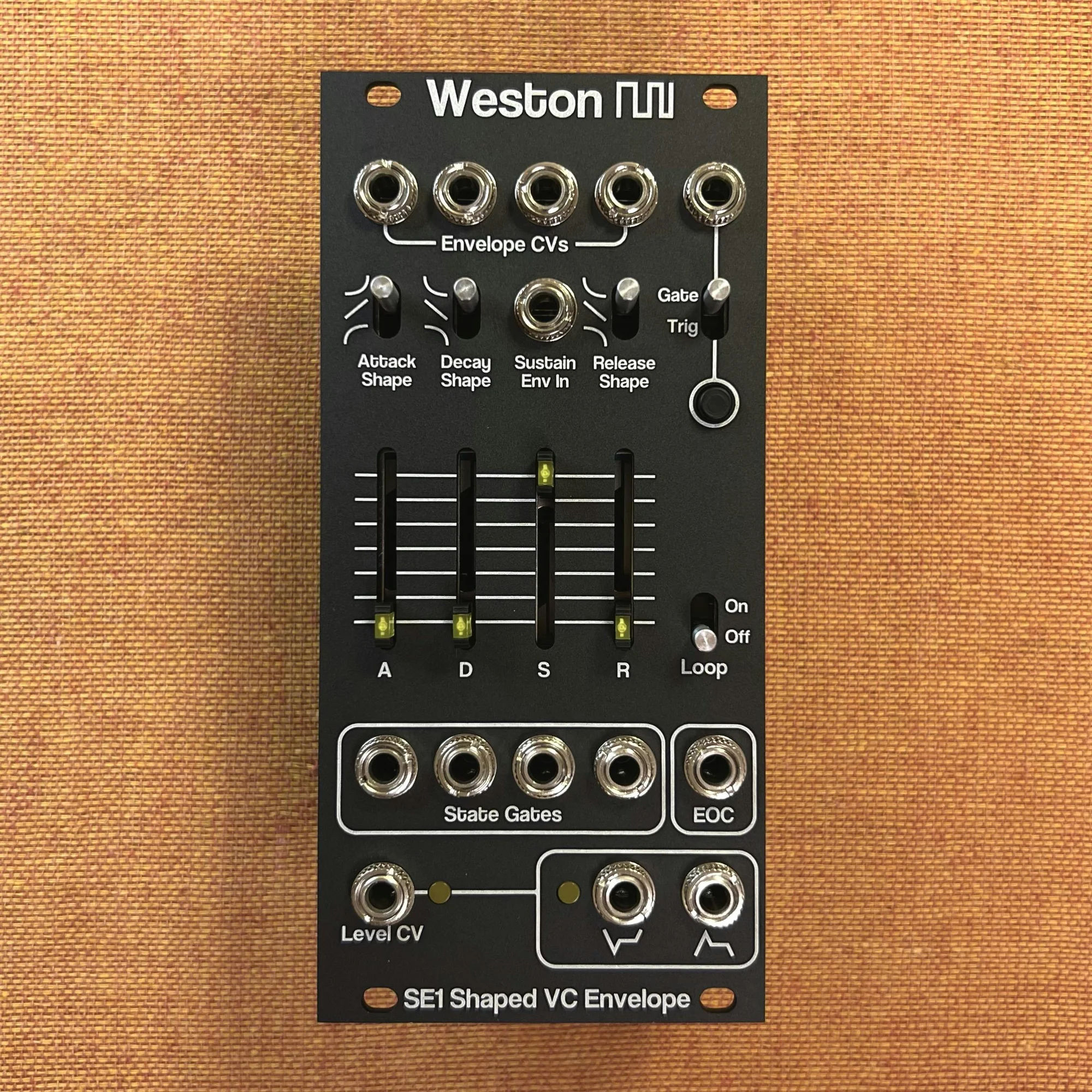
This module is a simple Envelope Generator, but I’d like to introduce Weston Precision Audio’s SE1 as a related, more feature-rich Envelope Generator that we also carry:
The SE1 is based on an ADSR Envelope Generator but adds the ability to select curves for each phase, generate Gates when each phase is active, control the envelope size, invert it, switch to AR-only mode, loop it, and more. It packs in practically everything an Envelope Generator can do.
The SE1 offers more diverse patching possibilities, but at 12HP, it takes up considerable space.
How should you think about the relationship between module size and functionality? There are various perspectives, but I personally believe that modules with large knobs and faders that take up more width are better suited for frequently controlled performances.
Comparing the SE1 to this ADSR, the SE1 is certainly better for frequent adjustments since its ADSR faders are larger. However, if you just need a one-shot envelope, this ADSR may be sufficient. Above all, at just 2HP, it makes it easier to consider adding other modules when case space is limited.
Choose the Envelope Generator that best fits your setup. The panel interface design is part of what makes each module unique.
Especially for those just starting with modular who want to understand Envelope Generators, this module is simple yet continues to be useful over time. I personally have bought and sold many used modules over the years, but small Envelope Generators and VCAs are ones I’ve always kept. Versatile modules always find a use.
Reference Videos
Below is a demo video of the ADSR published on the official Recovery Effects And Devices YouTube channel.
Specifications
- Width: 2HP
- Depth: 22mm
- Power consumption: 10mA +12V / 10mA -12V / 0mA +5V
Included Items
- Power ribbon cable
- Screws
Recovery Effects Devicesについて
Recovery Effects Devicesはアメリカシアトルのモジュラーシンセメーカーです。
このメーカーのモジュールは非常に実験的でありつつも、実用性が高いユニークなモノばかりです。現在最も看板となっているモジュールは「Cutting Room Floor」で、これは高度にサンプルスライシングとグリッチを行うことができる、他では見ないタイプのモジュールとなっています。
オマケ: 電氣美術研究會モジュラー小物セット付き

モジュラーシンセをもっと多くの方に触って欲しいという願いの元、電氣美術研究會さまにご協力頂き、モジュラー小物セットを本商品にバンドルさせて販売させていただいております。
パッチケーブルや電源ケーブル、ドレスナットのサンプルセット、モノラルスプリッターなど、内容は時期に応じて変化します。商品に同梱しますので是非お試し下さい!
That concludes our introduction of the ADSR.
We hope you find this helpful.